The CELAC’s reaction to US maneuvers
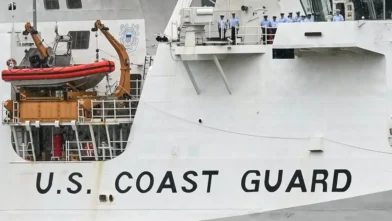
The Ministry of Foreign Affairs added that the intention of the Colombian chancellor, Rosa Villavicencio, in convening the meeting “is to strengthen the channels of dialogue and cooperation, recognizing that transnational challenges require joint and coordinated responses”. The CELAC, created in 2010, is made up of 33 countries in Latin America and the Caribbean and functions as an intergovernmental mechanism for dialogue and political concertation. The objective of its creation is to strengthen regional integration and advance common consensus without the participation of the United States or Canada.So far, the international body, whose pro tempore presidency Colombia assumed last April, had not commented on the United States naval deployment in the Caribbean, near Venezuela, to “stop the flow of drugs”, according to Washington.
Contents

Venezuela’s Criticism of “Hostile Actions”
The U.S. military deployment in the Caribbean has been vehemently rejected by the government of Nicolás Maduro, which calls it “hostile actions” and associates it with an attempt at “regime change.” The United States government, which recently doubled to $50 million the reward for information leading to the capture of the Venezuelan president, accuses the Chavista leader of “violating U.S. narcotics laws”.You may be interested in:Venezuelan Ambassador condemns U.S. for its deployment of nuclear ships in the Caribbean
Caracas warned at the UN that the presence of a missile cruiser and a fast attack nuclear submarine near its coasts represents “a serious threat to regional peace and security”, in violation of international treaties such as the Tlatelolco Treaty of 1967, which declared Latin America and the Caribbean as nuclear-weapon-free zones. Both the Venezuelan Defense Minister, Vladimir Padrino, and the Vice President, Delcy Rodríguez, have denounced that Washington’s operation seeks to «seize the Caribbean Sea» under the pretext of combating drug trafficking. In response to the naval deployment, Venezuela reinforced its military presence in border areas with Colombia, while calling for enlistment days for militiamen within the so-called ‘National Plan of Sovereignty and Peace’.