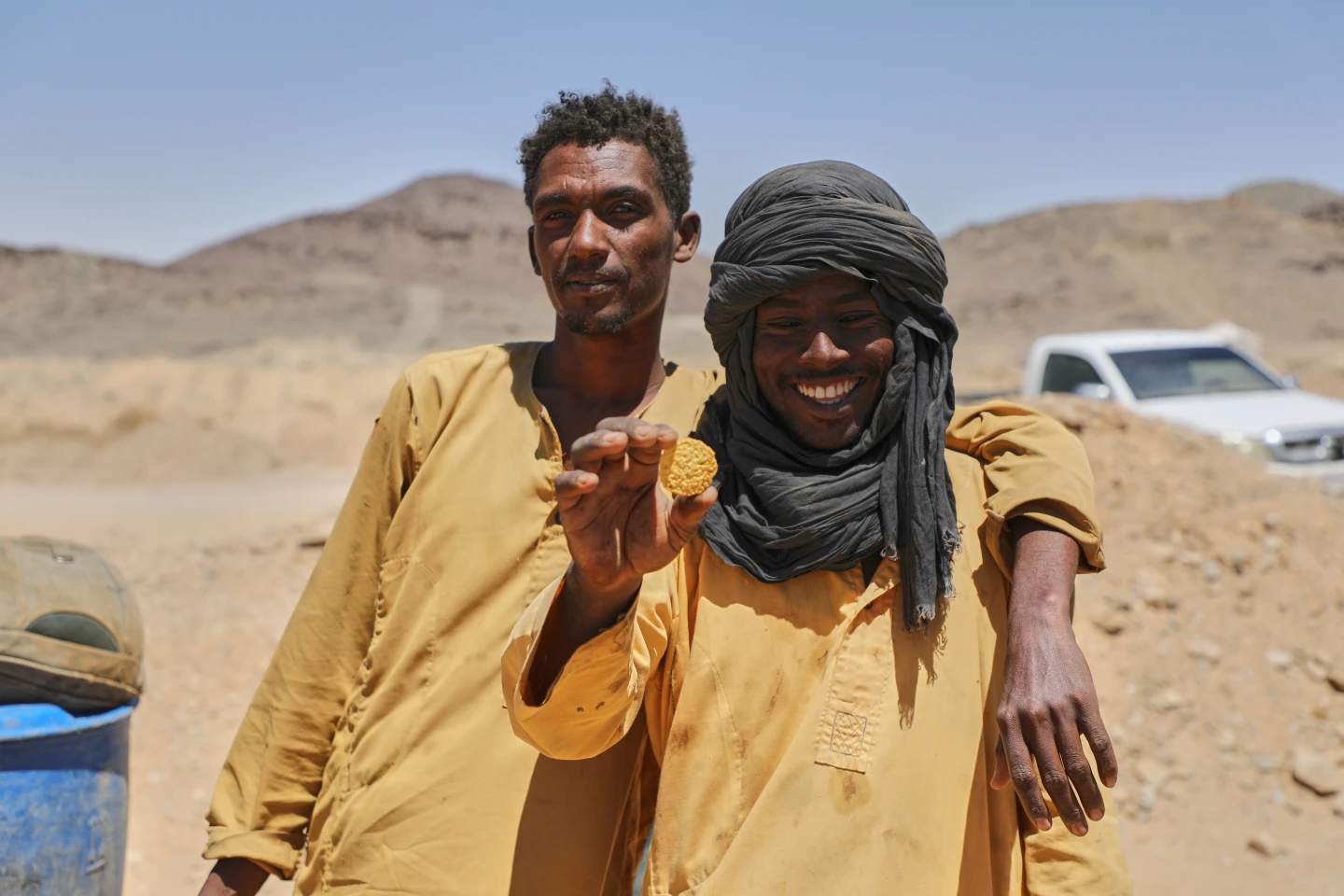
Sudan. — Men carried metal detectors as they explored a mountainous area in northern Sudan in search of gold. One of them knelt to examine the ground with a digging tool in search of the precious metal, in an environment that lacks even the most basic safety measures.
This is about unregulated miners working in a small private gold mine in the northern city of Dalgo Mahas. This mine is one of the thousands of small artisanal mines scattered throughout Sudan, a sector that is at the center of the devastating war that has sometimes plunged some areas of the country into famine.Gold has become an important source of funding for Sudan’s coffers after the country lost more than two-thirds of its oil revenues with the secession of South Sudan in 2011. This precious metal accounted for 70% of national income in the years following South Sudan’s separation, providing the Sudanese government with much-needed foreign currency.

We recommend reading: U.S. restricts entries from DR Congo, Uganda and South Sudan due to Ebola outbreak
The war also caused the largest humanitarian catastrophe in history, forcing more than 10 million people to flee their homes. Many displaced people joined the mining industry to support their families. “Gold mining is the only thing I can rely on,” said Atta al-Khazin, a 28-year-old miner who abandoned his previous profession as a farmer. “Due to the high oil prices, agriculture no longer covered the expenses.” Zahir Adam, a 35-year-old father from the city of El-Fasher, in Darfur, who worked in gold mining for more than a decade, said that the sector has attracted many people since the war broke out more than three years ago. According to him, they had “no other option.” “Many young people, and many families, depend on mining.” Sudan produced 70 tons of gold last year, up from 64 tons in 2024, according to official figures, making it one of Africa’s top producers. The gold generated about $1.8 billion in revenue in 2025, according to data from the state-owned Sudanese Mineral Resources Company. Artisanal and small-scale gold mining accounts for the majority of the gold extracted in this vast country, where safety regulations are largely ignored. Artisanal miners, like those in Dalgo Nahas, usually extract the gold, crush the ore, and apply toxic mercury to create the amalgam. This amalgam is heated, generally in a stove, to evaporate the mercury and recover the gold. The process, which includes the use of dangerous chemicals, also poses a risk to people living near the mines. Many of these mines are not controlled by the government. The UN panel of experts stated in its 2024 report that more than 50% of the gold extracted in Sudan was not traded through formal channels, but was smuggled out of the country. Deadly collapses in mines are not uncommon in Sudan, where safety regulations are not widely enforced. Last month, at least seven miners died in a collapse in the Red Sea province. In January, another thirteen died in another collapse in the South Kordofan province. A transitional civilian government that governed the country for more than a year after the military overthrow of dictator Omar al-Bashir in April 2019 attempted to regulate this crucial industry. However, their efforts were thwarted by a military coup in October 2021 and by the war that began in 2023.