Bangkok.- The Singapore government, a country with harsh drug laws, indicated this Thursday that from September 1st, it will punish suppliers of vapes containing etomidate, a substance with an
anesthetic effect, with up to 20 years in prison and a maximum of 15 strokes of the cane.
“Vaping devices have become a gateway to substance abuse,” noted in a statement the Health Minister of the
city-State, Ong Ye Kung.
Singaporean Prime Minister Lawrence Wong already announced last Monday the intention to reform measures against the sale and use of vapes, banned since 2018, and directly targeted etomidate.
The United Nations Office on Drugs and Crime (UNODC) already warned last March about the expansion in Eastern Europe and Southeast Asia of the sale of this substance for medical purposes, which is classified as a short-acting general anesthetic.
Singapore authorities dismantled in January of this year a vaping distribution network allegedly linked to etomidate, also known as kpod.
“Many people, especially young people, started vaping thinking it was okay and not as harmful as tobacco, and then (…) they delved into substance abuse, which is what we are seeing now with etomidate,” Ong remarked.
To end the use of vapes, the minister indicated that they will place containers throughout the country for users to voluntarily deposit the devices, before resorting to more coercive measures.
“Vape sellers with etomidate will now face up to 10 years in prison and five lashes (…) For importers, the penalty is more severe: up to 20 years in prison and 15 lashes,” the minister emphasized.
A sharp increase over the maximum of two years in prison and the absence of corporal punishment, which until now was used to punish people arrested for importing, selling, or distributing etomidate.
While vapers with etomidate, the vast majority of whom are young people under 30, will be required to attend rehabilitation programs and will be fined between 500 and 700 Singapore dollars (between 388 and 544 US dollars or 334 and 468 euros, at the current exchange rate).
In the event of continuing consumption or skipping the program, the punishments will be progressively toughened up to include penalties of a maximum of two years in prison.
Vaping has been banned in Singapore since 2018 and, according to current laws, possessing, using, or buying vapes carries a maximum fine of 2,000 Singapore dollars (over 1,550 US dollars or almost 1,340 euros).
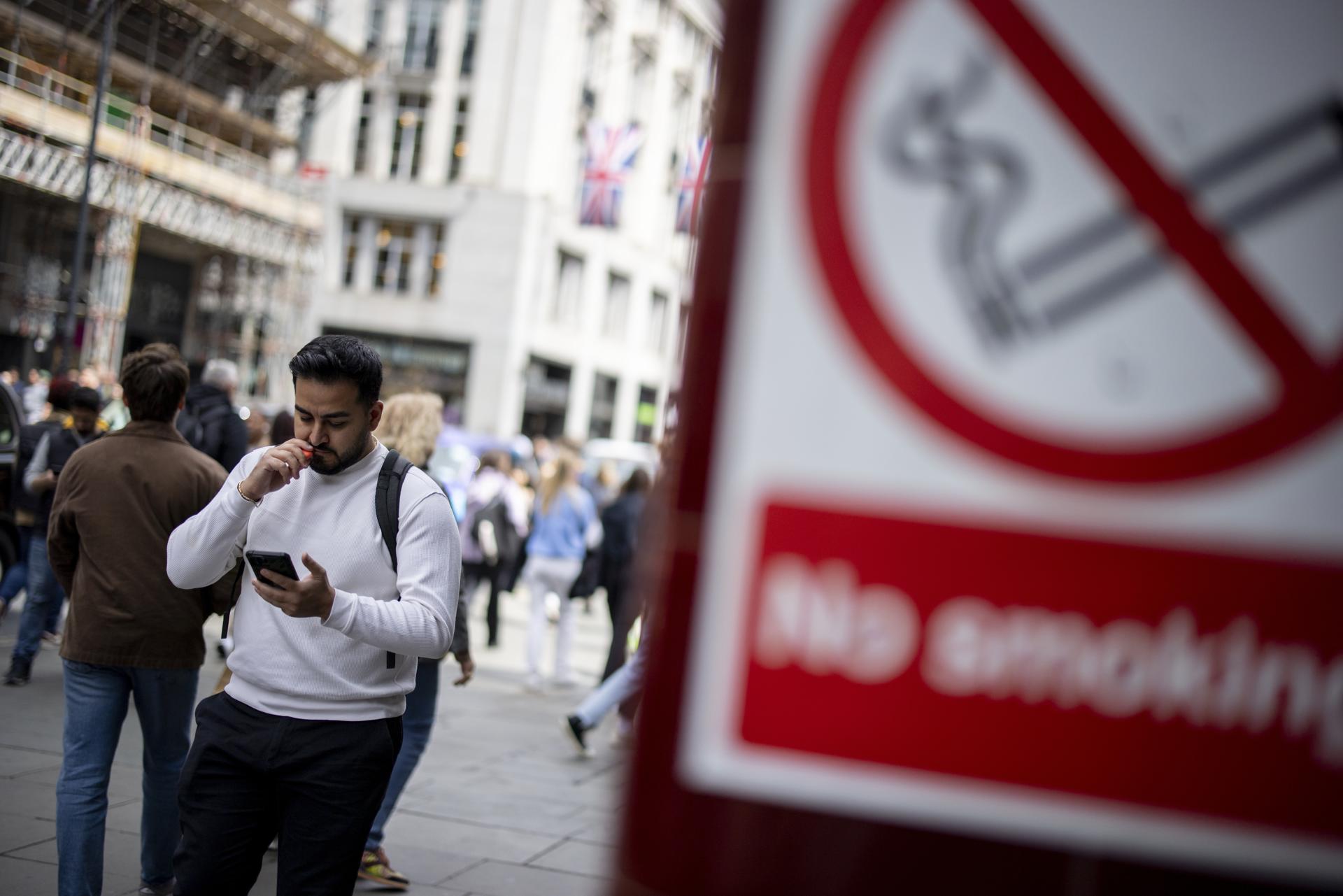
With these measures, the Asian city-state is at the forefront against the consumption of vapers, while increasing restrictions in other countries.
Since June, the UK prohibits the sale and supply of disposable vapes, a measure with which health authorities will try to reduce young people’s access to vaping and the waste generated by these devices.