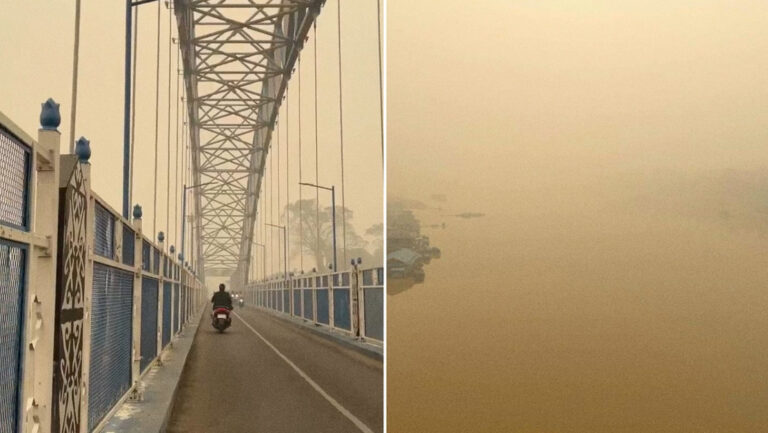

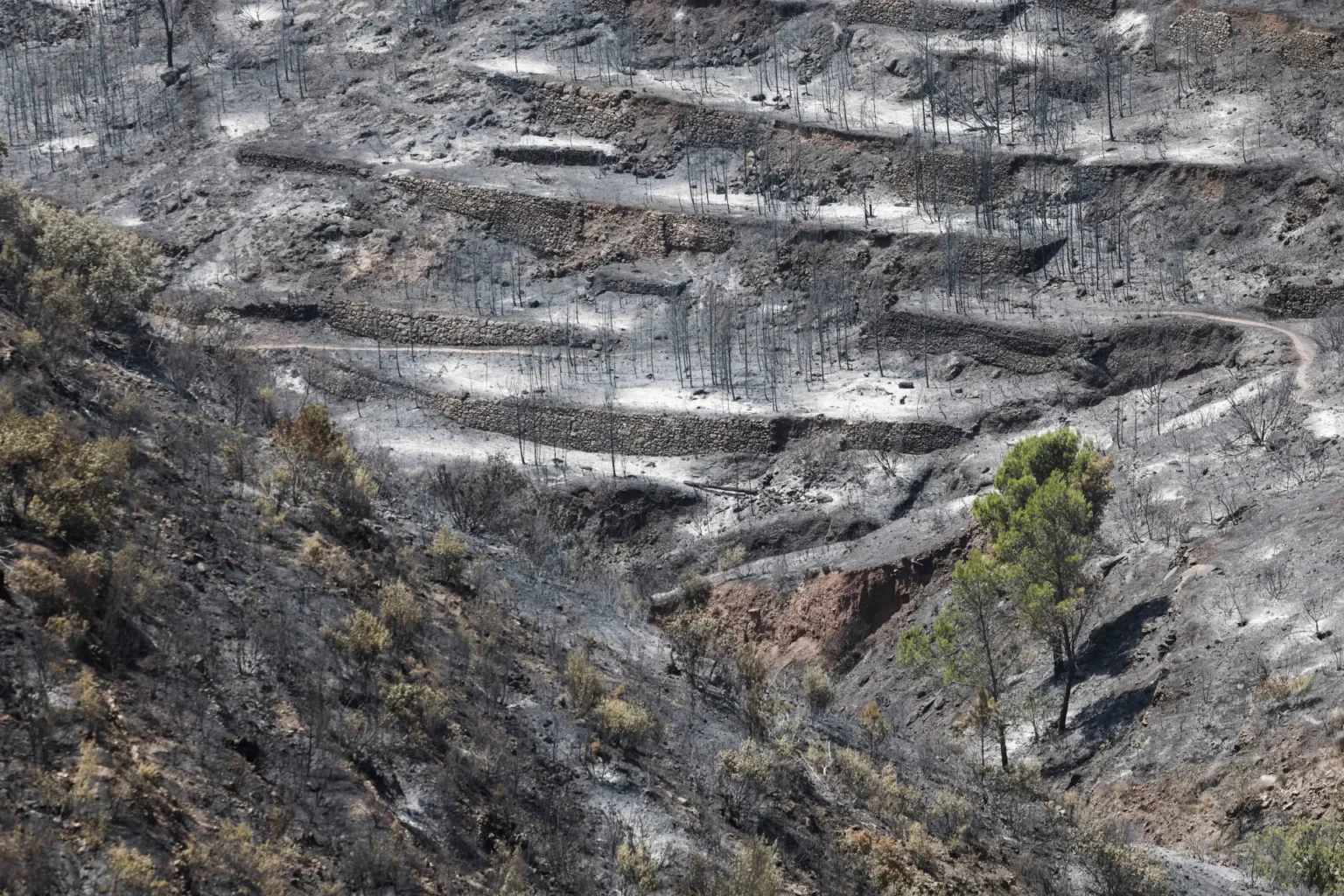

La Vall d’Uixò (Castellón).- The forest fires affecting La Vall d’Uixò (Castellón), Madrid, Toledo, and Ávila have scientific-technical advice on issues such as the expected evolution of the wind or the assessment of burned areas, which help in making decisions regarding extinction efforts.
This is how Diego Intrigliolo, the representative of the Spanish National Research Council (CSIC) at the Operational Coordination Center (Cecopi) for the Castellón fire, and director of the Desertification Research Center, a joint center between the CSIC, the University of Valencia, and the Generalitat, explains it to EFE.
Wind and wildfires
Intrigliolo is part of the Disaster and Emergency Advisory Group (GADE) that the CSIC has activated for the major wildfires currently affecting Spain, to provide “scientific-technical support regarding meteorological forecasts,” particularly wind, and specifically its speed and direction.
He highlights that the wind “is an important factor” in the spread of the fire and also for its extinction, as it determines whether or not air tankers and helicopters can operate, as has happened at certain moments during the Castellón fire, where a “thermal inversion” has occurred.

We recommend reading:NASA finalizes the launch of the Roman telescope, the tracker that will challenge the universe
“We can predict that meteorological phenomenon” in which smoke remains accumulated on the surface and “there is not enough visibility for aerial resources to be able to work,” highlights this expert, who details that in the Castellón fire, the orography “makes extinction more complicated, but so do the meteorological conditions, with an absence of wind during a good part of the morning and afternoon, which produces that thermal inversion.”
With the simulations they carry out, they can predict “when that thermal inversion occurs and when it ends, based on wind speed,” specifies this scientist, who adds that this “helps to predict how the fire may advance and the recommendations on the places where it would be most appropriate” to act.
In the case of the fire affecting the Sierra de Espadán in Castellón, Intrigliolo’s role in the CECOPI meetings is to provide those issues that may be useful for firefighting and that are requested of them, based on “scientific-technical inputs” gathered and prepared by expert personnel from the CSIC and other institutes, just as in the other fires.

They also provide advice on the assessment of burned areas, using “different sources of information, which include both satellites and the use of drones,” which allows, for example, for an automatic update of the flame front or to know the progression and characteristics of the fire fronts.
Science and fires
Intrigliolo asserts the role of science in tackling wildfires, for while “everything related to fire extinction is the responsibility of the authorities in charge of it,” experts provide “technical information to make the most appropriate decisions” based on that data.
The CSIC Disaster and Emergency Advisory Group has been activated in the past for other emergencies, such as the 2024 Valencia DANA, the La Palma volcanic eruption, or last year’s Las Médulas (León) wildfire, where they worked on the ground to provide scientific advice.
In total, there are 20 researchers from different CSIC centers mobilized these days to provide scientific advice on these fires in a coordinated manner, explains Intrigliolo, who is wearing a vest with the CSIC acronym and the motto “emergency advice”.