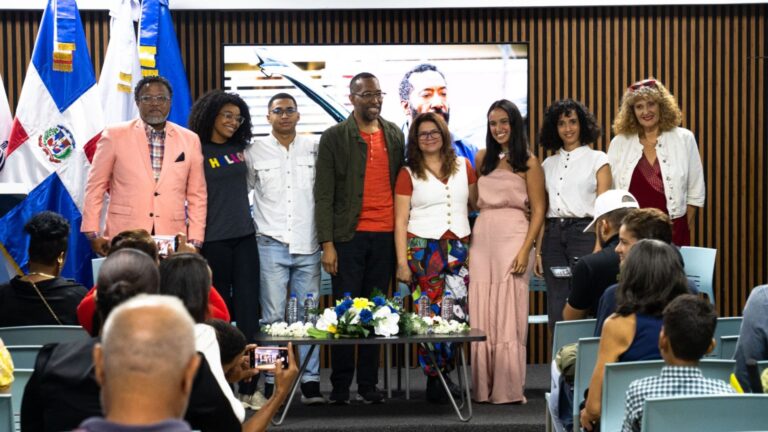


Santo Domingo.- The National Institute for Technical and Vocational Training (Infotep) reaffirmed its commitment to the transformation of technical and vocational training by fostering a space for reflection on the challenges posed by global trends and the need to strengthen strategic thinking that allows for anticipating changes in the world of work and responding to the demands of national development.
To that end, the institution held the keynote lecture “Professional training, global trends, and strategic thinking for the future,” delivered by economist and strategic consultant Franklin Emilio Vásquez Rodríguez, with the participation of representatives from the business sector, public institutions, international organizations, academia, and specialists in human talent development.
Infotep bets on future-oriented training
Upon inaugurating the conference, the Director of Vocational Training at Infotep, Luis Beltré, on behalf of the General Director, Maira Morla Pineda, highlighted that the accelerated evolution of artificial intelligence, automation, and other emerging technologies demands more innovative, flexible technical-vocational training that is aligned with the needs of a knowledge-based economy.

We recommend reading:Public and private sector reaffirm commitment to quality as a path to development
He explained that the institution promotes a permanent process of modernization of its educational offerings, incorporating programs linked to Industry 4.0, including artificial intelligence, automation, data analysis, digital transformation, advanced manufacturing, renewable energy, and cybersecurity, in addition to strengthening modalities such as dual training, virtual environments, and competency-based certifications.
Beltré stated that the great challenge consists of preparing people with the capacity to learn permanently, adapt to changes, and innovate, while reiterating that investing in human talent is an essential condition for boosting the country’s productivity, competitiveness, and sustainable development.
A strategic vision of vocational training

During the keynote address, Franklin Emilio Vásquez Rodríguez proposed that professional training must cease to be conceived solely as a mechanism aimed at preparing people for employment and instead become a national strategy to develop the country’s capacity to learn, adapt, and innovate in the face of technological, economic, and social changes.
“Societies no longer compete solely for their natural resources, their infrastructure, or their financial capacity. They compete, above all, for the speed with which they learn, adapt, and transform knowledge into productivity, innovation, and well-being,” he stated.
As part of his presentation, he introduced the National Competitive Learning Ecosystem (ENAC), a model that promotes greater coordination between the State, the business sector, universities, technology centers, and vocational training institutions to strengthen collective learning and innovation.
Likewise, he proposed the Law of Competitive Adaptation, according to which the sustainable competitiveness of a country depends on its ability to coordinate its institutions, generate continuous learning, and transform knowledge into economic value and social well-being.

The specialist also announced the proposal for the National Adaptive Capacity Index (INCA), conceived to measure a country’s level of preparedness in the face of technological, economic, and social changes.
Vásquez considered that Infotep is called upon to play a role that transcends technical training, consolidating itself as an articulator of lifelong learning and a key actor to strengthen the adaptive capacity of the Dominican Republic.
“The challenge is no longer just about training workers for current jobs. It is about preparing society for occupations, technologies, and challenges that do not yet exist,” he noted.
In conclusion, he urged strengthening cooperation between the State, the business sector, universities, and training institutions to consolidate a development model based on lifelong learning, innovation, and human talent.
“The greatest investment a nation can make in the 21st century is not just in physical infrastructure. It is the sustained investment in human talent, because the future will belong to societies that develop the capacity to learn faster than the changes they face,” he concluded.
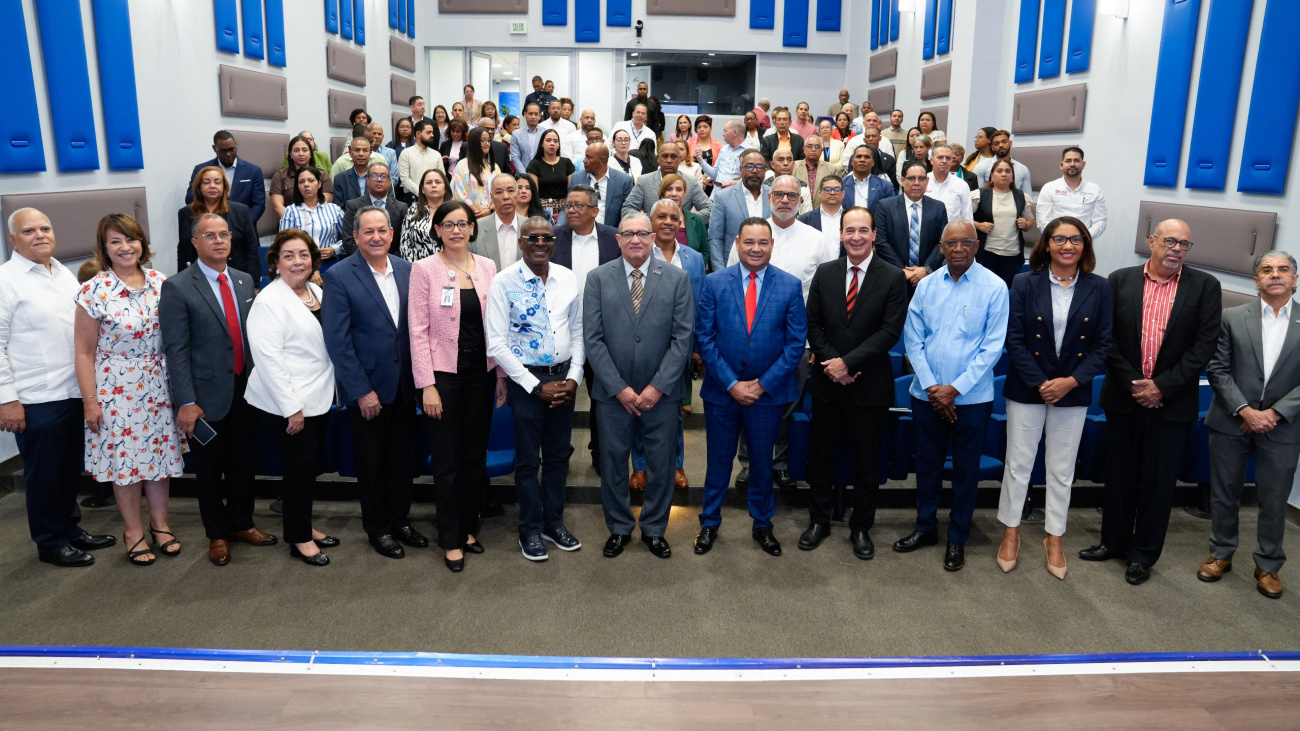
The activity was attended by the general director of the National Council for Promotion and Support to Micro, Small and Medium Enterprises (Promipyme), Fabricio Gómez Mazara, the rector of the Santo Domingo Institute of Technology (INTEC), Arturo Del Villar, the president of Ratán Dominicana, Porfirio Peralta, and the president of Grupo Cometa, Ezequiel Molina, among other personalities.