
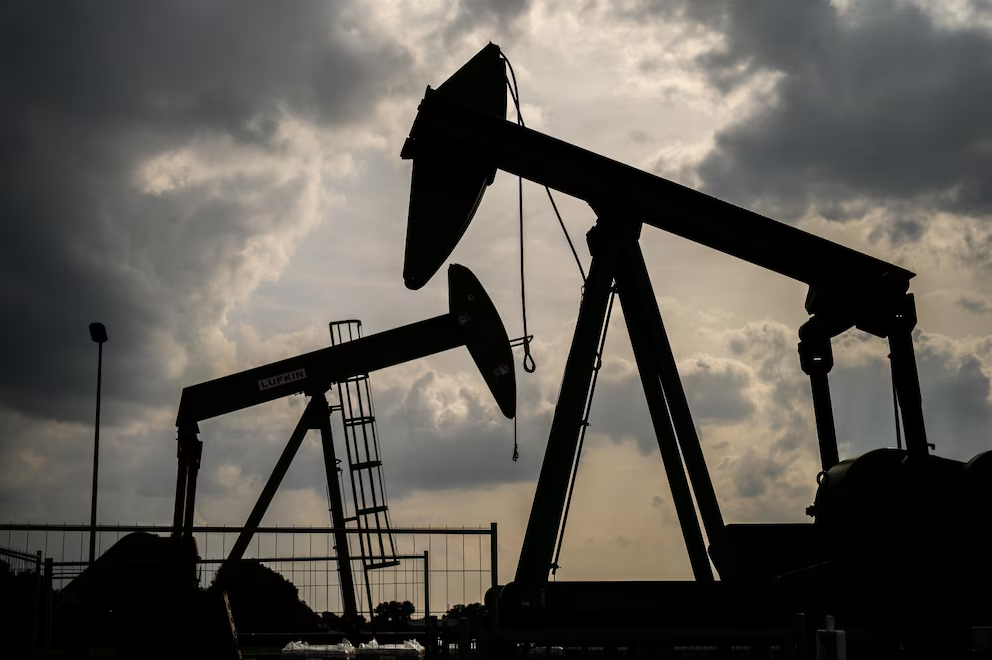

Oil prices fell sharply this Thursday, dragged down by the growing market conviction that the global flow of crude, including that leaving the Middle East through the Strait of Hormuz, will be sufficient to cover a demand that major energy agencies have just revised downward. North Sea Brent crude, the European benchmark, for October delivery, fell 2.15% to USD 87.07 per barrel. Its US equivalent, West Texas Intermediate (WTI), for September delivery, fell 2.43% to USD 81.25.
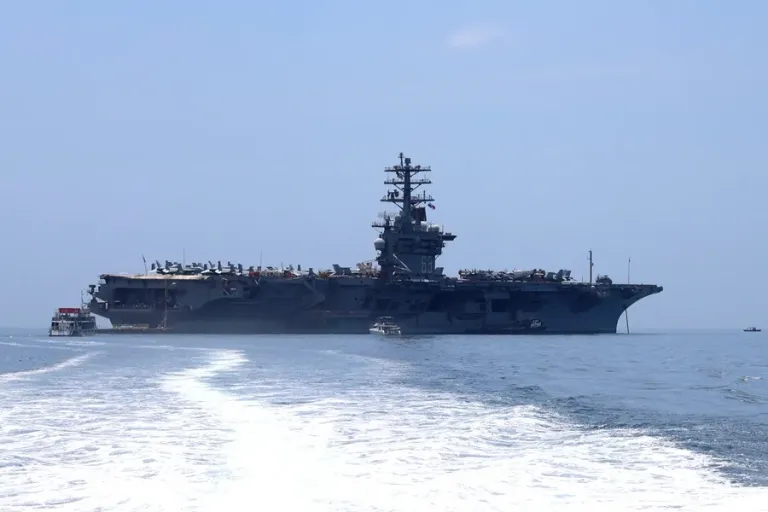
The decline comes amid a dispute between the United States and Iran over control of the Strait of Hormuz, the maritime route through which a substantial portion of the world’s oil transits and which both countries claim to dominate. The lack of verifiable data on actual traffic has divided analysts. Arne Lohmann Rasmussen, an analyst at the Danish firm Global Risk Management, acknowledged that the market lacks certainty regarding the exact volume of crude oil that manages to cross the passage.
For the consultancy Eurasia Group, however, there is one element that does seem confirmed: the so-called clandestine flows that continue to cross the Strait of Hormuz are easing pressure on the market. According to this firm, a growing number of oil tankers are choosing to sail with their AIS transponders turned off—the devices that allow for their geolocation—to avoid being targeted by attacks or sanctions while completing their shipments. This practice makes any precise calculation of the actual traffic through the strait difficult.
We recommend reading: Texas oil rises 0.02% after attacks in the Red Sea and the Gulf of Oman

Bjarne Schieldrop, chief commodities analyst at the Swedish bank SEB, maintained that the daily volume transiting through Hormuz is much higher than previously assumed. That perception was reinforced by statements from U.S. Secretary of Energy Chris Wright, who stated on Tuesday that nearly 9 million barrels per day continue to leave the Persian Gulf through the strait, a figure that far exceeds the estimates held by much of the market.
The dispute between the United States and Iran over the Strait of Hormuz maintains uncertainty regarding actual oil traffic.
The collapse in prices is not solely due to supply. The International Energy Agency (IEA), based in Paris and which advises industrialized countries on energy matters, indicated on Wednesday that it expects a contraction in global oil consumption of 1.6 million barrels per day by 2026, well above the drop of one million barrels per day that it had projected in its previous report. The agency attributed the adjustment to the recent rise in crude oil prices and supply restrictions derived from the conflict between Washington and Tehran.
The IEA’s correction was not an isolated case. The Organization of the Petroleum Exporting Countries (OPEC) reduced its forecast for global demand growth for 2026 that same Wednesday to 580,000 barrels per day, the fourth cut to this estimate so far this year. The coincidence between two organizations that usually differ in their market readings —the IEA typically represents consuming countries and OPEC represents producers— reinforced the bearish perception among traders.

The backdrop to this trading day is a conflict that has been disrupting the global energy market for months. Since the military escalation between the United States and Iran, the Strait of Hormuz has gone through phases of blockade, truce, and resumption of hostilities, each of which has triggered risk premiums that subsequently diluted as commercial traffic proved more resilient than anticipated. That alternation between panic and normalization largely explains the volatility that Brent and WTI have shown in recent weeks.
With supply proving more elastic than expected and demand weakening in major economies, the oil market faces a combination that, if sustained, points to prolonged downward pressure on prices, unless a direct attack on Iranian export infrastructure or a larger-scale military escalation alters the current balance again.