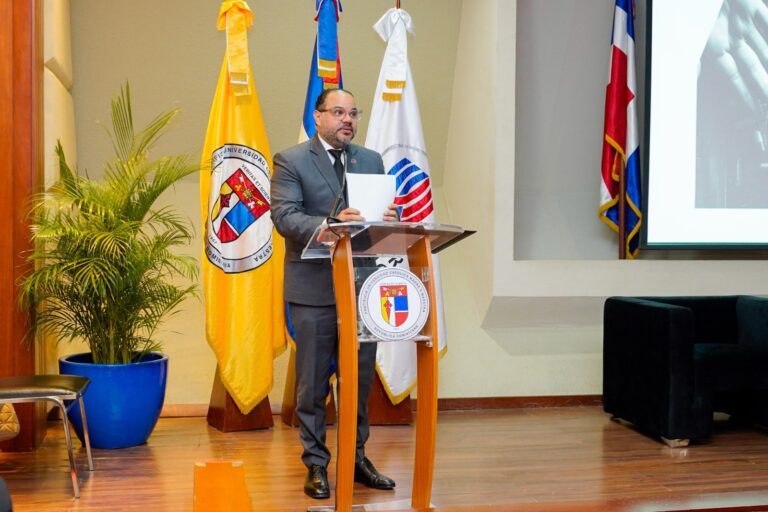

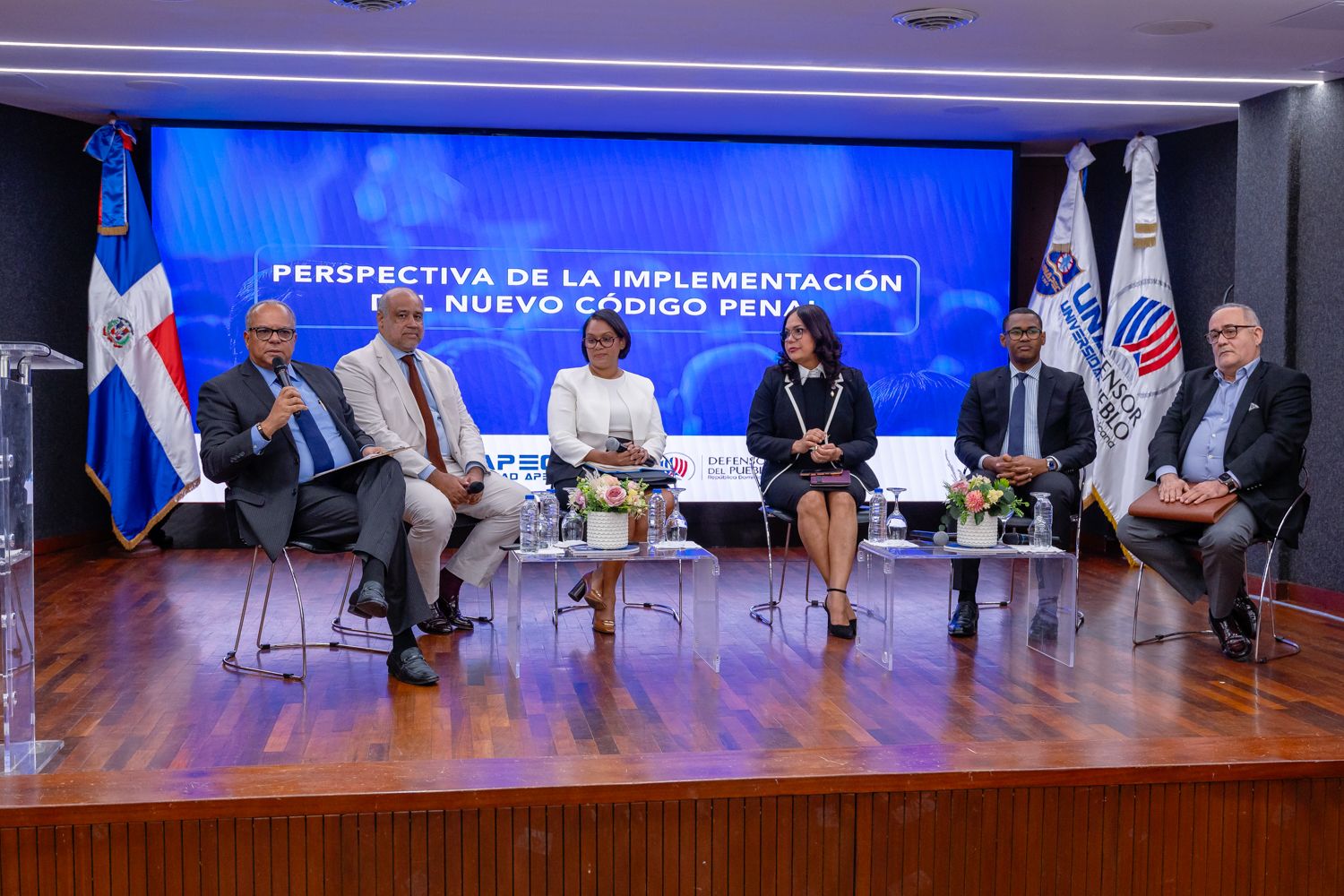

Santo Domingo.– The Ombudsman, in coordination with APEC University (UNAPEC), held a discussion on the new Penal Code, with the participation of jurists and academics, where the challenges involved in its entry into force and the need to evaluate its practical application were addressed.
During the meeting, the Ombudsman, Pablo Ulloa, stated that the enactment of the new regulation represents the conclusion of an extensive democratic process and the beginning of a stage focused on its implementation, analysis, and institutional improvement.
Ulloa maintained that the country is going through a moment that requires “serenity, a sense of history, and state responsibility,” while calling for respect for the constitutional powers of the Executive Branch.
“Enacting the Penal Code does not mean closing the debate, but rather responsibly moving it to the terrain of practical application, evaluation, and institutional improvement,” he stated.
The Ombudsman pointed out that no legislation is definitive or exempt from aspects that can be improved, but considered that a strengthened democracy must allow regulations to come into operation and be evaluated based on experience.

As part of the proposals that emerged during the discussion, he proposed to the National Congress the creation of a Special Bicameral Commission to monitor the implementation of the Penal Code. He explained that this team should be composed of specialists in criminal law, criminal procedure, constitutional law, legislative technique, and representatives of the institutions linked to the justice system.
He indicated that, after the first 90 days of implementation, said commission could present a technical report to the country and, if necessary, promote legislative amendments to strengthen both the Penal Code and the Code of Criminal Procedure.
“Correcting a law based on evidence does not weaken the legislator, but rather strengthens democracy,” stated Ulloa.
For his part, the rector of UNAPEC, Erik Pérez Vega, highlighted that the university opened this space for discussion because it is a reform of great impact for the Dominican judicial system.
Pérez Vega highlighted that the discussion allowed for the analysis of relevant aspects of the new legislation, such as the increase in penalties, the creation of new criminal offenses, the liability of legal entities, and the strengthening of sanctions against corruption and other crimes.

“These spaces allow students, teachers, legal professionals, and the public to access high-level analysis on a reform that will have a significant impact on the Dominican judicial system,” stated the rector.
Likewise, it reaffirmed UNAPEC’s commitment to continue promoting academic debates on issues of national and regional importance, aimed at strengthening the rule of law and legal education.
The panel included trial lawyer Miguel Valerio; Mirna Ortiz, head of the Specialized Prosecutor’s Office for the Prosecution of Administrative Corruption (Pepca); Judge Giselle Méndez, president of the First Collegiate Court of the National District; Harold Modesto, Criminal Law professor at UNAPEC; and Ricardo Rojas León, jurist and professor.
The meeting was moderated by Alejandro Moscoso Segarra, Dean of the Faculty of Humanities and Law at UNAPEC and coordinator of the Commented Penal Code published by the National School of the Judiciary (ENJ).