

Commission warns lack of enforcement of Law 63-17 worsens motorcycle transport crisis
Santo Domingo. – The Permanent Commission on Mobility and Land Transport of the Chamber of Deputies continued this Friday the work of the technical roundtable to strengthen the regulation of the motorcycle taxi (motoconcho) sector, amidst concerns over the increase in illegal stops and the high levels of traffic accidents linked to motorcycles.
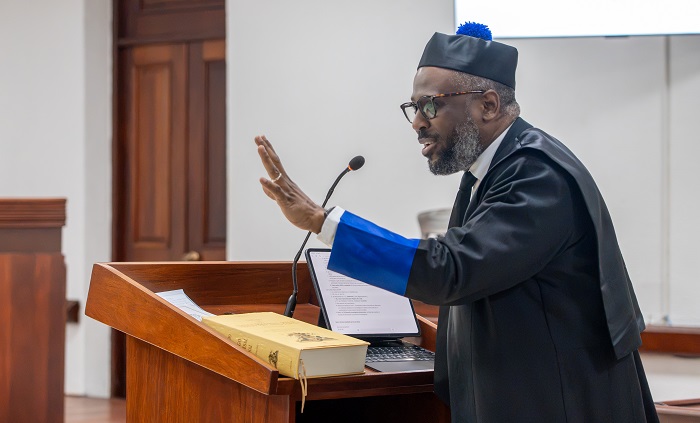
During the meeting, in which representatives of the motorcycle taxi sector, municipal authorities, and members of civil society participated, Deputy Tobías Crespo asserted that the main problem does not lie in the current legislation, but in the poor enforcement of Law 63-17 on Mobility, Land Transport, Traffic, and Road Safety.
The legislator maintained that, nearly nine years after its enactment, the regulation does not even reach between 10% and 15% effective implementation, which has prevented progress on fundamental aspects for the regulation of land transport.

Crespo proposed that local governments should take a more active role in the organization and registration of motorcycle taxi stands, as well as those involved in motorcycle transport, courier services, and delivery. Likewise, he advocated for identifying the coverage areas of these services and ensuring compliance with the safety measures established by law.
We recommend reading: Deputies call for stricter consequences for violence involving motorcyclists
Among these provisions, he cited the requirement that the license plate number must appear on the driver’s vest, the use of retroreflective vests, as well as the use of protective helmets for both the driver and the passenger.
“The country is in permanent fear. There is a lack of order and a lack of authority on public roads”, expressed Crespo, while warning about the high incidence of motorcycles in road accident statistics.
The deputy stated that these types of vehicles are involved in around 70% of traffic accident deaths and injuries, a situation he described as a “pandemic” and a “national tragedy.”

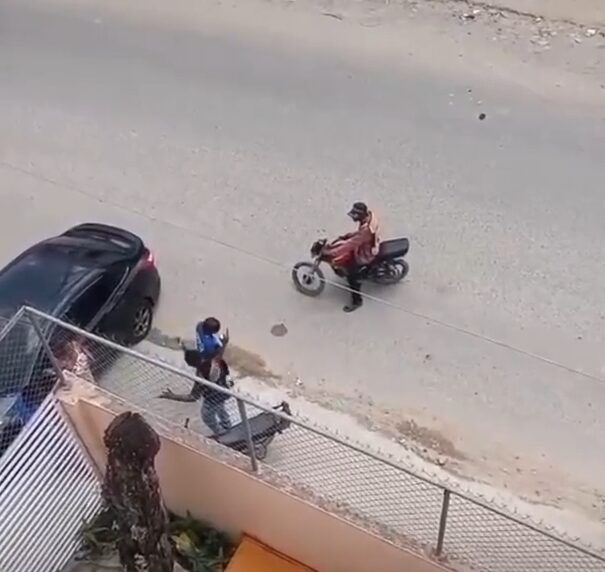
During the meeting, the increase in motorcycle taxi stands operating irregularly, by both Dominican citizens and foreigners, outside of established regulations, was also denounced. Participants pointed out that many of these informal operations are allegedly associated with the rise in accidents and criminal acts.
For his part, Jefry Jiménez, a representative of civil society, expressed concern over the failure to comply with legal provisions that assign city councils a fundamental role in the organization and supervision of traffic within their jurisdictions. He pointed out that both Law 176-07 and Law 63-17 provide for coordination between mayoralties and transport authorities for the registration and control of motorcycle taxi drivers, a process that, he stated, has not been implemented effectively.
Likewise, he questioned the lack of information regarding regularization programs and subsidies aimed at the motorcycle taxi sector. He indicated that, although the National Institute of Transit and Land Transportation (Intrant) reports tens of thousands of motorcyclists regularized in recent years and the delivery of economic incentives to workers in the sector, municipal authorities do not have updated records that allow for verifying the scope of those measures.
“We are the antithesis of progress in road matters, having one of the most modern traffic and mobility laws in all of America, but it is not being applied,” stated Jefry Jiménez, representative of civil society.
Likewise, the president of the commission, Bray Vargas, recalled that Law 63-17 clearly establishes the obligations that motorcycles and their drivers must fulfill, but he considered that the partial application of the regulations by the authorities has contributed to the uncontrolled growth of this means of transport.
The members of the technical committee agreed that, before proposing modifications to the current legislation, it is necessary to guarantee its compliance in order to strengthen road safety, improve the control of motorcycle transport, and restore order on public roads.