
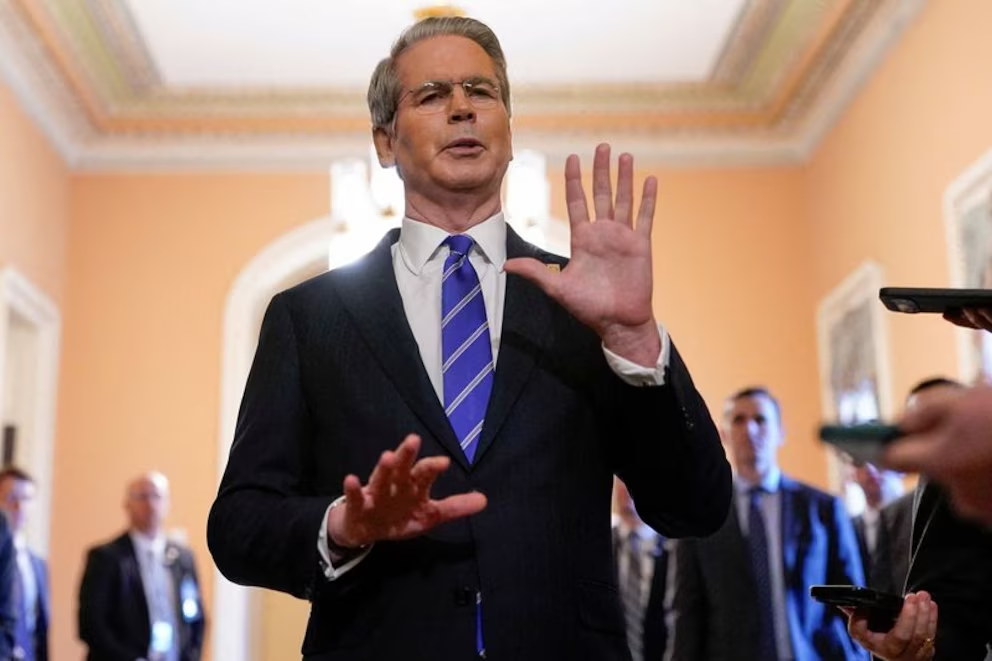
The U.S. Treasury Department announced this Wednesday sanctions against 22 companies considered “fronts” and based in Hong Kong, United Arab Emirates (UAE), and Turkey for facilitating the sale of Iranian oil through a “parallel banking system”. According to the statement released by Washington, these entities would be participating in financial operations to benefit the Islamic Revolutionary Guard Corps-Quds Force, the intelligence and unconventional operations branch of Iran’s Revolutionary Guard. The US administration maintains that the Quds Force uses companies located outside of Iran to operate foreign bank accounts and transfer hundreds of millions of dollars generated from the sale of crude oil. The objective of these operations would be to evade the sanctions imposed and channel funds back to the Iranian organization. Washington keeps the Revolutionary Guard on its list of Foreign Terrorist Organizations (FTO). The Treasury Secretary, Scott Bessent, wrote in a message on the social network X that “the Iranian regime relies heavily on its parallel banking system to finance its destabilizing nuclear weapons and ballistic missile programs, which threaten the United States and our allies in the region.” Bessent also highlighted the priority of the US Treasury to dismantle the network of companies and accounts that provides economic support to the Iranian military structure. This decision represents the second round of sanctions focused on financial infrastructures that facilitate the commercialization of Iranian oil, since the President of the United States, Donald Trump, signed in February a memorandum to reinforce the “maximum pressure” campaign on Iran. The Treasury Department specified that the refineries that acquire Iranian crude make payments to these shell companies, which subsequently distribute the funds using other accounts controlled by the Quds Force. Tehran, according to the statement, would be using these funds to boost its armament programs and support its allies and agents in the Middle East. Bessent emphasized that the clandestine financial infrastructure allows Iran to expand its nuclear and ballistic capabilities, to the detriment of the well-being of the Iranian people. As an immediate result of these sanctions, the assets and property of the designated entities that are under U.S. jurisdiction or in the possession of U.S. citizens are blocked. In addition, U.S. citizens and entities are prohibited from engaging in transactions involving these assets, except for certain exceptions authorized by the Office of Foreign Assets Control (OFAC). This announcement coincides with the expectation of possible dialogues between Washington and Tehran that could be held in the coming days in Oslo, Norway.
“We have conversations scheduled with Iran. They want to talk. I think they got a beating when we attacked the three sites,” Trump declared to the press at the start of a dinner with Israeli Prime Minister Benjamin Netanyahu at the White House, referring to the U.S. bombing of nuclear facilities in the Islamic Republic last month.