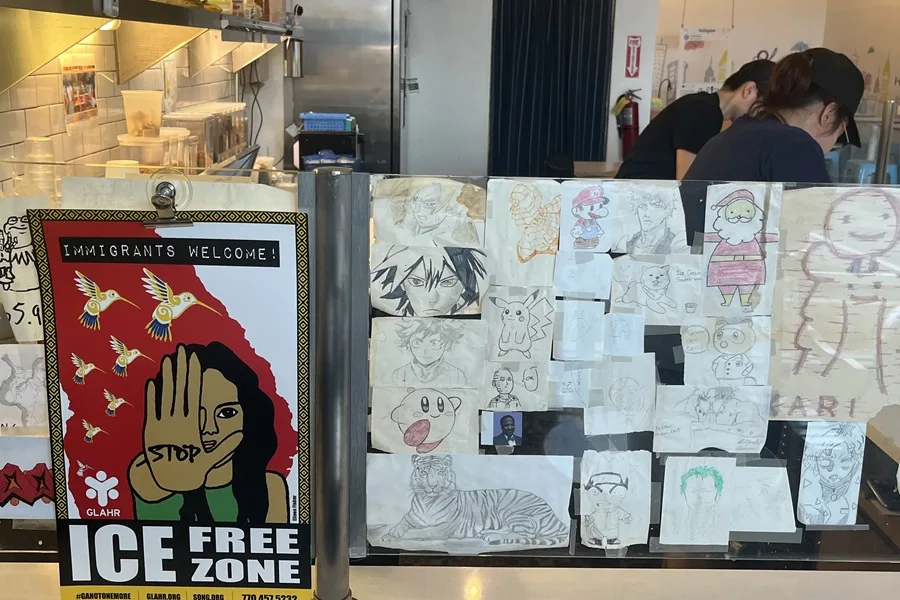
Atlanta, USA – The fear of raids has impacted the daily lives of Latino immigrants in Buford Highway, the heart of the Hispanic community in the Atlanta metropolitan area (Georgia), which is already seeing reduced commerce and community gatherings due to the anxiety that keeps immigrants locked in their homes.
As has happened in other Latino neighborhoods in the country, in this multicultural corridor – which begins in Atlanta and runs through the cities of Brookhaven, Chamblee, Doraville and Norcross, to the town of Buford – many of its residents feel besieged by federal agents who frequently carry out immigration operations in the area.
Fear is evident, palpable. Fewer people are seen walking the streets, shopping in stores, eating in restaurants, or simply enjoying some community event, than in previous years, which attracted hundreds of the more than 50,000 residents of the area popularly known as ‘La Buford’ and which also houses an Asian community.
«We are very afraid, we hardly leave the house anymore», expressed to EFE a Peruvian mother who was carrying several bags with groceries from the supermarket and who was accompanied by her three little daughters, one of whom was carrying on her back in a lliclla, a colorful traditional blanket from the Andean areas.
Impact on Commerce
In a store filled with piñatas hanging from the ceiling and stocked with various Mexican sweets, in a shopping center located in Brookhaven, one of the shop assistants shared the same concern: “There are fewer people because there is fear and yes, this immigration situation is impacting us all,” said the woman curtly, who preferred not to continue talking about the subject.
“Traffic has definitely decreased,” said the owner of a tailor shop in the Doraville area, specifying that he now closes earlier on Saturdays due to lack of customers.
All the interviewees spoke to EFE on condition of anonymity, as they were visibly uncomfortable commenting on this new reality that the community has been experiencing since President Donald Trump launched his offensive against undocumented immigrants.
Although figures on how this situation has affected trade in the area – which has more than 1,000 small businesses, mostly owned by immigrants – have not been published, some entrepreneurs estimate that sales have decreased by almost 50% since the operations began and some have even been forced to lay off some employees.
There is no evil that lasts a hundred years
Despite the fear that grips many, there is also a feeling that life must go on and that, as the popular saying goes, “there is no evil that lasts a hundred years”.
“Yes, there is fear in the community, but what are we going to do,” asked a Mexican citizen who claims to have witnessed one of the operations that hooded agents of the Immigration and Customs Enforcement Service (ICE, in English) recently carried out in the ‘La Buford’ area.
“We have to keep living. And if they want to deport us, then let them deport us. This can’t last forever,” he expressed.
Immigrant Community
In that same vein, community leaders from the area have spoken out, such as Lily Pabian, executive director of We Love Buford Highway, a non-profit organization that seeks to preserve the multicultural identity of this corridor that extends for more than 48 kilometers through Fulton, DeKalb, and Gwinnett counties.
“We feel sad. We feel anxiety, but in the end, this community, and in particular our immigrants, are resilient and strive to the utmost to move forward, because what else are we going to do? We are going to continue maintaining our business, protecting our family and educating our children,” Pabian told EFE.
Pabian assures that the immigrant community of Buford Highway is characterized by not giving up, because it is not the first time it has gone through difficult times and recalled the time of the covid-19 epidemic, which strongly hit this area located in the northeast of the metropolitan area of Atlanta.
“It’s one of those moments when you have to draw strength from all the difficulties your family members have gone through and say: ‘Hey, you know this is bad.’ We’ve seen worse and we can overcome this,” said the community leader.