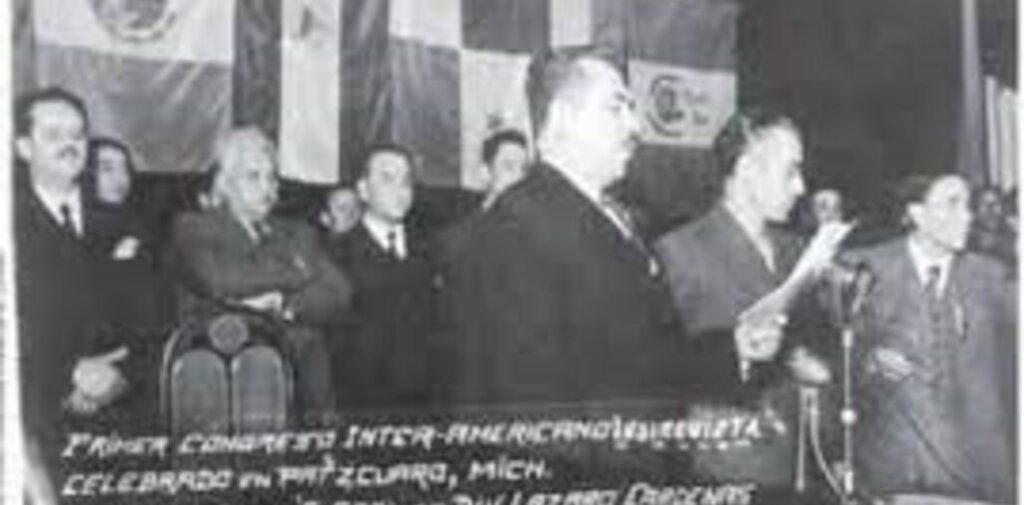
Every April 19th is celebrated as Indigenous American Day, a date established to highlight the rights, culture, and historical struggles of the indigenous peoples of the continent. This commemoration originated in 1940, during the First Inter-American Indigenous Congress, held in Pátzcuaro, Michoacán (Mexico), at the initiative of the then Mexican president Lázaro Cárdenas, who came from an indigenous family with limited resources and was a staunch defender of social causes.
The Congress, attended by delegations from the Pan American Union, anthropologists, diplomats, and some indigenous representatives, analyzed the situation of the native peoples in America. As a result of this event, April 19 was officially established as the Day of the American Aboriginal and the Inter-American Indigenous Institute was created, based in Mexico and later dependent on the Organization of American States (OAS).
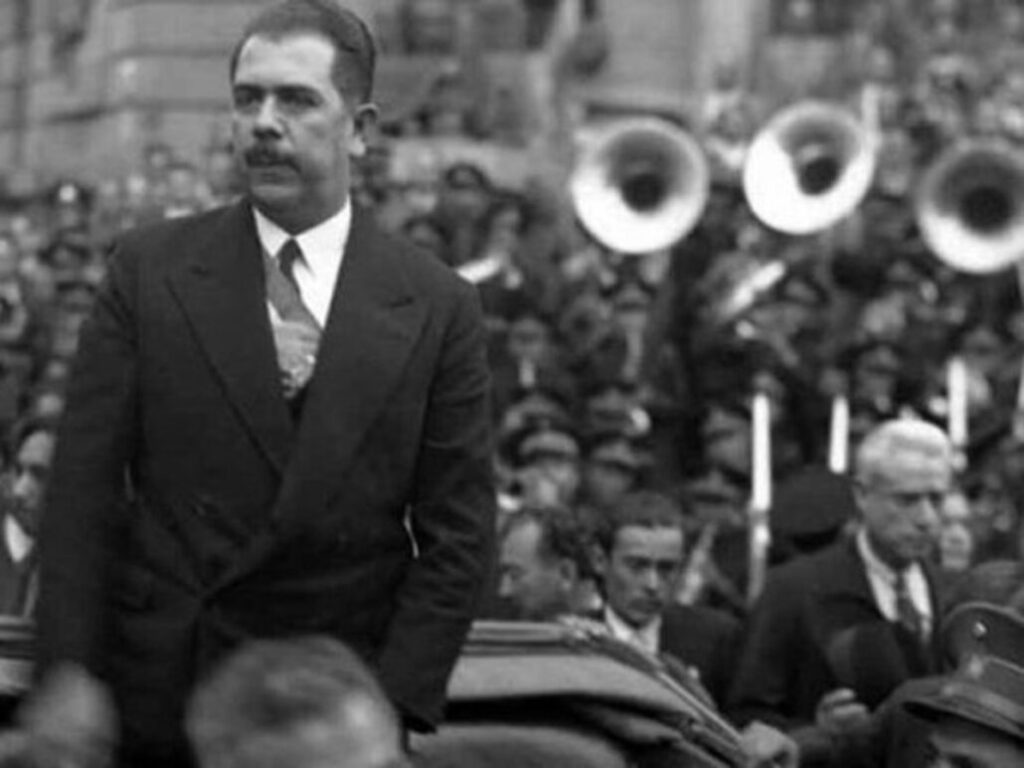
Lázaro Cárdenas, presidente mexicano hijo de aborígenes.
According to the Royal Spanish Academy, *aborigen* is that original inhabitant of a place, as opposed to those who arrived later. In this context, the term refers to the communities that inhabited the American continent before the arrival of European colonizers, and their descendants.
The Inter-American Indigenous Institute functioned as a breeding ground for ideas in favor of indigenism, many of them reflected in the publication América Indígena. During its active years, it addressed issues such as discrimination, intercultural education, and land ownership. Among its most relevant efforts is the promotion of five-year plans and the intention to establish a Permanent Forum of Indigenous Peoples of the Americas. The Institute was finally dissolved in 2009, being partially absorbed by the National Autonomous University of Mexico (UNAM).
Different countries recognized this date over the years. In Brazil, it has been celebrated as Dia do Índio since 1943, by decree of President Getúlio Vargas. In Argentina, the recognition was formalized in 1945, and in 1994 article 75, section 17, was integrated into the National Constitution, which recognizes the ethnic and cultural pre-existence of the original peoples, their right to bilingual and intercultural education, to the possession and community ownership of their lands, and to participate in the management of natural resources. Costa Rica, for its part, adopted the commemoration by decree n.º 1803-C of June 14, 1971.
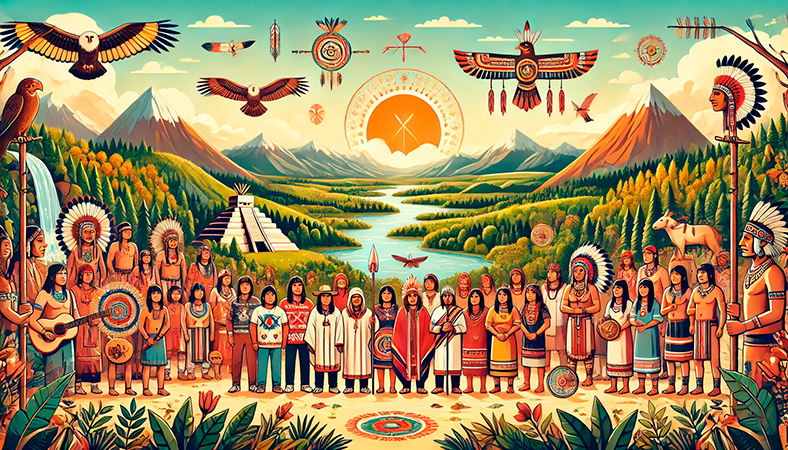
19 de abril: Día del Aborigen Americano, una jornada para reconocer, reflexionar y reivindicar
In figures, the indigenous population represents a significant percentage in several countries: more than 80% in Guatemala, 70% in Ecuador, more than 50% in Peru, and approximately 30% in Mexico. In Argentina, nearly three million people are part of 34 indigenous peoples recognized in the National Registry of Indigenous Communities (ReNaCI), including the Mapuche, Qom, Guaraníes, Diaguitas, Wichí, among many others.
Despite legal and educational advances, such as the Intercultural Bilingual Education Program launched in 2004 in Argentina, indigenous communities continue to face marginalization, structural poverty, and territorial conflicts. The date of April 19th remains in force not only as an anniversary, but as a call to continental awareness about the historical debt to the original peoples.