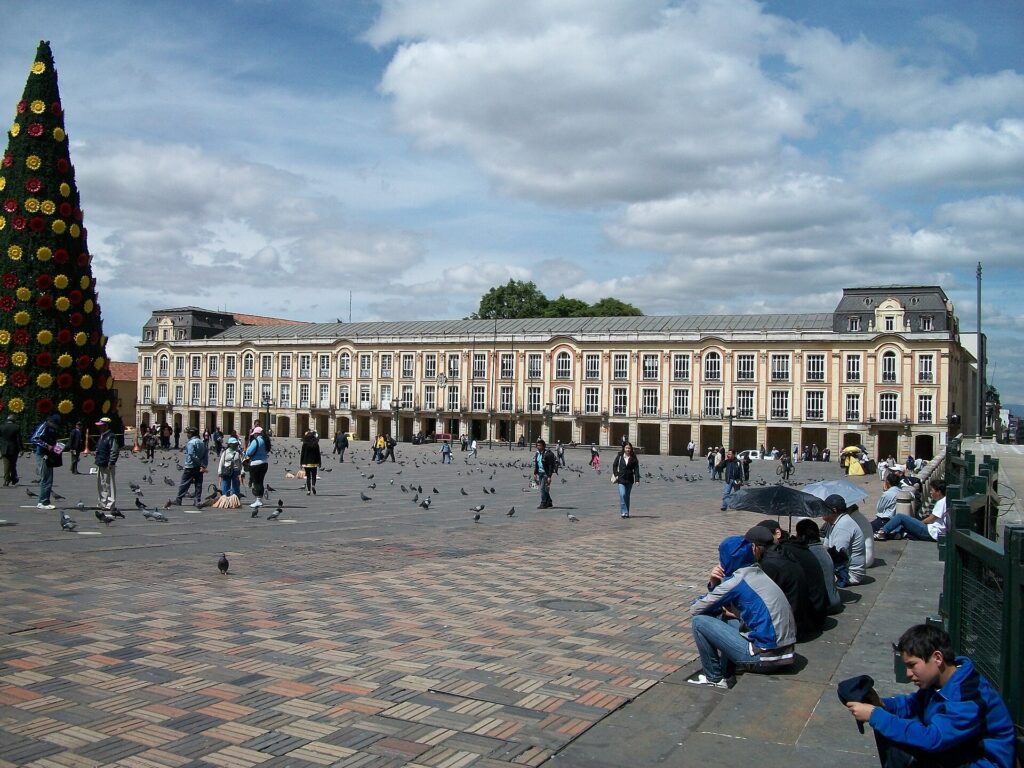
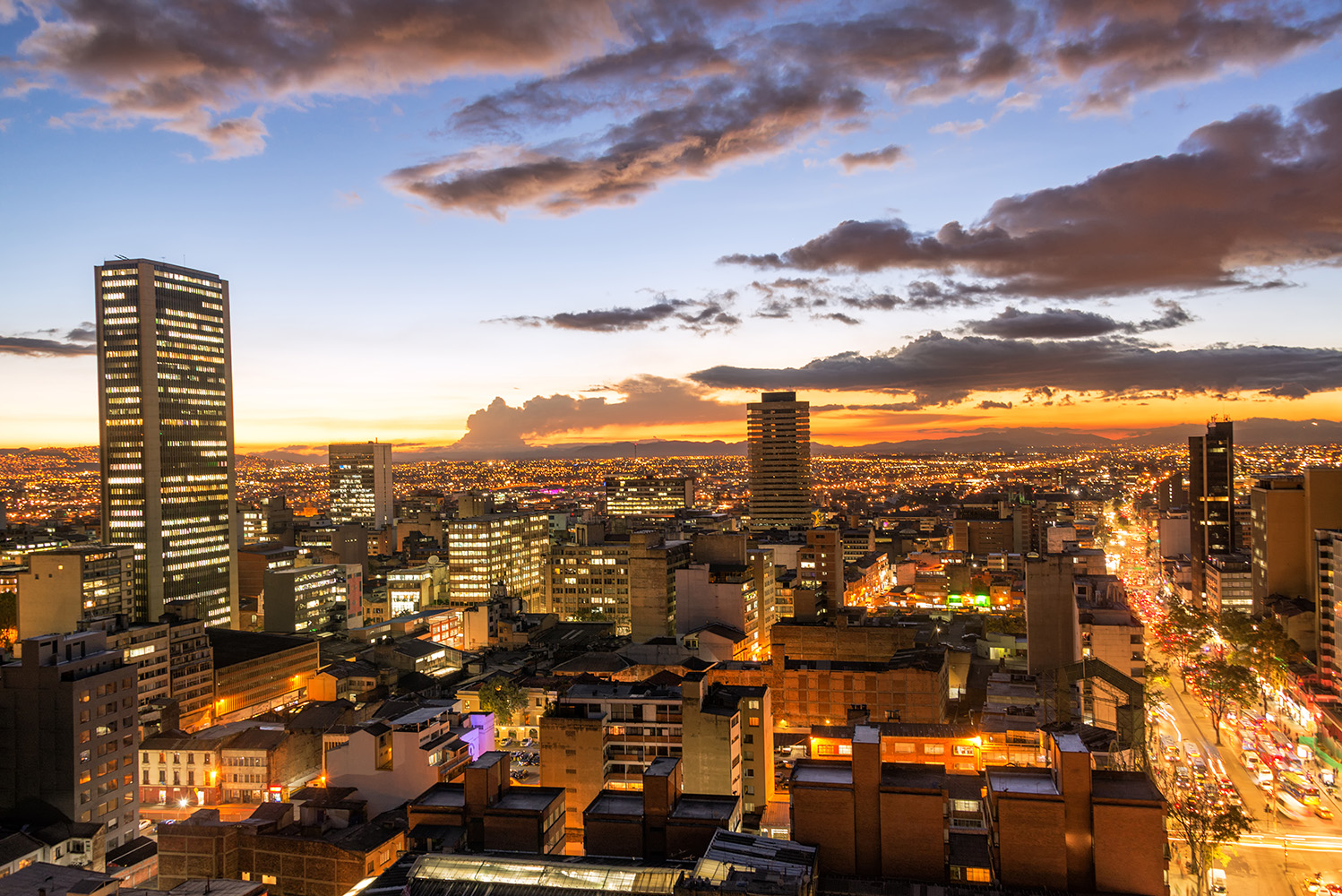
Bogotá, officially Bogotá, Distrito Capital, is the capital of the Republic of Colombia and of the department of Cundinamarca. Administered as a capital district, it has autonomy for the management of its interests and is made up of 20 districts. It is the main political, economic, administrative, industrial, artistic, cultural, sports and tourism center of the country.
Tourism and history of Bogotá: complete guide to the Colombian capital
Bogotá is located in the center of Colombia, on the homonymous savanna, in the Cundiboyacense altiplano, at an average altitude of 2,630 meters above sea level. It has an extension of 1,636 km² and an urban area of 378 km². It borders municipalities of Cundinamarca and the departments of Huila and Meta.History
The territory of Bogotá shows evidence of human occupation for more than 11,000 years. In pre-Hispanic times, the region was inhabited by the Muisca, who developed a complex social organization and agricultural activities. On August 6, 1538, Gonzalo Jiménez de Quesada founded the city as the capital of the New Kingdom of Granada. During the viceregal period, Bogotá was the seat of the Audiencia and, from 1717, the capital of the Viceroyalty of New Granada. In the 19th century, the city was the epicenter of the independence movements and, after independence, it was consolidated as the capital of the Republic of Colombia.Political-Administrative Organization
Bogotá is a first-order territorial entity, with administrative attributions similar to those of the departments. It is divided into 20 localities, each with its own local mayor and Local Administrative Board (JAL). The Capital District has bodies such as the Mayor’s Office, the Bogotá Council, the Ombudsman’s Office and the District Comptroller’s Office. The city is home to the main bodies of the executive, legislative and judicial branches of the country.Administrative division
The 20 districts of Bogotá group more than 1,900 neighborhoods. Each district has a JAL, whose members are elected by popular vote. The districts are subdivided into Local Planning Units (UPL). The city uses a nomenclature system based on streets, avenues, cross streets and diagonals.
Geography and climate
Bogotá is located in the Bogotá savanna, surrounded by the eastern hills, where Monserrate and Guadalupe stand out. The Bogotá River is the main tributary, accompanied by other rivers and wetlands. The climate is temperate mountain, with temperatures between 5 and 19 °C and an annual average of 13.7 °C. The city experiences two rainy seasons and two dry seasons a year.Population and Ethnography
Bogotá has a population of over 7.5 million inhabitants. According to the census, 42.7% are mestizo, 36.5% white, 1.5% Afro-descendant, 0.5% indigenous, and 18.9% from other groups. The city has received internal and foreign migrants, mainly from Venezuela, the United States, Ecuador, Spain, and Argentina.Economy
Bogotá is the main economic center of Colombia, with the highest nominal and per capita GDP in the country. It is the main destination for foreign direct investment and concentrates 21% of the companies registered in Colombia. The service, industry, commerce, and construction sectors are the most relevant. El Dorado Airport is the main cargo airport in Latin America and the second in passengers.Transportation
The city has the TransMilenio system, TransMiCable, a network of bike paths of 532 km, and intercity transportation terminals. The first line of the Bogotá Metro and the RegioTram project are under construction. El Dorado airport connects the city with national and international destinations.Education and health
Bogotá is home to 104 higher education institutions, including the National University of Colombia, the University of the Andes, and the Pontifical Xavierian University. The city has a network of hospitals and health centers distributed across three levels of care.Culture
Bogotá is recognized for its cultural offerings, with around 90 museums, 70 art galleries, and numerous festivals. Highlights include the Gold Museum, the National Museum, the Botero Museum, and the International Book Fair. The city was designated World Book Capital by UNESCO in 2007 and Creative City of Music in 2012.Sport
Football is the most practiced sport, with teams like Millonarios and Santa Fe. The city has venues such as El Campín Stadium, Simón Bolívar Park, and El Salitre Coliseum. Events such as the Bogotá Half Marathon and the WTA tennis tournament are held.Tourism