Bogota.– One week after the 7.4 magnitude earthquake that shook Colombia, emergency efforts are entering a new phase, with rescue teams focused on recovering the bodies of victims remaining under the rubble while authorities begin to prepare for the reconstruction of the devastated areas.
The latest report from the National Unit for Disaster Risk Management (UNGRD) puts the death toll this Sunday at 289, five fewer than on Saturday; in addition to 4,187 injured and 143 missing, while 354 people have been rescued.
The UNGRD justifies the lower number of deaths by the fact that “initial reports, mostly verbal, are being cross-checked with official records from the Prosecutor’s Office, Legal Medicine, and relief agencies to avoid duplicates.”
The earthquake also leaves 127,557 homes damaged, 26,945 destroyed, and 66 buildings collapsed, with 450 municipalities affected across 15 departments.
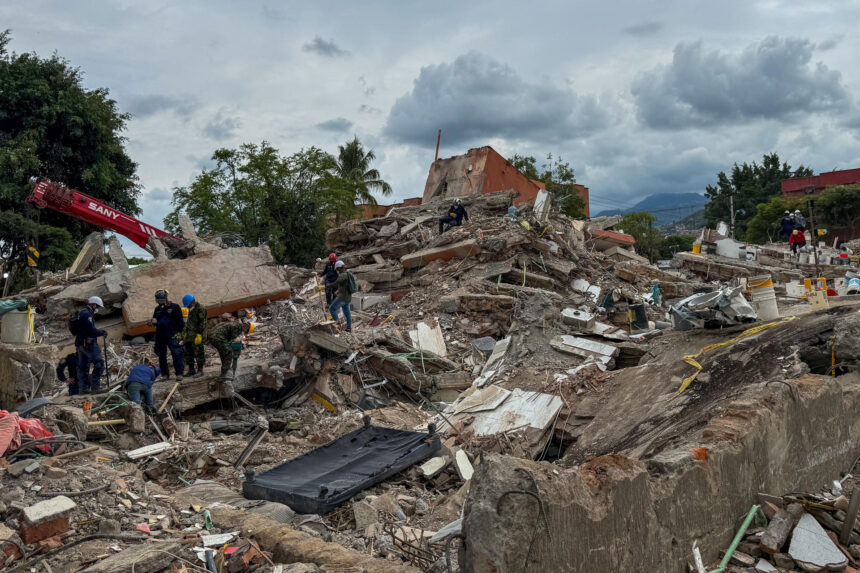
In Cali, one of the cities most affected, emergency teams are already working on the recovery of the victims located under the rubble.
More Read

In the Torres del Limonar residential complex, 25 bodies have been recovered and three others remain located, whose extraction is scheduled for this Sunday.
Firefighters from Cali, Bogotá, and Jamundí, rescue groups from the Navy and Police, and specialists from the Israel Defense Forces are working together in different parts of the city.
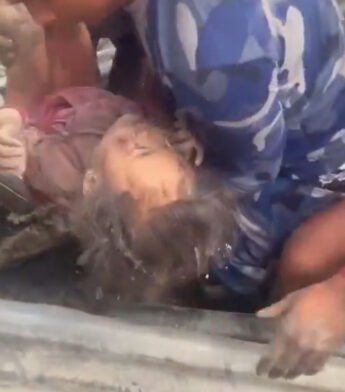
Israeli teams recovered four bodies in the last 24 hours and warned that the window of hope for finding survivors is closing, after several days without any live rescues.
More Read

After more than 140 hours of operations, the authorities in Cali consider that the emergency is progressively entering a stage of recovery of fatalities and debris removal, although engineering work and evaluation of collapsed buildings continue.
The mayor of Cali, Alejandro Eder, estimated that the city will need 10 trillion pesos (about 3.2 billion dollars) and three years to stabilize and undertake a resilient reconstruction, and proposed creating an exceptional financing mechanism similar to the one used after the 1999 earthquake, which devastated Armenia and other cities in the coffee-growing region of the center of the country.

Rural areas ask for help
While large cities move towards recovery, farmers from rural areas of Ansermanuevo and El Cairo, in Valle del Cauca, reported to EFE that they are still waiting for the authorities to arrive to assess their homes, some of which are practically destroyed.
Some families have placed flags with ‘Help, SOS’ messages in front of their homes and are demanding materials to rebuild roofs, while the acting mayor of El Cairo, Carlos Alberto Correa, acknowledges that the census of rural areas has not yet been completed because attention has been concentrated on the urban area.
In Cali, the Alberto Galindo Citadel, where the Petronio Álvarez Pacific Music Festival was supposed to be held this weekend, became a collection center with more than 1,200 volunteers.
New initiatives have also arrived from the world of sports, such as that of former soccer player Mario Yepes, who announced the ‘Let’s Lift Colombia’ solidarity match for next Friday at the El Campín stadium in Bogotá, in which national soccer legends will participate, although it has not yet been reported who they will be.
The business sector has also continued to mobilize: the Gilinski family, the richest in the country, announced a donation of 150 billion pesos (about 48 million dollars) to repair hospitals and schools in Cali.
This donation is in addition to that of other Colombian businessmen who on Friday announced more than 200 billion pesos (about 64 million dollars) to address the consequences of the tragedy.
A week after the earthquake, authorities are shifting from the search for survivors to the recovery of bodies, debris removal, and the assessment of material damage, while the needs of thousands of families who have lost their homes or livelihoods persist.
The magnitude of the task is beginning to become more visible in places like Cali, where more than 18,000 tons of debris have already been removed, according to the Mayor’s Office, but also in rural municipalities where aid has not yet arrived sufficiently.
The emergency thus enters a new stage, marked by mourning and recovery, but also by the challenge of rebuilding the hardest-hit areas of the country.