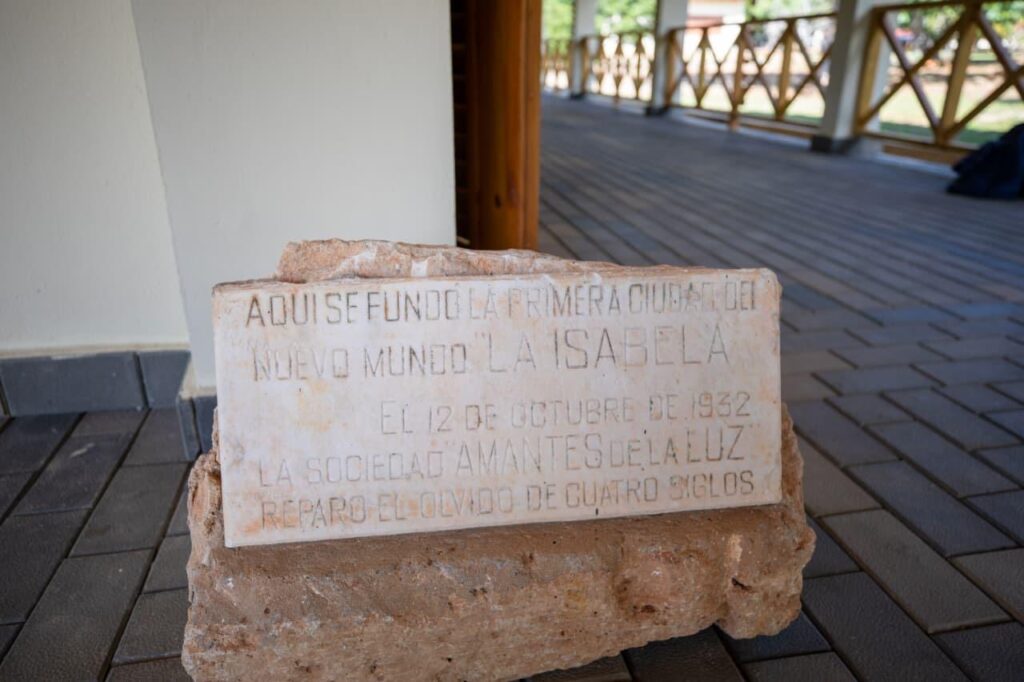
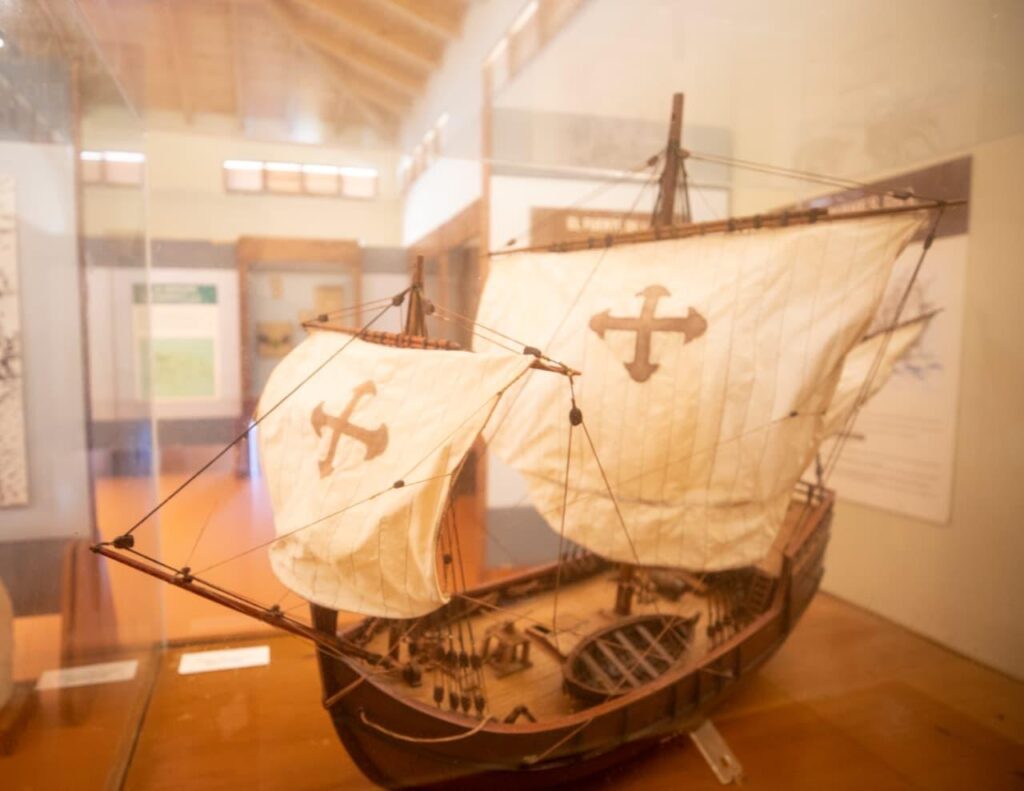
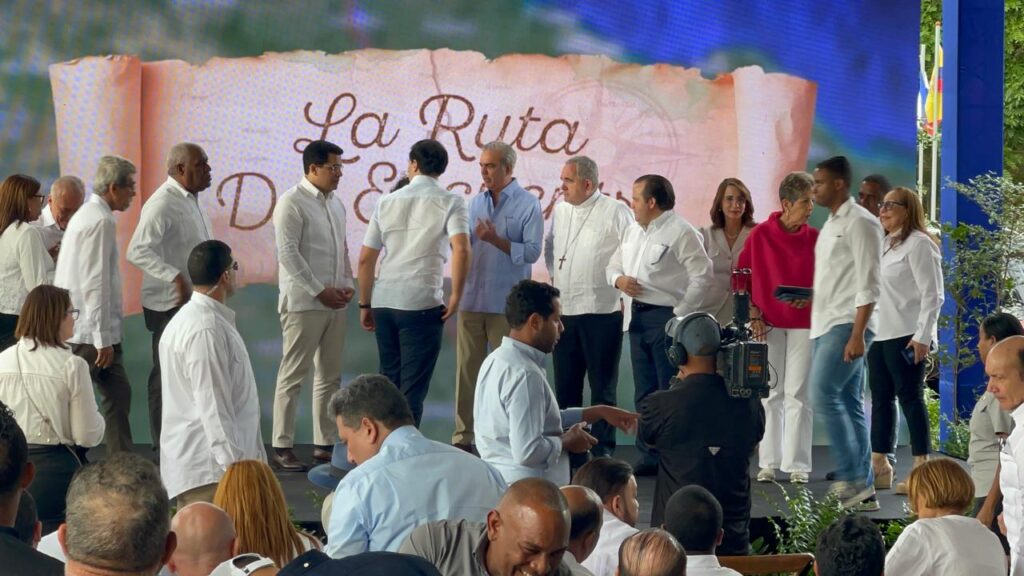
Puerto Plata.-To the rhythm of typical music and from the La Isabela Historical Park, President Luis Abinader presented this Sunday the Route of the Encounter of Two Civilizations, an ambitious cultural tourism initiative that seeks to rescue the original route of the 15th century and project the Dominican Republic as a world-class historical-cultural destination.
The project contemplates a route of approximately 450 kilometers, which will connect Puerto Plata with Santo Domingo, integrating archaeological ruins, colonial fortresses, historical trails and natural landscapes, under international criteria of preservation, sustainability and community participation.
The Route will be divided into three major sections: the first begins at the La Isabela Historical Park, the first European settlement in America; the second covers the Jánico–Cotuí axis; and the third culminates in the National District, consolidating a cultural itinerary of national and international scope.
During the event, the president highlighted that the initiative represents a strategic commitment by the State to diversify the tourism offer, strengthen national identity, and generate jobs and investments in the communities linked to the route.
“This project allows us to protect our history, strengthen our identity and turn our heritage into a real source of development, integrating it into a modern and sustainable vision of tourism,” expressed Abinader.
The president explained that the Ruta del Encuentro (Meeting Route) is inspired by international experiences such as the Camino de Santiago, by combining historical, cultural, religious, and tourist values, responding to a growing demand from visitors seeking experiences beyond sun and beach tourism.
In the first phase, the Government will prioritize Section A, which connects La Isabela with Jánico, incorporating foundational landmarks such as Paso de los Hidalgos and the Fortress of Santo Tomás. Subsequently, the sections Jánico–Cotuí and Cotuí–Santo Domingo will be developed.
Abinader specified that it is not a conventional road, but a route adapted to the environment, with safe and signposted paths for walking, promoting community tourism through hostels, local services and an active participation of the town halls.
He also reported that a Project Executing Unit was created by decree, with the support of the Government of Spain, the Dominican Academy of History, local governments, and the tourism sector, to ensure historical rigor and efficiency in execution.
The Minister of Culture, Roberto Ángel Salcedo, stated that the Ruta del Encuentro is the result of years of research, conservation, and valorization of the national heritage, and responds to a vision of development based on cultural tourism.
“Every year the number of visitors to the country increases and tourists seek authentic experiences. This project consolidates that cultural base that complements our beaches and landscapes, and reaffirms that the New World began here,” said the official.
For his part, the Minister of the Presidency, José Ignacio Paliza, highlighted the symbolic and spiritual character of the journey, which crosses more than six municipalities, connects landscapes of the Cibao and the Central Mountain Range, and integrates more than 60 historical milestones identified along the route.
“This is a similar effort, with its differences, to the Camino de Santiago: a journey loaded with history, spirituality and nature, which will allow to energize local economies and articulate public and private capacities,” Paliza pointed out.
The Director of Cultural Heritage, Juan Múbarak, indicated that archaeological and technical investigations continue in La Isabela and other points along the route, with specialized missions to validate key vestiges such as the Paso de los Hidalgos, reinforcing the historical and academic impact of the project.
In the act, President Abinader was accompanied by ministers José Ignacio Paliza, Roberto Ángel Salcedo, David Collado and Paíno Henríquez, as well as legislative, municipal, cultural and tourism authorities, who highlighted that the Ruta del Encuentro (Meeting Route) positions the Dominican Republic as a cultural reference in the Caribbean and Latin America.