La Paz.- The state-owned National Institute of Statistics (INE) reported this Tuesday that Bolivia closed 2025 with an accumulated inflation of 20.40%, above the annual target of 7.5% projected by the Government of former President Luis Arce (2020-2025).
Last December, the percentage variation of the consumer price index (CPI) reached 0.59% compared to November, due to the increase in prices of products such as public transport in different modalities, gasoline and bread, among others mentioned in the INE report.
On the other hand, the costs of chicken, tomatoes, carrots, televisions, bananas, and eggs decreased, the report indicates.
In 2024, Bolivia closed with an accumulated inflation of 9.97%.
The Ministry of Development Planning and Environment mentioned in a press release that December’s inflation “shows price stability in the market”.
According to that entity, on which the INE depends, of the 397 products and services that are quoted monthly in this index, 189 reduced their price, 175 increased in price and 33 maintained their costs.
The ministry defended that “in two months of management by the Government of President Rodrigo Paz”, who took office on November 8th, “prices were stabilized and inflation began to fall”.
The Peace Government’s projection is that in the coming months the index will be even lower, and among some of the factors contributing to these results is the stabilization of the exchange rate, the institution added.
The Peace Government Measures
The annual inflation of 2025 is the highest reported so far in the 21st century, as the highest that had been recorded until now was 11.85% in 2008. It is also the highest since 1988, when it reached 21.47%.
In the early 1980s, Bolivia experienced a period of economic crisis, with a currency collapse and hyperinflation that reached five figures in 1984 and 1985.
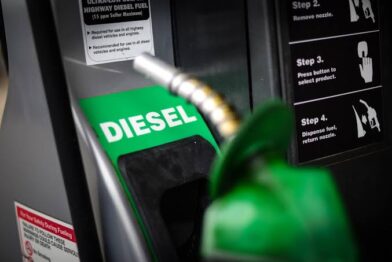
On December 17th, the Peace Government decreed the “economic, financial, energy, and social emergency” in Bolivia due to a crisis that worsened in the last two years due to the lack of dollars, fuel, and high inflation, and among other provisions, removed the subsidy on the main fuels.
Decree 5503 established prices of 6.96 Bolivianos (one dollar) per liter of special gasoline, 11 Bolivianos (1.58 dollars) for premium gasoline and 9.80 Bolivianos (1.40 dollars) for diesel, among others, which represents increases of 86% and 162% compared to the subsidized costs of these fuels.
The law is resisted by unions and sectors that were political allies of the leftist governments of former President Evo Morales (2006-2019) and Luis Arce, such as the Bolivian Workers’ Union (COB) and the peasants of the regions of La Paz and Cochabamba.