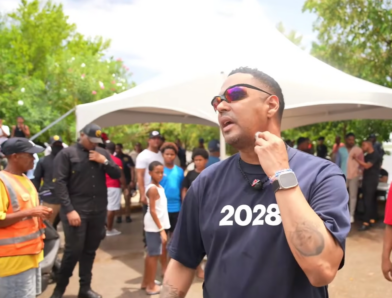
Santo Domingo. — A complaint with civil action was filed against Ángel Ramón De Jesús Martínez Jiménez (known as “Detective Ángel”), as well as other users. The action was presented before the District Attorney’s Office of the National District by Milagros Marina De Camps Germán, lawyer and former vice minister of the Ministry of Environment, within the framework of a set of legal actions initiated on January 24, 2025.
The complaint, filed by lawyers Amauris Vásquez Disla, Diana De Camps Contreras, Paul Concepción, Mariela Santos Jiménez and Félix M. Santana Reyes accuses the defendants of committing the crimes of defamation and aggravated insult, established in articles 367 et seq. of the Penal Code, as well as in Law 61-32 on Freedom of Expression and Thought and Law 53-07 on High Technology Crimes and Offenses.

Systematic Defamation and Viralization
The accusation is based on a series of publications and videos disseminated on social media that violate the right to human dignity and integrity. According to the complaint, the narrative was amplified with mocking language, manipulated images, and claims unrelated to the truth, in what the plaintiff describes as a systematic and viral defamation campaign. The lawsuit includes a request for compensation amounting to RD$10,000,000.00, to be allocated to the protection and conservation of the National System of Protected Areas (SINAP).
Digital Crime at the Center of Debate
The lawsuit highlights how social media, far from being “lawless territories”, must respond to the current legal framework. Citing precedents from the Dominican Constitutional Court and comparative jurisprudence, the lawyers argue that the expressions made are not protected by the right to freedom of expression, as they are false, outrageous, and offensive imputations.
“This case represents a clear example of the malicious use of freedom of expression, where thought is not the driving force behind the statements, but rather hatred, manipulation, and discredit,” states the introductory text.
A Lawsuit Amid a National Debate
The discussion has ignited a necessary dialogue about the balance between the right to express oneself and the duty to respect the dignity of others, especially in the age of social media, where an unfounded statement can replicate exponentially in a matter of minutes.
In the words of the plaintiff’s lawyers: “Social media cannot become trenches of impunity. This case is not just about one person, but about the ethical and legal limit that Dominican society must reaffirm.”
The case will be heard before the courts of the National District. It is expected that in the coming weeks the Public Prosecutor’s Office will proceed with the investigative proceedings, including the possible request for coercive measures against the accused.