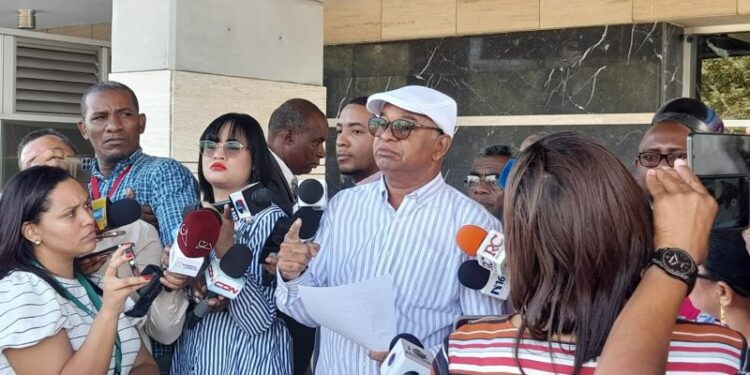
Santo Domingo.- Social researcher Víctor Scharboy Almánzar filed a lawsuit for patrimonial liability against the Attorney General’s Office of the Republic (
PGR) and several prosecutors from Santo Domingo East, after having been in pre-trial detention for more than eight months for an accusation that was finally dismissed.
The legal action was filed before the Superior Administrative Court (TSA), arguing material and moral damages derived from a process that Scharboy considers arbitrary, illegal, and lacking objectivity. The lawsuit also includes the Attorney General of the Republic and the prosecutors César Payano, Carlos Casado, Florentino Sánchez Zabala, María Sánchez, and Felipe Cuevas.
Scharboy was arrested in September 2023, after being accused of gender violence by his ex-partner María Yocasta Escotto. According to his lawyers, Miguel Álvarez Hazim and Luis Lizardo Cabrera, the complaint was false and for extortionate purposes. The case was tried by the First Collegiate Court of the Judicial District of Santo Domingo, which acquitted him on June 10, 2024, due to insufficient evidence.
You can also read: Brother of journalist Scharboy was declared innocent and acquitted after accusation of gender violence | De Último Minuto
The lawyers argue that the Public Prosecutor’s Office violated multiple principles of due process, ignoring its obligation to investigate objectively before requesting a coercive measure. They denounce that the accused was never heard, nor was he allowed to present his version of the facts.
In their filing, the lawyers request that the PGR be ordered to pay RD$30 million as compensation to the plaintiff. Additionally, it is requested that each of the prosecutors involved pay RD$6 million individually.
During his detention, Scharboy was transferred through several prisons, including La Victoria, in conditions that his relatives described as undignified and publicly denounced without receiving an institutional response.
The case has reopened the debate on the excessive use of preventive detention and the need for greater rigor in preliminary investigations by the Public Prosecutor’s Office.