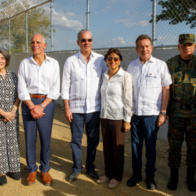
Santo Domingo. — The name of
Roberto Antonio Canaán, former User Attention Manager of the
National Health Insurance (SeNaSa), has gained public notoriety after being linked to a judicial process involving
alleged acts of administrative corruption, bribery, and illicit financing within the Dominican health system.
Profile and Career
Canaan served as an official within SeNaSa, a state entity in charge of managing the health insurance of millions of Dominicans. From his position, he was linked to the supervision of services and the attention to affiliates, as well as internal processes related to medical service providers.
During the management headed by
Santiago Hazim, Canaan also formed part of administrative structures that, according to the
Public Ministry, are under investigation for possible irregularities in the hiring of suppliers.
Research and Findings
According to the Public Ministry’s file, Canaan is a key figure in a network that allegedly operated in the awarding of contracts in the health system. The authorities maintain that:
- There was a hiring committee where decisions did not respond to technical criteria, but to higher directives.
- Certain approvals were influenced by signals or instructions from the management environment.
- Some suppliers would have been favored in exchange for undue payments to secure contracts.
In his statement, Canaan would have detailed the existence of internal mechanisms that allowed for the prioritization of “cases of interest”, as well as the alleged intervention of people close to the institutional leadership.
Financing and Money Management
Another relevant aspect of the case is the indication of an alleged irregular flow of money. According to the authorities:
- Canaan would have handled significant sums of cash linked to healthcare service providers.
- Part of those funds, amounting to millions of pesos, would have been delivered to figures linked to the administration of SeNaSa.
- The Public Ministry is investigating whether these resources were used as irregular political financing, which could constitute crimes such as influence peddling and extortion.
Bribery case against prosecutor
The file also reveals a fact that has generated special attention: Canaan would have been the person used as an intermediary in a controlled delivery of money to evidence an alleged bribe.
According to the research:
- Prosecutor Aurelio Valdez Alcántara would have initially requested large sums of money in exchange for favoring Canaan in the judicial process.
- The agreed amount was reduced until it materialized in a payment of US$10,000, delivered under the supervision of the authorities.
- The judicial official was arrested in the act of committing a crime after receiving the money, which was seized as evidence.
The Public Ministry maintains that this episode demonstrates an attempt to interfere with the course of the investigation, which aggravates the institutional dimension of the case.
Scope of the Case
Authorities are investigating an alleged fraud that would exceed billions of pesos within the healthcare system, involving former officials and actors from the private sector.
In this context:
- Canaan is not only listed as being investigated, but also as a key witness.
- His testimony is considered fundamental to reconstructing the alleged bribery and influence peddling network.
- The case has highlighted possible structural failures in both the public administration and the justice system.
Position of the Public Ministry
The
Public Ministry has reiterated that the process is part of its policy of “zero tolerance” of corruption, underlining that the investigations even reach members of the judicial system itself.
Conclusion
The case of Roberto Canaán reflects the complexity of an investigation that combines alleged acts of administrative corruption, irregular handling of funds, and an attempted bribery within the judicial system. His dual role —as defendant and key witness— makes him a central figure for the development of the process, the outcome of which could have
important implications for the country’s institutional framework.