Presidents Donald Trump and Vladimir Putin held a phone conversation this Monday for approximately one hour, the first since the end of December 2025, to address the ongoing armed conflict against Iran, the stalled negotiations on Ukraine and the situation in Venezuela within the framework of an oil market shaken by the closure of the Strait of Hormuz. The Kremlin described the exchange as “frank, constructive and professional”, while Trump described it to journalists as a “very good conversation” from his golf club in Doral, Florida.
The call took place at a time of maximum international tension. The price of Brent crude reached $120 a barrel this Monday morning, before moderating its gains to $103, accumulating a rise of over 40% since February 27, the eve of the start of the joint offensive by the United States and Israel against Iran. Trump maintained that the war would lower the price of oil in the long term and assured that the Strait of Hormuz “will remain safe”.
According to Kremlin foreign policy advisor Yuri Ushakov, Putin presented Trump with “several options aimed at a rapid political-diplomatic settlement of the Iranian conflict”, proposals that, according to the official, are the result of contacts held during the previous week with Iranian President Masoud Pezeshkian and with leaders of Gulf countries. Trump, for his part, offered his own assessment of the events in the context of the ongoing US-Israeli operation. Iran, meanwhile, ruled out this Monday any possibility of negotiation while the attacks continue: the spokesman for the Ministry of Foreign Affairs, Esmaeil Baghaei, stated that “as long as the military aggression continues, there is little room to talk about anything other than a decisive response”.
The Ukrainian issue also took center stage in the dialogue. According to Ushakov, Putin informed Trump about what is happening on the combat line, where
Russian troops are advancing in eastern Ukraine, and presented this advance as a factor that “should push the Kiev regime to finally embark on the path towards a negotiated resolution of the conflict.” Trump, visibly frustrated with the slow pace of the process, told reporters that
“there is enormous hatred” between Putin and Ukrainian President Volodymyr Zelensky and acknowledged that both “do not agree.” He added that when Putin expressed his willingness to be “useful” in Iran, he replied: “You could be more useful by ending the war between Ukraine and Russia.”
The trilateral negotiations between Washington, Moscow, and Kyiv are going through their worst moment since they began in January. A fourth round scheduled for last week was postponed due to the conflict in Iran, and the parties have not indicated when they will resume. The previous three rounds, held in Abu Dhabi and Geneva with the mediation of envoy
Steve Witkoff and
Jared Kushner, did not produce concrete progress on the central point of the dispute: the territory. Russia maintains maximalist positions while its forces continue to press on the Donbas front.
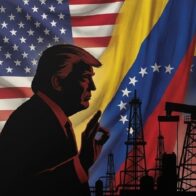
The two presidents also discussed the situation in Venezuela in the context of global oil markets, at a time when
Caracas has regained diplomatic prominence with Washington after the formal restoration of bilateral relations, announced in early March, and in which Venezuelan production acquires additional relevance in the face of the interruption of energy flows from the Persian Gulf.
The conversation represented the first contact between both leaders in more than two months and, according to Ushakov,
Trump proposed that their direct dialogues be “regular”, to which Putin showed willingness. Basically, the exchange revealed the geometry of an international order in reconfiguration.