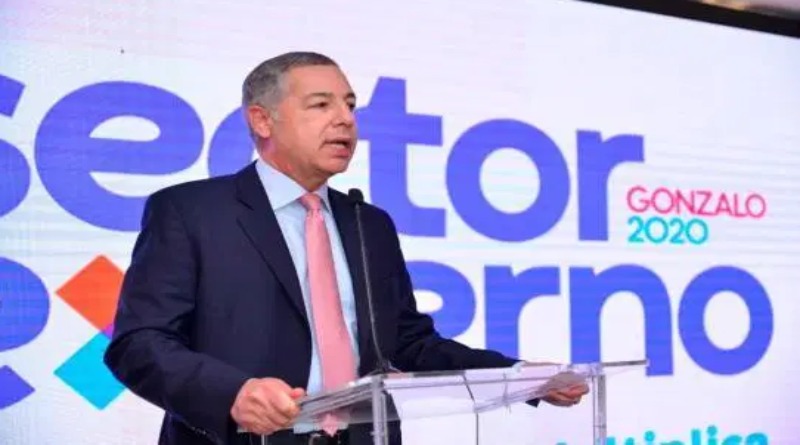
The external sectors of parties or candidates are a kind of shift in force or 4×4 that parties need to apply to add wills outside the party to the cause, especially for a party or candidate seeking re-election, since the external sector comes to compensate for the natural wear and tear of a first period and be able to achieve a 50+1 of the votes to stay in power.
“Convincing” political movements, professional guilds, unions, business and community, peasant and even religious organizations to support a candidate costs a lot of money, and is probably the reason why both the coordinator of the powerful external sector that accompanied former President Danilo Medina and that of current President Luis Abinader, have ended up charged in cases related to corruption and embezzlement of a lot of public money.
That also explains why the coordinators of external sectors end up being appointed in institutions that manage many resources when the candidate they supported comes to power.
Donald Guerrero, who served as national coordinator of the External Sector that supported former President Danilo Medina and former presidential candidate of the Dominican Liberation Party (PLD), Gonzalo Castillo, was appointed Minister of Finance after a successful career in the private financial and automotive sector.
Guerrero, who managed to gather hundreds of movements in support of Danilo Medina for the 2016 campaign, was investigated and is charged as part of a corruption scheme that embezzled more than RD$21 billion according to the Public Prosecutor’s Office’s accusation.
Santiago Hazim, a successful doctor and health entrepreneur and a close friend of President Luis Abinader, was appointed to head the National Health Insurance (SENASA), after having successfully led the External Sector “OLA Abinader” for the 2020 campaigns and the 2024 re-election.
Currently, Hazim is facing charges for having embezzled more than RD$15 billion from SENASA under his administration.
These situations, which are not exclusive to a candidate or party, but rather inherent to the current system, force us to reflect on the cost of electoral campaigns and their consequences for public administration
We are a multiplatform outlet offering news and television content. The fastest-growing news outlet in audience in the history of Caribbean communication.