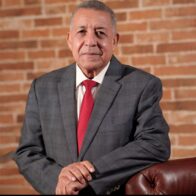
Santo Domingo.- The appointment of Ernesto Rodríguez García as the new director general of the National Police generates expectations, but also a marked dose of skepticism among citizens consulted, who believe that the change in the institution’s leadership will not be enough to reduce crime levels and improve security in the country.
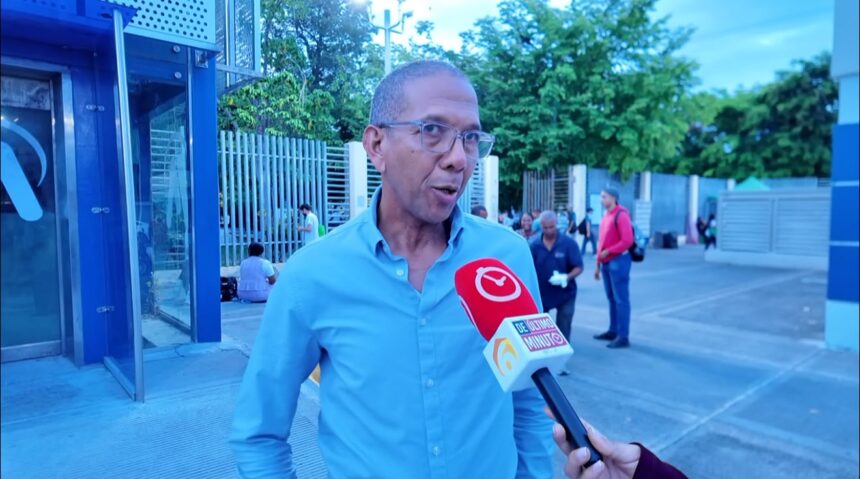
Those interviewed in the citizen consultation conducted by this media outlet regarding the change in police leadership questioned whether the replacement of the head, by itself, can generate a transformation in the fight against crime, although some of those consulted expressed their expectation that the new management will contribute to reducing criminal acts and make the reform of the institution a reality.
The main criticisms point out that the problem transcends the figure of whoever holds the leadership of the Police and requires modifications in the structure, preparation, and functioning of the law enforcement body, in addition to a state policy that allows addressing the root causes of crime.
Political scientist Paulino Ureña described the previous director’s tenure as a “failure,” questioning why he remained in the position for only six months, even though the Organic Law of the National Police provides for a two-year term for whoever holds the position.
Ureña considered that both the Government and its advisors should review the criteria used to select the generals who are placed at the head of the institution, understanding that a position of such importance requires a deeper evaluation of the profiles before making an appointment.
More Read

You can also read: Citizens view Abinader’s changes with skepticism; they ask to keep “shaking the tree” in the Government
However, the professional said that he maintains the expectation that with the new director, crime levels will decrease and that the process of transformation and reform of the National Police can finally become a reality.
In contrast, Francisco Peña maintained that crime is not fought simply by changing the police chief, but through a State policy that establishes concrete measures to address criminality and its causes.
Peña stated that he has no expectations regarding the recent changes in police leadership, noting that, despite the reform announced for the institution, police actions and methods have not undergone the expected transformation and acts of violence and crime continue to be recorded.
More Read


The citizen proposed that the Police must be restructured to become an instrument at the service of the population and guarantee their protection, after considering that the State must assume the responsibility of defining a comprehensive strategy against robberies, violence, and other criminal manifestations.
For Emilio Mateo, one of the fundamental aspects that must be improved within the institution is the training of the agents. In his view, the levels of education, preparation, and commitment of the police officers have a greater impact on the institution’s performance than the person occupying the leadership position.
Mateo expressed his hope that the situation will improve and that the population can once again feel safe with the agents in charge of protecting them. He considered that the better the preparation of the members of the Police, the better the conditions will be for them to carry out their duties appropriately.
A similar position was expressed by Freddy Ariel, who maintained that “it is useless to appoint a good chief” if the rest of the police force lacks education and training. He used the comparison of a head and a body to explain that the good performance of a director requires that the other members of the institution be prepared and work under the same direction.
Ariel was categorical in responding that he has no hope that things will improve solely with the new appointments, reinforcing the argument that the change in police leadership must be accompanied by internal transformations that involve the entire institution.
Meanwhile, another person consulted, identified as Jesús, was more reserved regarding the arrival of the new director and preferred to wait until he begins to take measures before issuing an assessment of his performance. His expectation, he said, is that the official begins to “resolve” issues and that his actions allow for determining if there will truly be changes.
More Read
The opinions gathered reflect a citizen demand that goes beyond the replacement of a director: reducing crime, strengthening the training of officers, improving police performance, and regaining the population’s trust. The challenge for the new management will be to demonstrate that the change in command can translate into concrete results regarding one of the citizens’ main concerns.
Ernesto Rodríguez García assumed the leadership of the National Police, replacing Major General Andrés Modesto Cruz Cruz, amidst expectations regarding the continuity and results of the police reform. His administration will have among its main challenges strengthening the institution, improving the response to crime, and ensuring higher levels of security and trust for the citizenry.