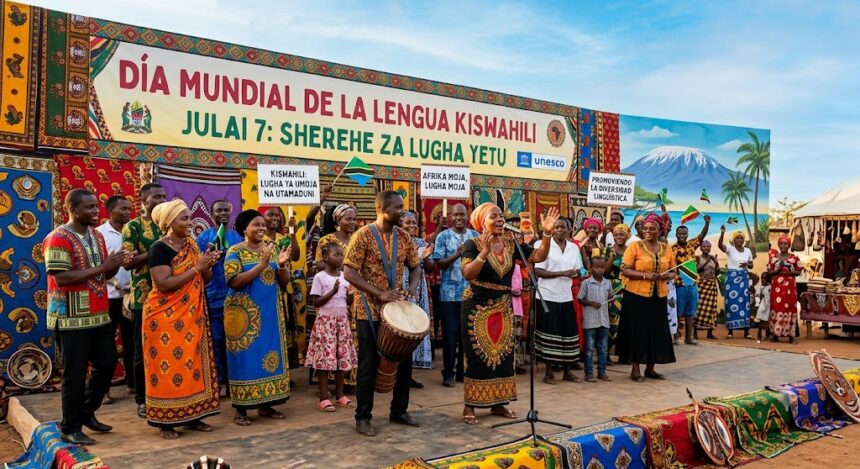
Every July 7th, World Kiswahili Language Day is commemorated, a date established to recognize the importance of this language as a tool for communication, cultural identity, and unity among millions of people in Africa and other regions of the world.
Kiswahili, also known as Swahili, is one of the most spoken languages on the African continent and plays a fundamental role in East African countries, where it is used as an official or national language in several nations.
This celebration seeks to promote the preservation and dissemination of a language that represents centuries of cultural exchange between African, Arab, and other communities, in addition to highlighting its contribution to the world’s linguistic heritage.

We recommend reading:
The Kiswahili language was recognized by the United Nations Educational, Scientific and Cultural Organization as a language of great cultural value, and its international day aims to promote learning, research, and respect for linguistic diversity.
More Read

The date also highlights the role of mother tongues in building more inclusive societies and reminds us of the importance of protecting the languages that are part of the history and traditions of peoples.