

Government highlights arrests of corrupt officials
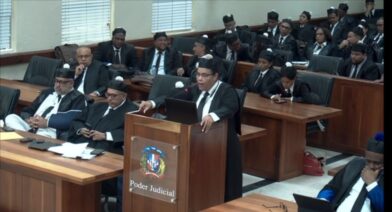
Santo Domingo. – The United States government recognized the efforts of President Luis Abinader in the fight against corruption, highlighting that, unlike previous administrations, his administration has promoted arrests of high-ranking officials from both the ruling party and the opposition.

“President Abinader has largely fulfilled his commitment to make the fight against corruption a priority. He appointed officials with a reputation for professionalism and independence and has respected the autonomy of his Director General of Public Procurement and the Attorney General,” the report states.
You may be interested in: Government delivers report to PGR on irregularities in SeNaSa and reiterates commitment to transparency
It maintains that the supervisory functions of the General Directorate of Public Procurement (DGCP) have been strengthened with the imposition of the use of the electronic portal in purchases, however, it notes that the regulation does not impose criminal sanctions for fraud and abuse in the contracting system, because it requires legal changes. It reaffirms that civil society has been a critical voice in anti-corruption campaigns so far, as is the case with the Institutionalism and Justice Foundation (FINJUS), Citizen Participation, and the Dominican Alliance Against Corruption (ADOCCO). Finally, it is noted that the Dominican Republic signed and ratified the United Nations Convention against Corruption (UNCAC), despite highlighting that it is not part of the OECD Anti-Bribery Convention in International Business Transactions.