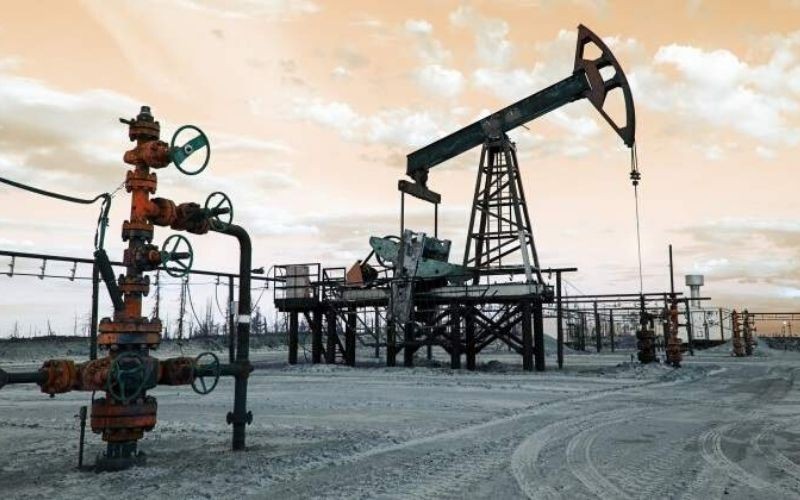
New York.- The price of Texas intermediate oil (WTI) opened this Thursday with a rise of 2.71%, to 88.16 dollars per barrel, after United States President Donald Trump announced yesterday an “unprecedented” economic offensive to isolate Iran.
At 09:00 local time (13:00 GMT), WTI futures contracts for September, the benchmark in the United States, were up 2.33 dollars from the previous close.
You might be interested in: Texas oil rises 3.25% after Iran announces the closure of the Strait of Hormuz
Trump announced a new economic offensive against Iran that he described as the most impactful operation ever undertaken against a country, with which he seeks to cut off the channels of financing and economic support to the Islamic Republic.
“Today I announce the most devastating economic operation ever undertaken against any country,” stated Trump on his network, Truth Social, where he warned that any country that allows its financial institutions, companies, airports, or government entities to provide “any kind of lifeline” to Iran will in turn face economic consequences.

The president specified that the measure contemplates cutting off the routes used to evade sanctions and maintain financial flows to Iran, including oil smuggling, currency exchange lines, cash transfers, exchange houses, ship registries, and shell companies.
Trump demanded that all these operations “stop NOW” and warned that Washington will monitor the countries and entities that allow them to continue.
This comes amid growing frustration over the lack of progress in reopening the Strait of Hormuz or reaching an agreement to end a war that has already lasted nearly six months.
More Read


Oil
The price of Texas Intermediate oil (WTI), the benchmark in the United States, opened this Thursday with a rise of 2.71%, reaching 88.16 dollars per barrel, amid growing geopolitical tension in the Middle East.
The increase occurred after US President Donald Trump announced a new economic offensive against Iran, which he described as one of the most impactful measures taken against a country. The strategy seeks to limit Tehran’s sources of funding and increase pressure on its economy.
Among the measures announced is the fight against operations used to evade international sanctions, including oil smuggling, cash transfers, currency exchange operations, vessel registries, and the use of shell companies.
Washington’s decision raises new concerns in international markets, due to Iran’s role as an oil producer and exporter and the possibility that the restrictions could affect the flow of crude oil to other markets.
Attention is also focused on the Strait of Hormuz, one of the main maritime routes for global oil transport. The lack of progress in guaranteeing its reopening keeps uncertainty high among energy market operators.
The scenario occurs as a conflict in the Middle East continues, having lasted for nearly six months and increasing fears of further disruptions to energy supplies. Any escalation affecting transport routes or oil facilities could put further pressure on international prices.
WTI’s behavior thus reflects market concern over a possible impact of geopolitical tension on the global crude oil supply. Investors remain attentive to U.S. decisions and any signs of further escalation in the region.
Texas oil thus adds new upward pressures, after the markets incorporated the risk of greater restrictions on Iran and possible difficulties in guaranteeing the transit of crude oil shipments through one of the strategic areas for global energy trade.