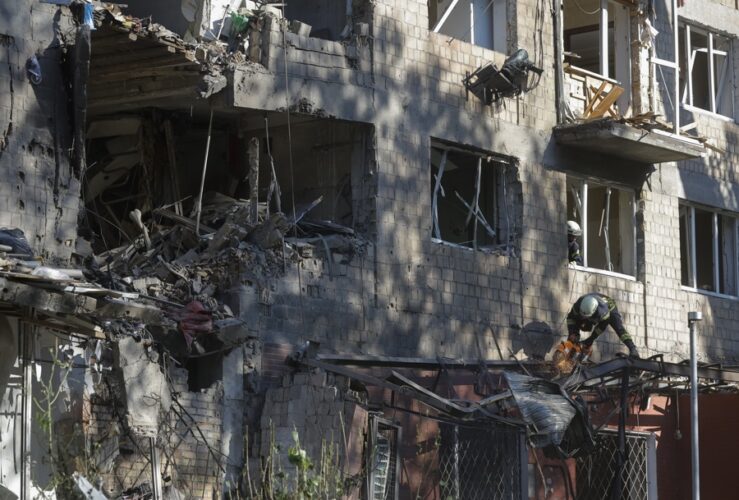
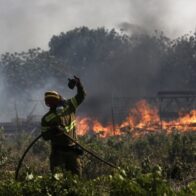
Kyiv, July 4 (EFE).- A lone Shahed drone passed shortly after eight o’clock in the evening on Thursday over the Babin Yar forest, located on the outskirts of Kyiv and the scene of the shooting by the Nazis of tens of thousands of Jews more than eighty years ago in what was one of the worst massacres of the Second World War. A few minutes later, when the drone could no longer be seen from the forest, the buzzing of the small unmanned aircraft gave way to the roar of machine guns trying to hit it as it approached, losing altitude to the target in another part of the city. The arrival in Ukrainian territory of this drone, the first of many that would fall on Kyiv during the early hours, occurred hours after another call from the US President, Donald Trump, to the Kremlin leader, Vladimir Putin, to unsuccessfully ask him to lay down arms. Night fell on the Ukrainian capital and the most cautious neighbors sought refuge in the metro stations with mattresses and mats to sleep on and with toys and puzzles to entertain the children. On the surface, most people continued to live normally until the curfew began at midnight. Before the streets emptied, the explosions that would continue until morning had already begun again. They were repetitive and less powerful when the Ukrainian Army’s mobile patrols fired at the Shahed with machine guns to shoot them down and when the air defense missiles impacted with the Russian attack missiles that the Ukrainian Air Force did manage to intercept. After a practically sleepless night due to these noises – and those of the direct impacts of the drones and missiles that could not be intercepted – the inhabitants of Kyiv went out into the street to go to work, have coffee, or take their children to school with the air polluted by the smoke from one of the many fires caused by the attack.
Kyiv awakens amidst explosions and smoke in the midst of one of the worst Russian attacks