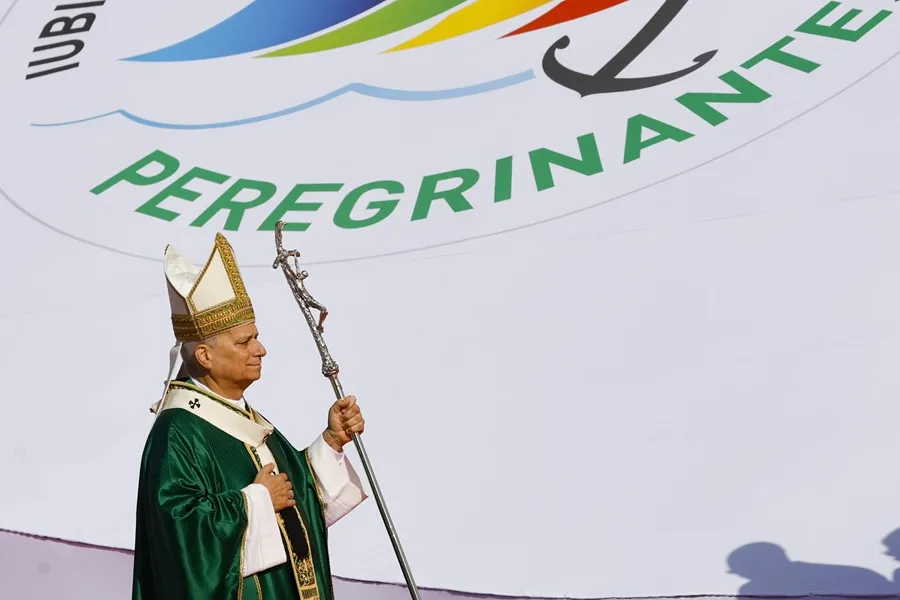
Pope Leo XIV completes 100 days of his pontificate without major decisions

EFE
By
6 Min Read
Vatican City.- Pope Leo XIV completes 100 days of his pontificate, since that May 8th when he appeared on the balcony of the facade of St. Peter’s Basilica after the conclave, and which have been marked by his reserved character, total prudence, since he has not yet made important decisions, and a strong inclination towards diplomacy. In these 100 days of the American pontiff, who will turn 70 in September, the most commented changes regarding the pontificate of Francis have been, above all, a return to tradition. From the use of liturgical vestments that Francis had eliminated, such as the decision to resume the red mozzetta and white pants under the cassock, the desire to live again in the apostolic palace, take vacations in Castel Gandolfo or re-establish the solemn procession of Corpus Christi through the streets of Rome under the canopy. For the rest, Pope Robert Prevost has not yet made important decisions for the Church or the Vatican government, such as the appointment of collaborators, with the exception of his secretary, or changes in the Roman Curia, although for many this is due to his prudent character.
Pope Leo XIV completes 100 days of his pontificate without major decisions | De Último Minuto English

A Period of Adaptation of Pope Leo XIV

“In the White House they say that 100 days reveal the presidency. The scope of a pontificate is different. We should not expect appointments as a test for the pope. He will make them when necessary, but it will not be the government team who will tell us who Prevost is. It is a mistake to judge him in terms of rupture or continuity with Francis, or whether or not institutions are restored,” said the founder of the Community of Sant’Egidio, Andrea Riccardi, in a recent interview in ‘La Stampa’.

The head of communications for the Pontifical Mission Societies of the United States, Ines San Martín, explains to EFE that, in these one hundred days, «Leo XIV dedicated himself mainly to observing and listening much more than to speaking. Therefore, for example, we did not see him make major personnel changes in the Roman Curia». “In September we will probably see the first ones. He is clearly a conciliatory man, who listens to the parties before taking action, accustomed to working with people of different theological and political orientations,” he explains and highlights that it has been “three months dedicated to getting used to his new role.” While, for some, Prevost’s almost shyness and overly structured speech did not allow him to connect with the million young people at the meeting in Tor Vergata for the Jubilee of Youth, for San Martín he did have “a clear leadership style deeply rooted in Saint Augustine, that is, fostering spiritual life, friendship as a synonym for life in community, and charity.”

You may be interested in: The Pope asks to implore God for the peace of all peoples

“Not sympathetic, but empathetic,” is heard about the way of relating to the masses of faithful. The pacification signals shown by the new leader of the Catholic Church after some turbulence have been highlighted, such as the sending of Cardinal Robert Sarah, considered an ultraconservative and opposed to Francis during his pontificate, as the Pope’s representative for a jubilee celebration in Sainte-Anne d’Auray, France.

A Diplomatic Inclination

In the various speeches that the Pope, also with a Peruvian passport, has given in these 100 days, there have been no great surprises: he has defended the family “formed only by a man and a woman”, life in all its phases and the need to protect the environment; and he has condemned rearmament.

But in this world in crisis due to numerous conflicts, Leo XIV has reiterated on many occasions his request to achieve peace and a diplomatic inclination although always marked by prudence.
His calls to end conflicts around the world have been repeated, and he has condemned the attacks in Gaza that are leading its population to famine, but he chooses specific moments to launch them. For example, they have disappeared from the general audiences. The Vatican offered itself as a meeting point for negotiations between Russia and Ukraine, and without caring about Russia’s refusal, subsequently spoke with President Vladimir Putin and received the emissary of the Russian Orthodox Patriarch, Cyril. And in these few days he has already received Ukrainian President Volodymyr Zelensky on two occasions.
TAGGED:
Share This Article