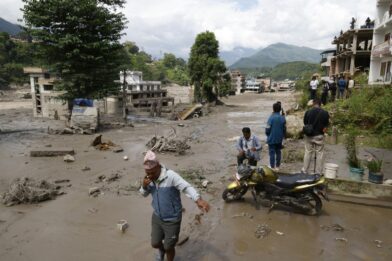
Australia.- Australian Prime Minister Anthony Albanese confirmed this Thursday that 34 Australian citizens remain missing following the flash floods that struck the border between Nepal and Tibet (China), where at least 160 people have died and hundreds remain out of contact.
“Our thoughts are with all those who will be worried about their loved ones today“, declared Albanese during an event in Dubbo, in the state of New South Wales, where he pointed out that the difficulties in obtaining information from Nepal are complicating tracking efforts.
The Australian Prime Minister said that, as it is a developing country, there are not enough resources available and “information is difficult“.
Australian Foreign Minister Penny Wong also stated in a press conference today that authorities are working “urgently” to confirm the status of Australian citizens who were in the areas affected by the floods.
According to the latest available report, 157 people died in Nepal and three on the Chinese side of the border. In addition, Nepalese authorities accounted for 384 tourists without contact, including 291 foreigners, while China reported 265 missing in the Tibetan county of Gyirong.

You can also read: Australia sues Telegram for alleged failures
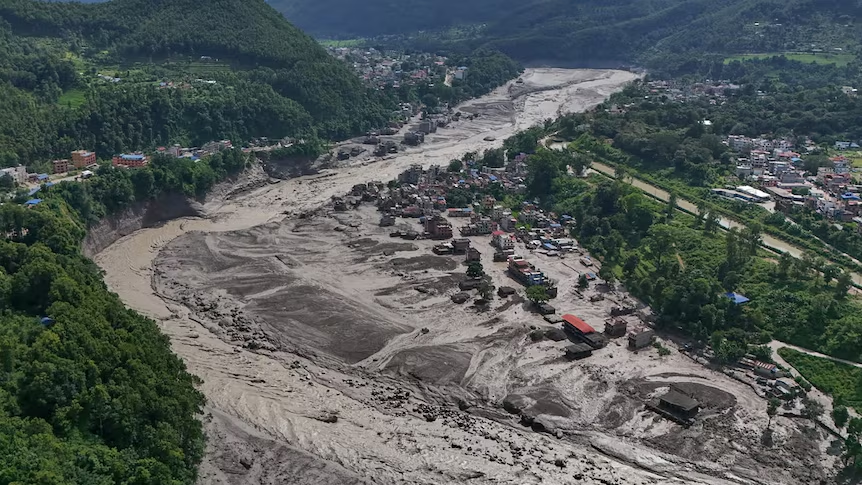
The flood hit the Rasuwa district in northern Nepal with particular force, where the mass of water reached the towns of Timure, Rasuwagadhi, and Syabrubesi early Wednesday, next to one of the main land crossings to Tibet.
At least 80 bridges and about 40 kilometers of roads were damaged, according to Nepalese authorities.
Nepal’s Minister of Foreign Affairs, Shishir Khanal, indicated that initial signs suggest an earthquake recorded in the morning may have caused a large landslide that temporarily blocked the river’s course in Tibetan territory, before the accumulation of water triggered the flood.
More Read

The Nepalese government declared the affected areas a disaster zone for three months and ordered the mobilization of military and private helicopters for search and rescue operations, in addition to providing free medical care to the injured and accelerating the restoration of roads, electricity, and telecommunications.