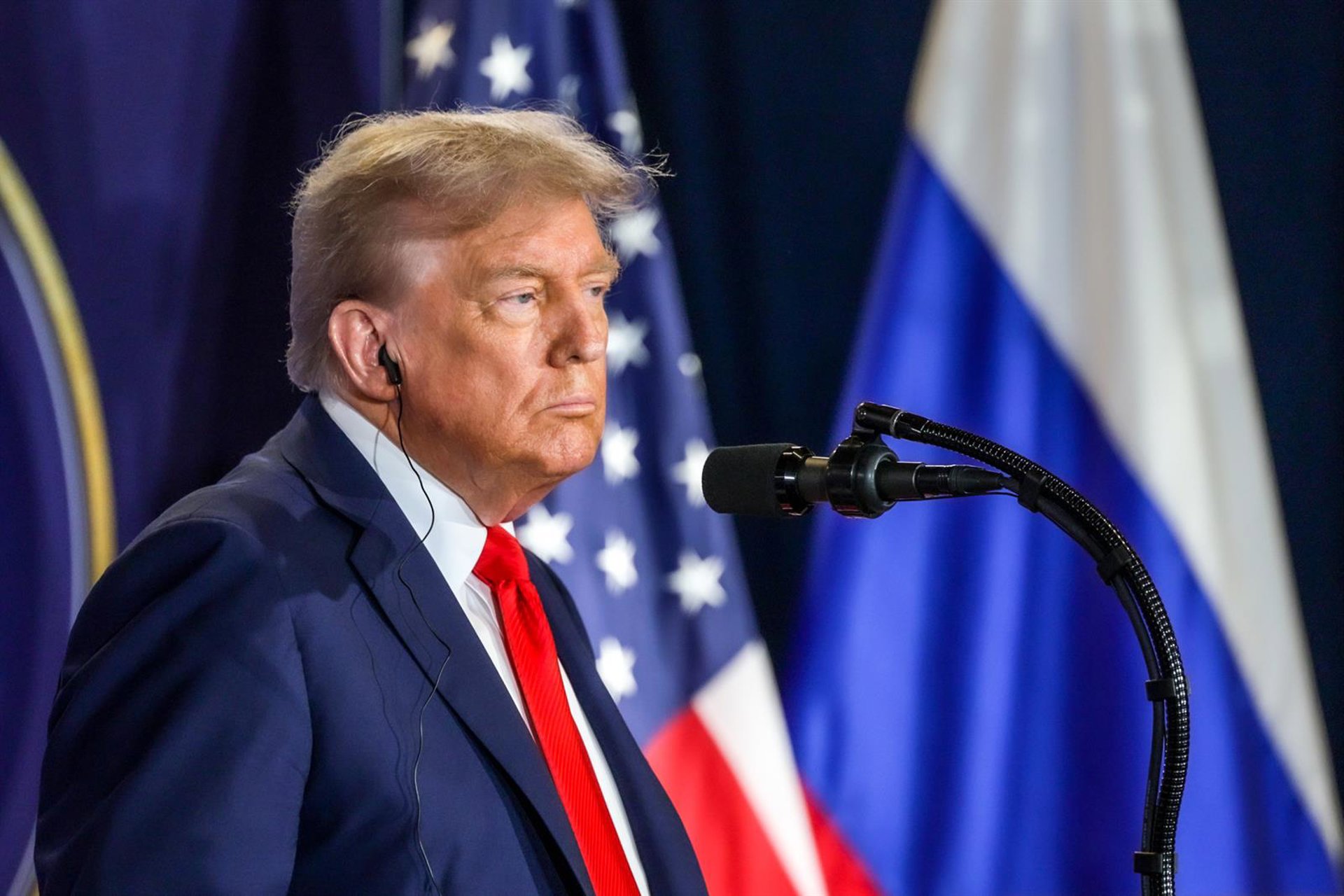
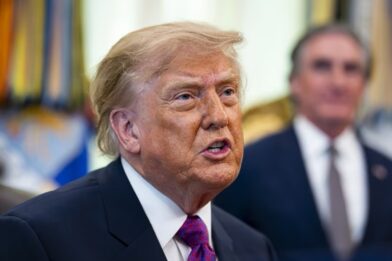
The President of the United States, Donald Trump, stated this Thursday in the Oval Office that he will not allow Israel to proceed with the annexation of the West Bank, a measure that has been proposed by far-right figures within the Israeli cabinet. Trump’s statement comes as diplomatic tensions persist following the recognition of the Palestinian State by several Western countries, which has led to threats of territorial annexation from sectors of the Israeli government.
“I will not allow Israel to annex the West Bank”, Trump assured journalists present at the White House, and added: “That’s not going to happen, we’ve had enough”. This statement responded to questions about whether, during the recent UN General Assembly, he had promised Arab leaders to prevent any annexation action.
Israeli Prime Minister
Benjamin Netanyahu has reiterated his opposition to the creation of a Palestinian state and has dealt with pressure from various voices in his cabinet, who have proposed the annexation of the West Bank in response to the recognition of the Palestinian state by countries such as
the United Kingdom,
France,
Canada and
Australia.
In his statements to correspondents,
Trump confirmed that he warned Netanyahu not to proceed in that direction: “I will not allow it”.
During the same press encounter, Trump expressed
optimism about the possibility of reaching a ceasefire agreement in Gaza.
“We spoke today with Bibi Netanyahu, and with all the leaders in the Middle East, and we are quite close to reaching an agreement on Gaza and perhaps even peace,” assured the American president, anticipating the possibility of a diplomatic breakthrough in the region.
Netanyahu is expected to visit the White House next Monday, according to sources in the Israeli government.
The situation unfolds in a context of growing international pressure against Israel following its military offensive in Gaza after the Hamas attacks of October 7, 2023.
In his statements, Trump reiterated that he is in contact with leaders in the region to seek
a solution that includes the simultaneous release of all hostages held by Hamas, stating: “Many people are dying, but we want the hostages back. We don’t want them back one this week, another in two months, three months later. We want them back all at once”.
The American president
also referred to a “big” meeting held with Arab and Islamic leaders during the UN General Assembly, in which possible solutions to the conflict and the design of a post-conflict plan for Gaza were discussed. “We had a very positive meeting with the representatives of the most powerful countries in the Middle East, and
I think we are close to reaching an agreement”, he explained.
Although ten countries, including Germany, have taken different positions on the conflict —with some recognizing the Palestinian state and others halting military exports to Israel—, the United States and Israel have so far rejected such recognitions. The European Union is evaluating possible tariffs and sanctions against Israel, and calls to boycott sports and cultural activities related to the Israeli state are multiplying, while the rejection of Israeli tourists grows in some regions.
Trump’s statements on the West Bank mark a shift in US policy regarding the region, by explicitly setting limits on Washington’s main ally in the Middle East, at a time of maximum diplomatic tension and with expectations of possible progress towards a ceasefire in Gaza
.