Zipaquirá (Colombia).- A yogurt about to expire, a day-old bread or a leftover milk carton find a new destination in the mountains of central Colombia, where the Zipaquirá Food Bank transforms donations into monthly food baskets for more than 3,500 peasant families and elderly people at risk of hunger.
The impact is enormous in rural areas, where receiving what would be unthinkable in local stores —like a box of cereal, chocolate bars, or products that many children had never seen— becomes a relief.
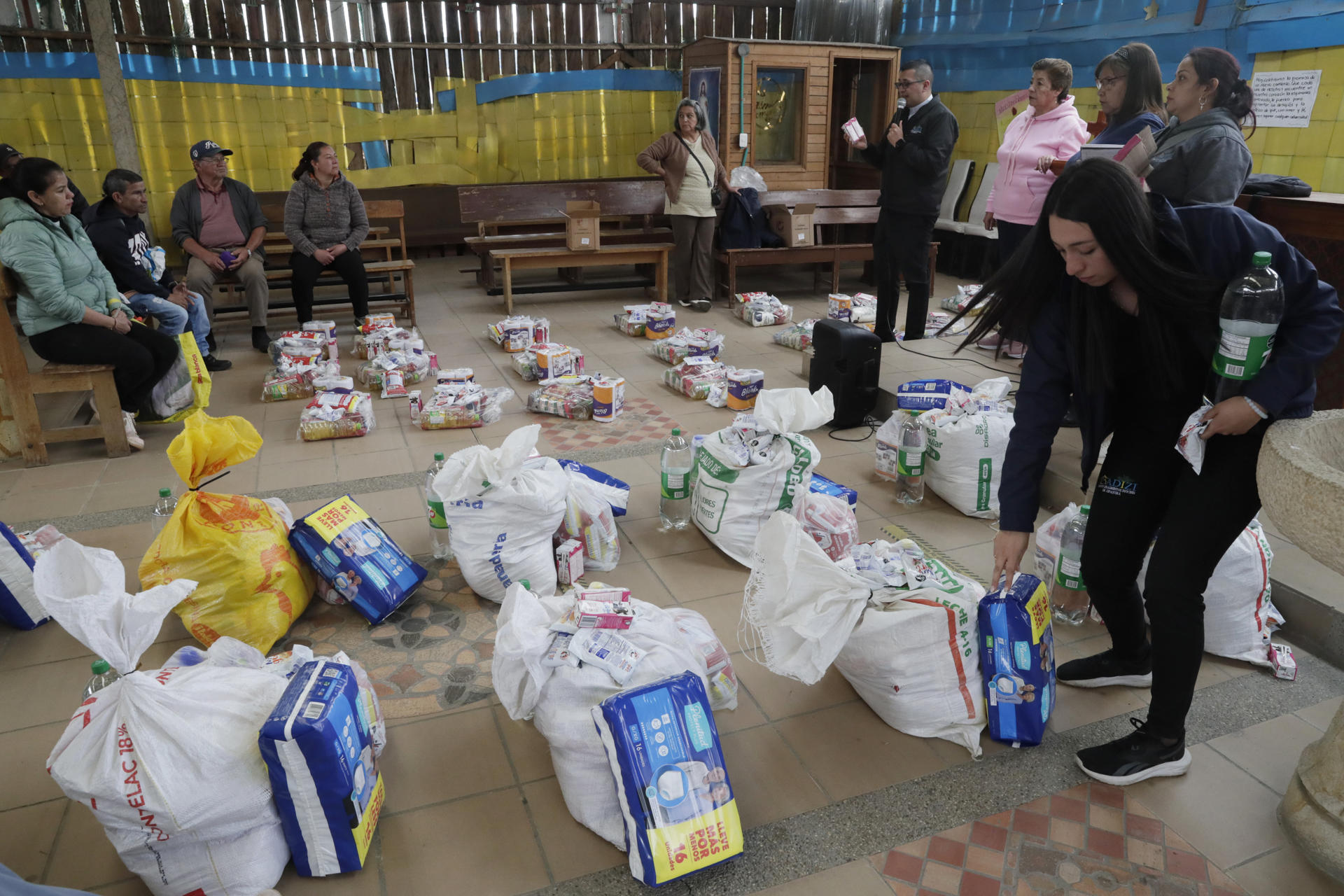
“The reception is always one of hope,” says priest José Alejandro Quiroga, pastoral director of the bank, to EFE. The deliveries are simple but powerful scenes: elderly people waiting in the sun, mothers carrying their children, and neighbors helping to arrange the packages.
Clash between tourism and rural
In the Zipaquirá warehouse, a tourist city famous for its Salt Cathedral, 42 kilometers north of Bogotá, hands separate a bruised tomato from a good one, tape seals the boxes, and a forklift goes back and forth through the aisles.
Outside, the noise of the tourist buses contrasts with the silent routine of those who prepare the cargo that will travel to the poorest towns.
“We are rural, completely rural: 95% of our market niche is peasant people,” says Lida Plata, administrative director of the bank, who decided to dedicate her retirement to this work, which in less than a decade went from 500 to 3,700 families served and from five to 25 workers.
The growth was possible thanks to a post-pandemic alliance with the Food Bank Association of Colombia (Ábaco), which groups 24 of these centers, and to daily donors: from large supermarkets like PriceSmart and Makro to bakeries that give up the previous day’s bread every morning.
“Whether or not there are donations, we guarantee that people receive food,” emphasizes Plata, who explains that, as a non-profit organization, the bank also sources through Ábaco to ensure that the monthly packages —with basic foods at less than half the supermarket price and a hygiene kit— arrive as complete as possible.
Families who can afford it pay for the markets at a low cost, between 42,000 and 180,000 pesos (between $10 and $45). Those who do not have resources access a sponsorship program, in which another family contributes 15,000 pesos so that the market also reaches its destination.
Each month the contents of the bags are similar, but according to donations from supermarkets —products nearing expiration but in good condition— beneficiaries receive items that, in many cases, they had never seen.
Eternal struggle against food insecurity
In a country where 9.7 million tons of food are wasted annually and 14.4 million people suffer from food insecurity, each truck loaded with rice, milk, or bread becomes crucial in some areas.
That’s what happens in humble neighborhoods like Villa del Rosario, in Zipaquirá, where 43 families help unload the truck in front of a church built by the community itself with wooden boards.
Upon finishing the distribution, many beneficiaries avoid lingering. With bags on their shoulders or in baby carriages, they quickly leave for their homes. Most do not want to speak, either out of shame or fear of showing their need, and in that silence, the weight of food insecurity is also perceived.
“This is not paid for with any money in the world,” acknowledges the bank director, who remembers with emotion that, although many do not have food to eat, they are offered a plate of lunch in many of those neighborhoods.
The Challenge of Comprehensive Support
In rural areas, previously self-sufficient in food production, access to food has become a challenge due to armed conflict and climate change.
Each parish under the bank’s jurisdiction has a volunteer leader who collects the money and, together with social workers, identifies the most vulnerable families so that the aid reaches those who need it most.
Diana Orduy, a social worker at the bank, acknowledges that the toughest cases have been those of families in critical health and hygiene conditions.
“I have had to accompany very difficult situations, and there we try to help in the most comprehensive way possible: not only with the delivery of the food package, but also by seeking health networks or additional support. We have identified needs that even local authorities must address,” he explains.