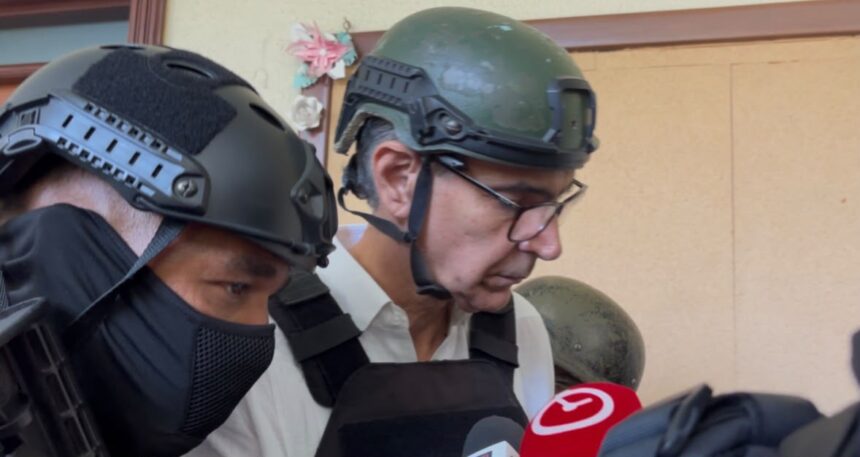
Santo Domingo.– The Second Criminal Chamber of the Court of Appeals of the National District ratified the 18-month pretrial detention imposed on the former director of the National Health Insurance (Senasa), Santiago Hazim, and six other defendants, considering that the coercive measure remains legal, constitutional, and duly substantiated.
The decision was adopted after rejecting the appeals filed by the defense, understanding that the circumstances that motivated the imposition of pretrial detention have not changed.
At the end of the hearing, the deputy prosecutor and head of the Public Ministry’s General Directorate of Prosecution, Wilson Camacho, stated that the court concluded that the measure continues to be necessary to guarantee the development of the judicial process.

“The court has decided to maintain the coercive measures for all the defendants on the basis that the reasons that gave rise to their imposition have not changed. Furthermore, it has established that pretrial detention is the necessary, suitable, and proportional coercive measure for these defendants,” stated Camacho.
The Public Prosecutor’s representative maintained that the defendants must remain deprived of liberty while the process advances and assured that, once the trial is concluded, he expects “exemplary sentences” to be handed down for the damage that, as he stated, they caused to the Dominican health system.
“These defendants must remain in pretrial detention and, at the appropriate time, must receive sentences that are exemplary for having harmed the health of the Dominican people,” he stated.
You can also read: Santiago Hazim returns to court this Wednesday for coercion review
When approached by journalists about a possible new phase of the investigation, identified by some communicators as “Senasa 2.0“, Camacho avoided offering details and limited himself to responding: “We are still here“.
More Read

The process is part of an investigation into alleged acts of administrative corruption related to the management of the National Health Insurance, while the Public Prosecutor’s Office continues with the presentation of evidence and the development of the case file in the courts.