Cuba remembers leader Fidel Castro on the ninth anniversary of his death

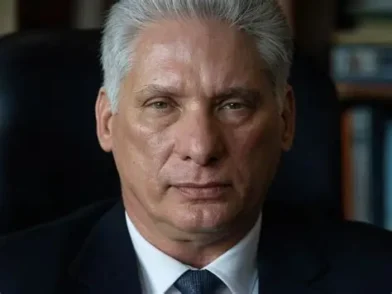
Havana.- Hundreds of people, including Cuban President Miguel Díaz-Canel, attended a tribute on Tuesday on the steps of the University of Havana to the leader of the island’s Revolution, Fidel Castro (1926-2016), on the ninth anniversary of his death.
During the event, the participants – mostly young people – highlighted the figure of the former president through songs, recitations of poems, dances and video projections about Castro’s political career, including excerpts from his speeches.
The first secretary of the Young Communist Union (UJC), Meyvis Estévez, the only speaker of the evening, recalled Castro’s steps through the University of Havana, “where he was forged as a revolutionary”, and emphasized that “he brought a new chapter to the history” of the island.
Díaz-Canel wrote on his X account: “Fidel lives among us. Whoever doubts it should read, see, hear, how much the Commander in Chief of the Cuban Revolution continues to speak to us, from the immortality of his ideas and the strength of his legacy, which continues to challenge us every day“.
For his part, Chancellor Bruno Rodríguez expressed about Fidel Castro on the same social network that “his legacy of dignity, sovereignty, anti-imperialism and social justice for Cuba and the peoples of the world remains alive in the current generations of revolutionaries”.