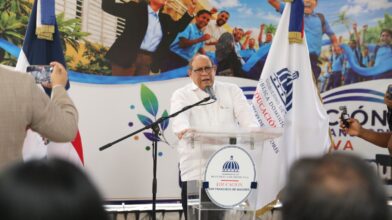
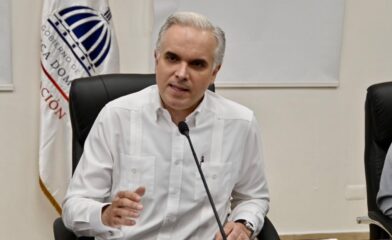
Santo Domingo. – The President of the Republic, Luis Abinader, and the Vice President Raquel Peña led this Thursday the 56th Council of Ministers, a work day focused on reviewing the progress of economic growth priorities and the national strategy Meta RD 2036, with the participation of the main leaders of the productive sector who coordinate their strategic committees.
The meeting continues the approach of articulation, monitoring, and execution of priorities promoted by the Government, aimed at ensuring concrete and measurable results in the economy and the quality of life of the population, in line with what was established in previous meetings.
During the session, progress was evaluated on Meta RD 2036, a strategy that seeks to create the conditions for a productive transformation that allows the country to achieve more and better economic growth in the next decade. Among the main advances addressed, progress in the training of human capital aligned with productive demands was highlighted, through the expansion of technical high schools and scholarship programs in STEM areas. In the tourism sector, progress was made in the elaboration of a standard for the management of sargassum and in the alignment of technical-professional training with the needs of the sector. Likewise, in construction, improvements were recorded in the reduction of permitting and an increase in investment in infrastructure, while in free zones the international promotion of the country as a regional hub was strengthened and financial tools are being developed to expand the capacity of industrial parks.
Similarly, in the logistics field, progress was reported in re-export processes from logistics centers and in the implementation of the plan to position the Dominican Republic as a regional logistics hub. In the agricultural sector, the execution of programs aimed at increasing efficiency and productivity was highlighted, including training initiatives for the export of avocados, the strengthening of the food and agricultural health and safety system, and the creation of investment funds for the production of coffee and cocoa.
When referring to these advances, the Minister of the Presidency, José Ignacio Paliza, highlighted that “Meta RD 2036 has been consolidated as a real working space between the public and private sectors, where we are aligning efforts to transform the country’s productive structure and accelerate economic growth with concrete results.”
In a second block, the Council of Ministers addressed the country’s preparation to face the effects of the conflicts in the Middle East on the national economy. During the session, it was highlighted that this context has generated high volatility in the international energy market.
The authorities reported that the national budget includes around RD$12,000 million allocated to fuel subsidies, calculated on the basis of a WTI oil price of US$65, and that additional items for more than RD$10,000 million have already been identified for reallocation if necessary. Likewise, it was highlighted that the country has solid macroeconomic fundamentals to face this scenario, including international reserves close to US$16,000 million, adequate levels of liquidity and access to financing in both international and domestic markets.
In that sense, it was indicated that public sector deposits exceed RD$300,000 million between the Central Bank and the Reserve Bank, while tax revenues are approximately RD$4,000 million above the budgeted amount, which strengthens the State’s response capacity.
Regarding this context, the Minister of Finance, Magín Díaz, stated that “the Dominican Republic has the necessary macroeconomic buffers to face external shocks, with solid public finances, access to financing and prudent management that allows us to protect economic stability”.
The Government reiterated that among its main objectives is to protect the most vulnerable households by strengthening social protection programs, as well as maintaining constant monitoring of international prices of food, agricultural inputs and fertilizers, in order to cushion their impact at the local level. These actions are part of a comprehensive strategy aimed at preserving the economic and social stability of the country.
The Council had the active participation of representatives from the private sector, who positively valued the working dynamics of Meta RD 2036, highlighting it as a practical, sincere, and effective space for collaboration between the public and private sectors to increase national productivity.
Details about the progress of Meta RD 2036 are available on the official portal of the strategy: meta2036.gob.do.