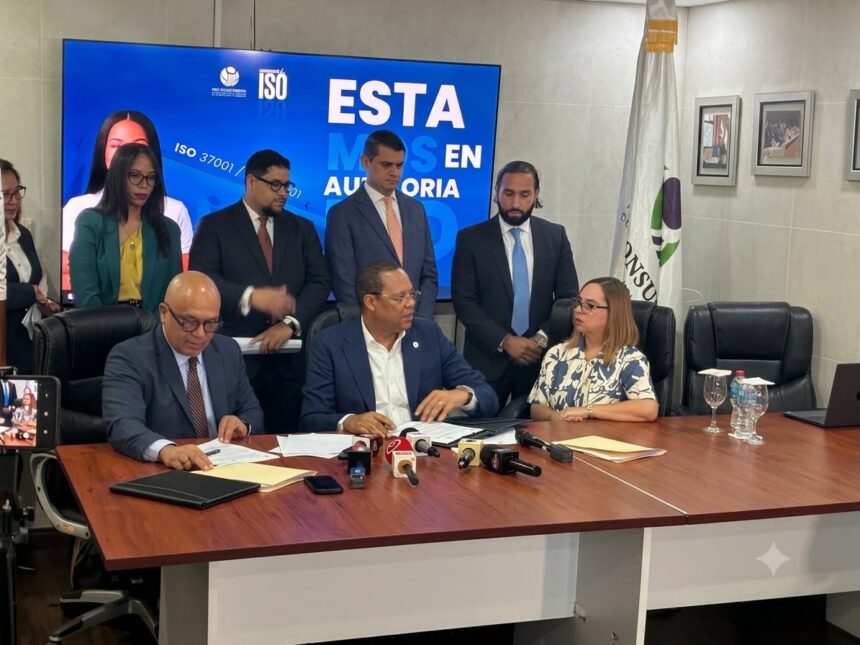
Santo Domingo.- The National Institute for the Protection of Consumer Rights (Pro Consumidor) and the Association of the Credit and Collection Ecosystem of the Dominican Republic (COB-RD) signed an agreement to strengthen compulsive and judicial collection management practices, with the aim of ensuring that these processes are carried out within the framework of the law and respecting the rights of citizens.
During the signing of the agreement, held at the Pro Consumidor headquarters, the institution’s executive director, Eddy Alcántara, explained that the agreement seeks to establish clear rules for collection efforts and avoid practices that could violate the integrity and morale of debtors.
Alcántara highlighted that companies dedicated to debt collection must act in accordance with the regulations and laws in force in the Dominican Republic, seeking to enforce the rights of creditors without affecting the rights of debtors or involving third parties unrelated to the financial obligations.
As part of the commitments, the entities agreed that garnishments must be carried out in accordance with the procedures established by national regulations. The agreement further establishes as a reference standard that, in a single measure, garnishments shall not exceed ten debtor persons.
We recommend reading:Fuel stations will continue to accept card payments; Government establishes a dialogue table


In that sense, Pro Consumidor expressed its preference that garnishment orders be processed individually for each debtor and urged sector actors to evaluate the progressive incorporation of this criterion into their internal policies, always within the framework of current legislation.
The agreement also contemplates the development of good practice guides, protocols, and codes of conduct to promote more humanized and responsible collection, which can be voluntarily adopted by financial intermediation entities, collection agencies, portfolio buyers, law firms, and other actors linked to the sector.
Likewise, Pro Consumidor and COB-RD agreed to develop training programs for the staff in charge of collection management and customer service, in addition to promoting technological innovation initiatives that allow for better case tracking and early detection of possible inadequate practices.

The entities will also promote education and awareness campaigns aimed at consumers to foster a culture of responsible payment and, at the same time, guide providers on the importance of implementing humanized collection processes that comply with the law.
The agreement establishes that the use of tools such as instant messaging, emails, automated calls, and artificial intelligence systems must comply with consumer protection regulations and the applicable provisions issued by the Dominican Institute of Telecommunications (INDOTEL).