
The OAS approved an urgent meeting of foreign ministers from across the region to condemn the dictatorship in Nicaragua, which has had intentions since September to permanently suspend presidential and legislative elections.
The political decision of the regional forum was approved by 29 countries, with Brazil against and Mexico abstaining. The governments of Lula da Silva and Claudia Sheinbaum acted in tandem, even though they used different methods when voting.
You might be interested in: The OAS debated the Nicaragua crisis 64 times without achieving changes in the regime
Specifically: Lula and Sheinbaum’s ambassadors rejected the call from all the foreign ministers to repudiate another autocratic decision by the dictators Murillo and Ortega.
The diplomatic summit does not yet have a precise date. But it should be before the first of September, since on that day the National Assembly will abolish the right to vote in Nicaragua.
More Read
Before the vote, a space for geopolitical debate was opened that exhibited the differences between the United States and its allies regarding the position held by Brazil and Mexico in the region.
Benoni Belli -Lula’s ambassador to the OAS- raised a formal objection whose sole political purpose was to prevent the OAS from being able to convene the foreign ministers to debate the situation in Nicaragua.
“We believe that we must exhaust the possibilities of acting through the Permanent Council and the General Secretariat. For this reason, we do not understand this to be the appropriate reason to convene a meeting of foreign ministers. This conduct goes against the best diplomatic practices and also the spirit of cooperation between multilateral organizations. Instead of contributing to a sustainable solution, we are simply precipitating a negotiation principle to gain political visibility to the detriment of measures that could efficiently help ratify the rights of Nicaragua,” stated Belli.

And he added: “We support the creation of a group of national specialists to try to resolve the situation in Nicaragua, as suggested by Mr. (Albert) Ramdin, Secretary General, in a meeting on this topic to analyze the situation in Nicaragua”.

Belli’s reluctant position was echoed by Carlos Cherniak, Argentina’s ambassador to the OAS, who exposed the formal position that Brazil was alleging.
Cherniak raised what 28 other diplomatic representatives were thinking at the regional forum: there is no time for academic debates, the Nicaraguan dictatorship will once again violate human rights for its own benefit.
“We are clear that we are in a situation of an enormous emergency in a country whose government decided that there will be no more elections and there will be no more democracy. None of our countries that signed the democratic charter and has a commitment to this inter-American system can remain absolutely defenseless in the face of this situation,” maintained Cherniak.
And he added: Each of our colleagues must know what is at stake with their vote regarding this issue. It is a very delicate matter and all the Nicaraguan exiles who are with us, all those who have lost their nationality due to the authoritarianism of the Nicaraguan government, all those who are watching through different visual, virtual mechanisms, this whole situation, are watching what the OAS is going to do and what each of the countries is going to do in terms of solidarity with those Nicaraguans who are suffering repression and who are being told that they will never have democracy again”.
OAS concerned
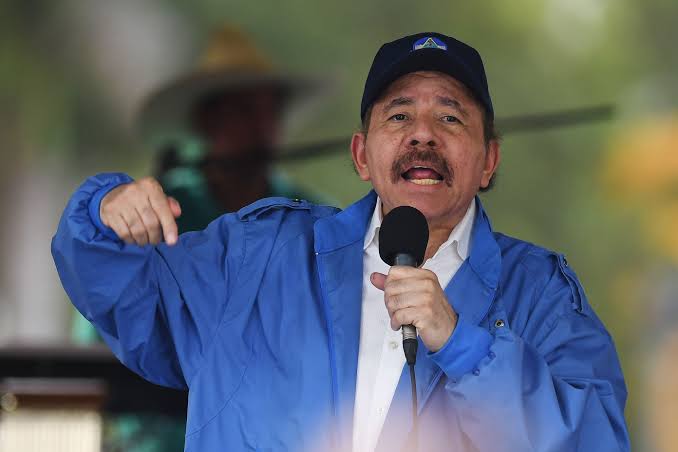
On July 19, during an official act to commemorate the Sandinista Revolution, Daniel Ortega announced that electoral rights were going to be abolished in Nicaragua.
More Read
“There will be no more elections. There will be no more elections so that they can try to seize the Government, seize power through them”. (…) The history of parties put in place by the Yankees, put in place by the Somocistas, returning to power is over here. Never, never, never!”, announced the Nicaraguan dictator.
This authoritative announcement, which would be executed on the first of September by the National Assembly, set in motion the institutional mechanisms of the OAS.
The United States, backed by its allies in Latin America, requested that a summit of foreign ministers be convened to repudiate the decision of the Sandinista regime and define a course of action that can preserve the right to vote in Nicaragua.
With the opposition of Brazil and the abstention of Mexico, 29 countries endorsed the call for the summit of foreign ministers, which could take place the following week.