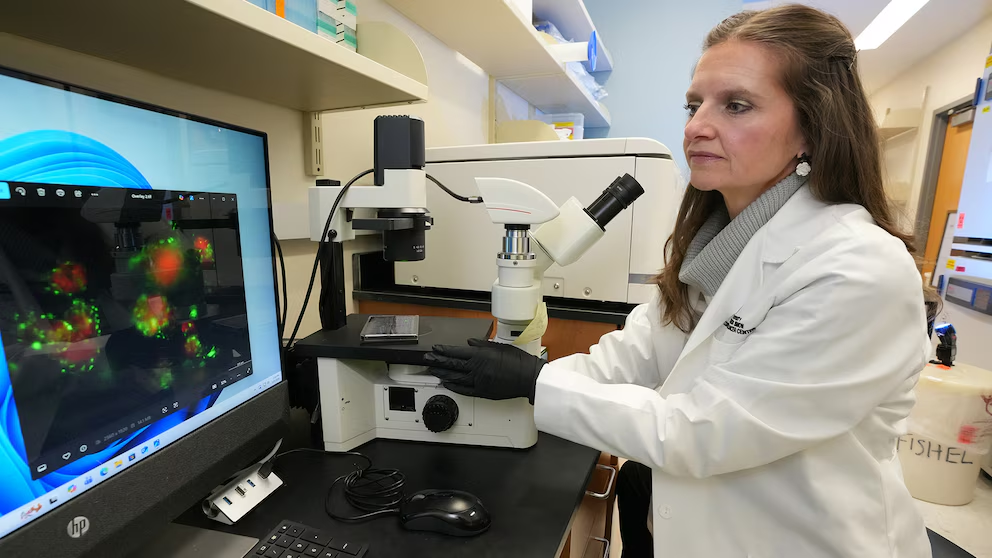
The pancreatic cancer affects more than 495,000 people each year, according to the World Health Organization and usually progresses without symptoms, which makes its diagnosis and control difficult. It is one of the most lethal tumors because most cases are detected late and respond poorly to current treatments. In that context, a group of researchers from the United States discovered that if fibrinogen, a blood protein, is reduced, the growth of pancreatic cancer can be slowed down. It would also allow to limit its ability to metastasize in the liver. The results, which were published in the journal Gastroenterology, show that, by decreasing fibrinogen in animal models, the tumors shrank and their progression became much less aggressive. This finding opens the door for the development of strategies that could improve expectations for patients. Attacking fibrinogen could be added to chemotherapy to increase the effectiveness of current treatments.
Melissa Fishel, who led the research from the Melvin and Bren Simon Comprehensive Cancer Center at Indiana University, explained: “When fibrin was not present, we observed a drastic reduction in the size of the primary tumor and in liver lesions”. The first author of the study was Nayela Chowdhury.

We recommend reading:Women’s health in the face of gynecological cancer and its family impact in the DR
The team also included researchers from the University of North Carolina, the University of British Columbia, Louisiana State University, the University of Illinois, Tulane University, and the University of Oregon.
The Clot That Helps the Tumor
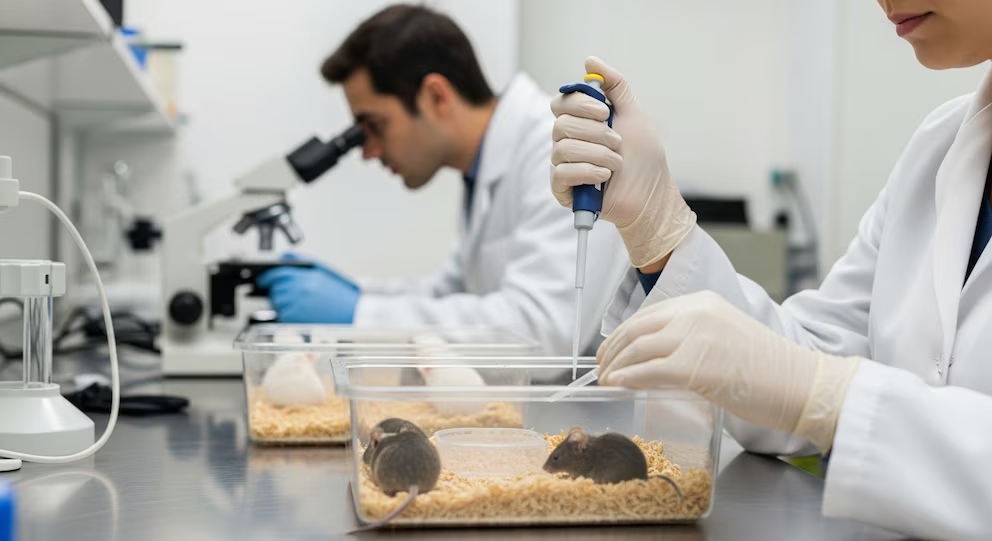
The pancreatic cancer usually goes unnoticed until it has already spread. Many patients also develop blood clots. Before conducting the study, the researchers had considered that pancreatic tumors accumulate fibrin, the protein that forms from fibrinogen, produced in the liver. In a healthy pancreas, fibrin is almost invisible. Therefore, the scientific team wondered if fibrinogen simply accompanies the tumor or if it actually helps it grow. Fishel said: “We wanted to understand if the proteins involved in coagulation and clot formation drive the disease or are a byproduct of it.” To answer the question, the researchers used mice of the species Mus musculus with pancreatic cancer and applied two modern techniques to lower fibrinogen: antisense oligonucleotides and nanoparticles with interfering RNA. Both strategies are already being tested in other diseases and allow for the precise reduction of certain blood components. The objective was to see if fibrinogen helps the tumor grow and expand or if it only appears due to the body’s natural reaction.Mysteries of Blood in Tumor Development
In the experiments, the team measured the size of the tumors, the amount of metastasis, and the changes in the environment of the cancer cells. With three animal models derived from patients, the results were clear: the tumors shrank and liver metastases decreased by reducing fibrinogen. The tissue analysis showed less fibrin in the tumors and more restrictive fibroblasts, which seemed to slow the advance of the cancer. Even in already developed tumors, the effect was the same: less tumor mass and fewer metastases in the liver. No changes were found in the number of metastases in the lungs, which suggests that fibrinogen has a particular role in the pancreatic environment and in the first steps of expansion to the liver. The team found that most of the fibrinogen found in the tumor comes from the liver and not from the cancerous cells.New approaches to treating a difficult cancer
The team of scientists suggests that reducing fibrinogen, without eliminating it entirely, could be combined with chemotherapy to improve outcomes in patients with pancreatic cancer. Fishel explained: “Since fibrinogen levels are elevated in pancreatic cancer, the idea would be to bring them back to normal values, not to zero.” Among the limitations, researchers warned that, although the tumor shrank, other proteins that could protect it increased, so the strategy should be combined with other medications. The techniques to lower fibrinogen are already being tested in clinical studies and the next step will be to combine them with treatments such as gemcitabine or FOLFIRINOX (a combination of four chemotherapy drugs).You can also read:“It is neither legal nor humane”: Journalist Pamela Rojas denounces mistreatment of cancer patients at INCART
Regulating fibrinogen could offer real hope for changing the fate of those diagnosed with pancreatic cancer. To lower the risk of that type of tumor, smoking tobacco should be avoided, a healthy weight should be maintained, and a balanced diet should be chosen. Controlling diabetes and moderating alcohol consumption also decreases the chances of developing it, according to the American Cancer Society. Among the most common symptoms are abdominal or back pain, unexplained weight loss, yellowing of the skin and eyes, and changes in bowel movements. These signs usually appear when the disease is already advanced.