
Clawers, mechanics and watchmen: this is how the network operated in Puerto Caucedo

7:00 pm
Santo Domingo.– The Public Ministry revealed new details about the criminal structure linked to former councilman Francisco Alberto Paulino Castro, alias “Francis” or “El Compadre”, accused of operating a network dedicated to international drug trafficking, money laundering, and contamination of containers in the Caucedo Multimodal Port.
According to the coercion measure, the organization took advantage of internal accesses, technical functions, and breaches of the security system to introduce drugs into containers bound for the United States and Europe.The structure was composed of leaders, transporters, mechanics, “clavadores”, camera operators, security personnel, and suppliers of illicit substances.
Who were they and what did they do within the network?
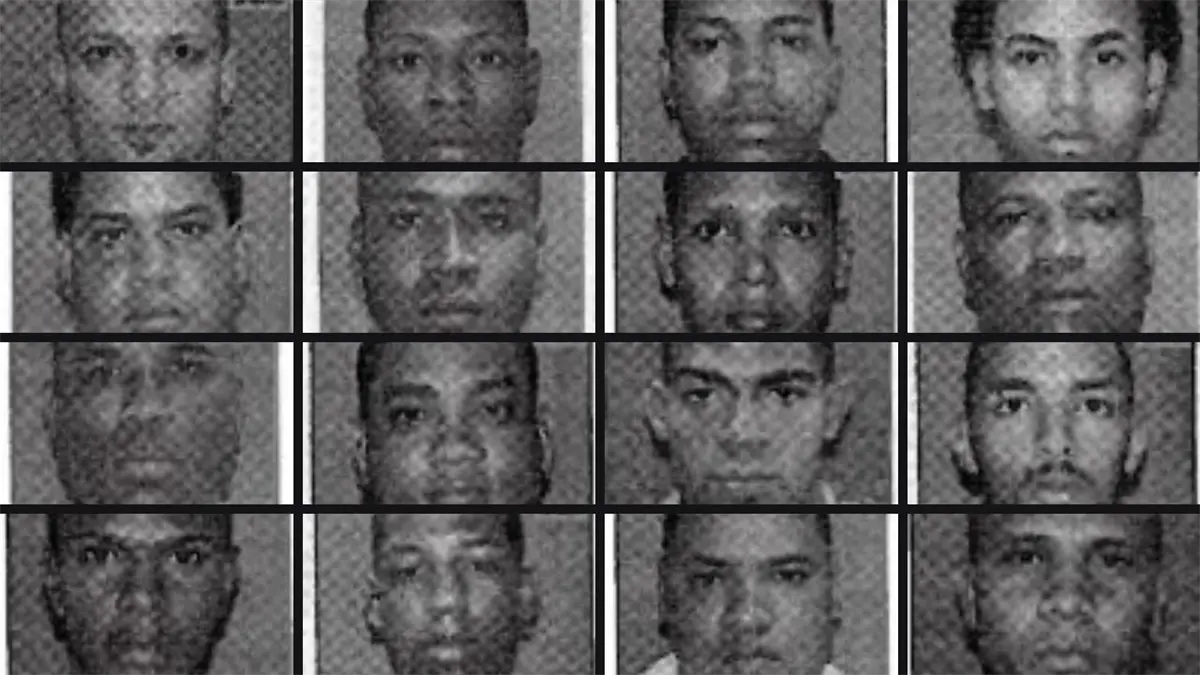
The Public Ministry attributes to “Francis” the use of the structure to send drug shipments abroad. His link with criminal networks is not new: in 2012 he had already been arrested with six packages of cocaine.On July 4, 2025, two vehicles left his residence driven by the accused Marko Popovic and José Augusto Rodríguez Sánchez, confirming their active participation in the operations. José Augusto Rodríguez Sánchez (“El Rubio”) is identified as one of the main leaders: he received, stored, and distributed the drugs, recruited personnel from the port, and used companies to justify profits. In the terminal, several employees facilitated the access and manipulation of the shipments:
- Melvin Manuel Fis Taveras introduced the drugs to the port and delivered them to the “clavadores”.
- Wilmer Evangelista Rumaldo, Ángel David Feliz Cuevas, Edwin Alberto Mejía Guerrero, Fernando Javier Castro Ramos and Wilson Tomás Altagracia hid and placed the drugs inside the refrigerated containers.
- Gregory Arturo Calzado Paredes, identified as the logistics chief, recruited personnel and modified trucks with hidden compartments.
- Leandro Manuel Arias Santana (“Berni”) acted as a supplier and financier.
- Cleudi Zapata (“Pelota”) provided drugs for the operations.
- Francisco Colón Natera (“Kelito”) falsified the security seals of the contaminated containers.
The camera operators José Francisco Sabino Castillo and Manuel Amancio Moreno de los Santos accepted bribes to omit reports of irregular movements within the port. Other key roles included transportation and support for internal logistics:
Fernando de Jesús Ventura Segura, Mauricio Josué Castillo, Jonathan Ditren (“El Brujo”) and José Alberto López Alcántara (“Bururun”) participated in the transfer, concealment, and placement of the shipments.
Actions and arrests
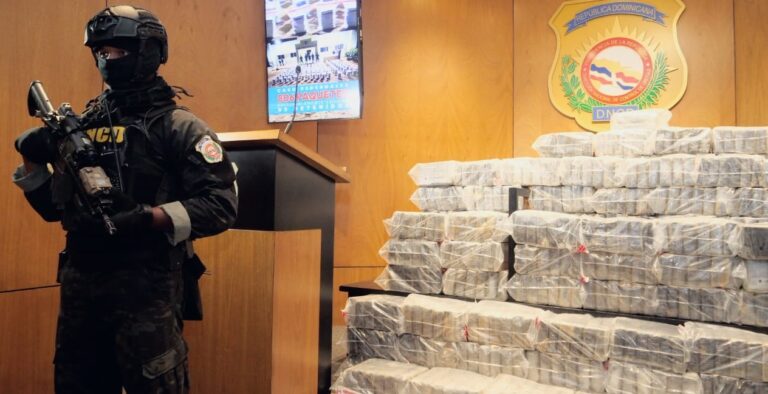
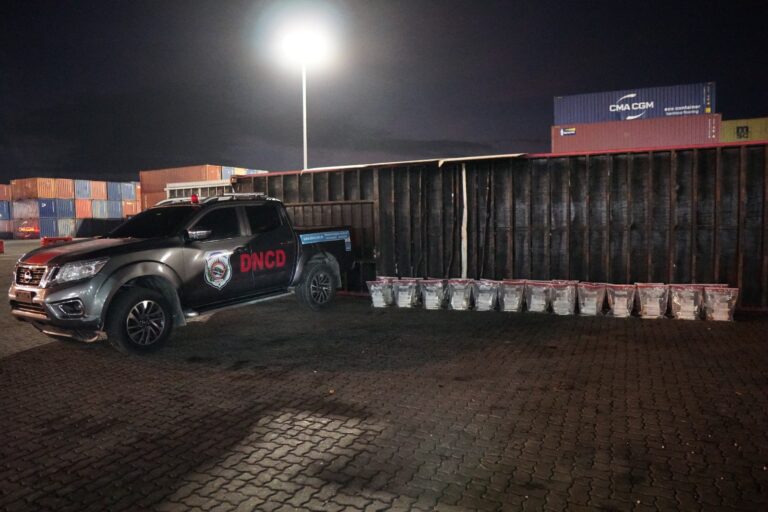
Among those arrested are employees and contracted personnel of the Caucedo Multimodal Port, who used their access to facilitate the entry, manipulation, and exit of the contaminated containers. The authorities seized recent shipments, such as the 125.81 kilos of cocaine found on August 29, 2025, and the 120 packages seized in August of the same year, both in containers tampered with by members of the network. The Public Ministry assures that the case has documentary, electronic and testimonial evidence, and that it is one of the “most infiltrated” internal drug trafficking operations within a port terminal in recent years.
Redacción de De Último Minuto



#Most read
- 1.Armed men attack U.S.-flagged vessel in Haiti’s Port-au-Prince Bay
- 2.Solange Omon, from Cameroon, is chosen as the new Victoria’s Secret angel
- 3.5D Cinema in Japan surprises the world with an immersive experience that goes viral
- 4.VIDEO: Witnesses say man prayed and bowed to tiger before fatal zoo attack in England
- 5.Now in Italy! Riots erupt in Milan as protesters loot stores and clash with police
- 6.VIDEO: Guatemalan teenager wakes up inside her coffin after being presumed dead
- 7.VIDEO: iPhones and luxury perfumes float in the Strait of Hormuz after cargo ship sinks
- 8.Iguazú Falls surge forces closure of Devil’s Throat walkway in Brazil
- 9.Dominican man shot by ICE in the Bronx had robbery conviction and pending drug charges
- 10.The Panama Canal begins evaluation of companies interested in building two ports

Newsletter
Subscribe to our newsletter to receive our latest articles instantly!