A Heritage Deteriorating in Silence
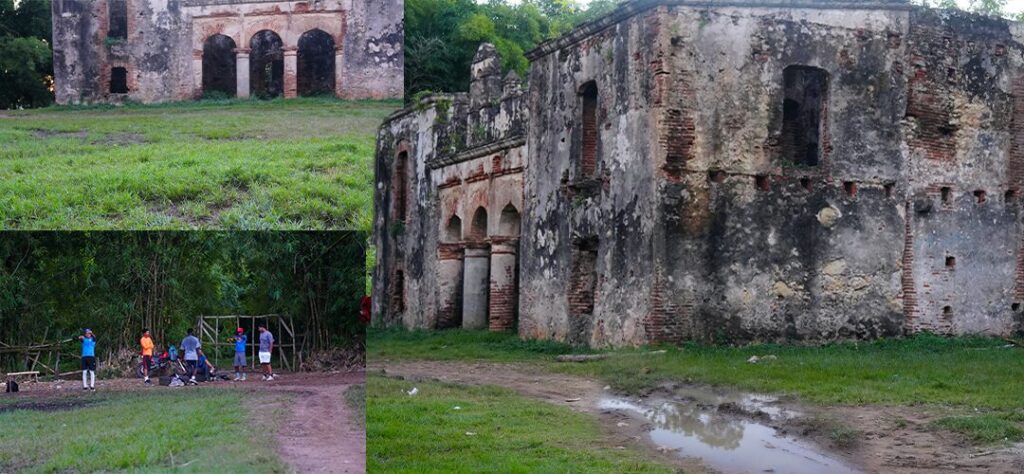
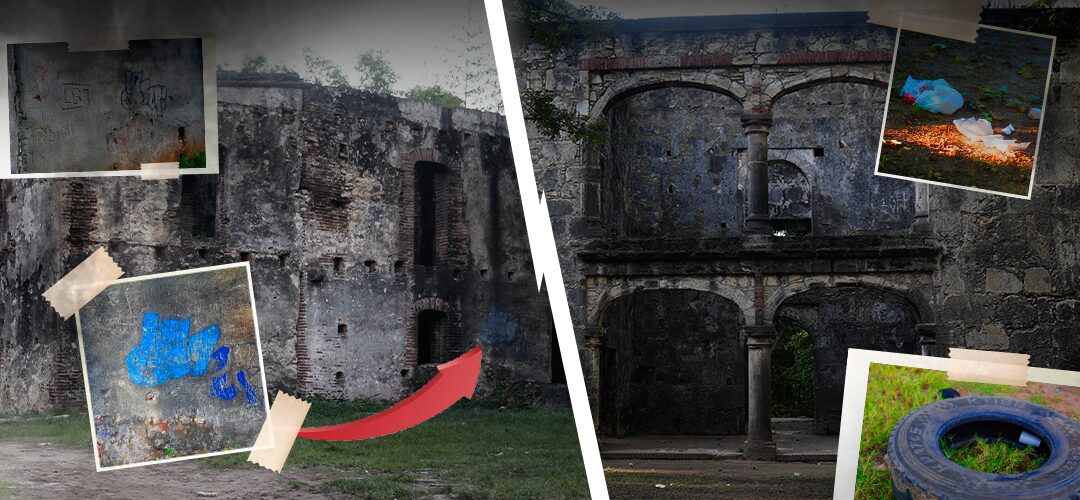
The Engombe Ruins make up one of the few colonial architectural complexes that remain standing outside the historic center of Santo Domingo. They belonged to the old Engombe sugar mill, one of the most important production centers of the colonial era, located on the banks of the Haina River. Among its structures, the big house, the church, and the remains of the mill’s facilities stand out. Despite its archaeological and cultural relevance, Engombe faces progressive deterioration. Although the area is not full of garbage, a fact that surprises due to the lack of state supervision, abandonment is evident.Within the complex, there is even a dwelling, inhabited by a family that has settled there permanently. According to the resident, this house, located within the limits of the Mirador Oeste Park, was sold to her father by the Autonomous University of Santo Domingo (UASD). The high house of studies, according to her statements, developed housing projects for employees in this area in the past.
Contents

The Palavé Palace: History Among the Undergrowth
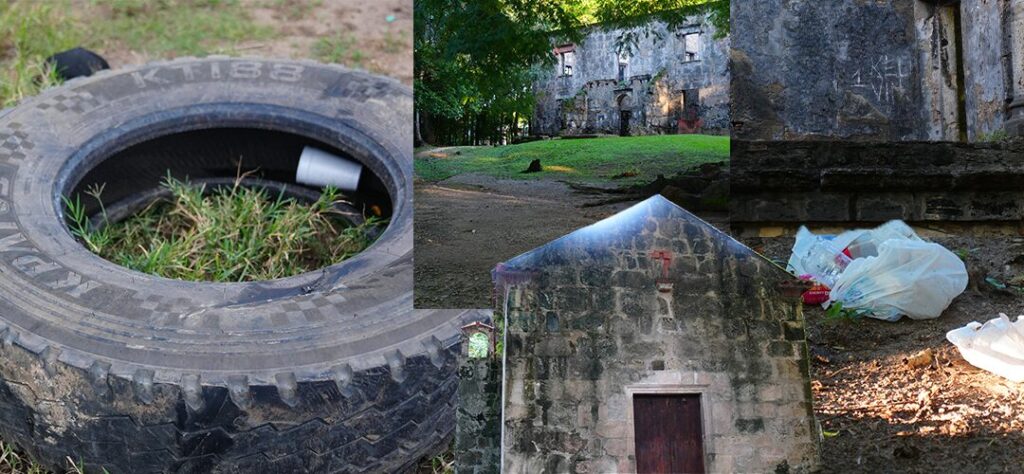
A few minutes from Engombe, in the community of Hato Nuevo, Manoguayabo, stands the Palacio de Palavé, one of the most enigmatic colonial buildings in the country. Built in stone and with a design that has generated multiple historical interpretations, Palavé is a symbol that has resisted centuries, but has not managed to overcome contemporary abandonment. Contrary to popular belief, the Palavé Palace is not part of the Mirador Oeste Park, nor is it located within its grounds. Its true surroundings are an expanding residential area, where the monument is increasingly isolated and deteriorated every day. Currently, the structure is overgrown with weeds, with large graffiti-covered walls and areas that show years without maintenance. Lacking protection, the place has become a space informally used by young people who practice exercises. Although this shows that the community finds value in the site, it also raises the urgency of a regulated use that protects the monument and gives it a sustainable cultural or tourist purpose. Engombe and Palavé could become a true tourist-cultural corridor for Santo Domingo Oeste, capable of attracting visitors, generating employment, and reinforcing local identity. When these spaces are visited, one realizes that they have everything that in other countries would be a reason for immediate development: palpable colonial history, a unique aesthetic, a strategic location, and enormous potential to integrate into educational, cultural, or recreational routes. In Engombe, for example, its different structures allow us to imagine interpretive circuits about the history of sugar, slavery, and colonial architecture. Its open areas invite us to think about open-air museography, cultural activities, school visits, and restoration projects for tourism purposes. The Palavé Palace could also be transformed into a cultural center, a small community museum, a space for artistic activities, or a point of historical observation. Preserving its architecture, it would become an attraction for national and foreign visitors. Something that is immediately noticeable, and that is impressive, is the contradiction that the community is present, but the State is not. Walking through Engombe and Palavé, you find families, young people exercising, content creators recording videos or photo shoots, and people who simply go to get to know the place.