Santo Domingo.– The National Earthquake Evacuation Drill mobilized 3.2 million people this Tuesday in more than 12,500 institutions across the country, far exceeding the participation recorded in 2025 and becoming, according to the Emergency Operations Center (COE), the exercise of this type with the greatest reach in the region.
The director of the COE, Erdwin Olivares, offered the preliminary results of the day and thanked the integration of public and private institutions, educational centers, companies, communities, and families.
You might be interested in: DR activates earthquake drill today to test emergency response
The figures represent growth compared to the fifth National Earthquake Evacuation Drill, held on November 5, 2025, when 2.8 million people and 7,506 public and private institutions and communities were directly impacted, according to the COE’s institutional report.
This means that this year’s exercise incorporated about 400,000 additional people and nearly 5,000 more institutions than the one developed in 2025.
More Read

Last year’s drill was also aimed at testing institutional contingency plans, protocols, and evacuation procedures in the event of an earthquake. The event was coordinated by the COE and included the participation of public institutions, private companies, universities, educational centers, and community organizations.
About 7,000 people exit El Huacal in nine minutes during drill
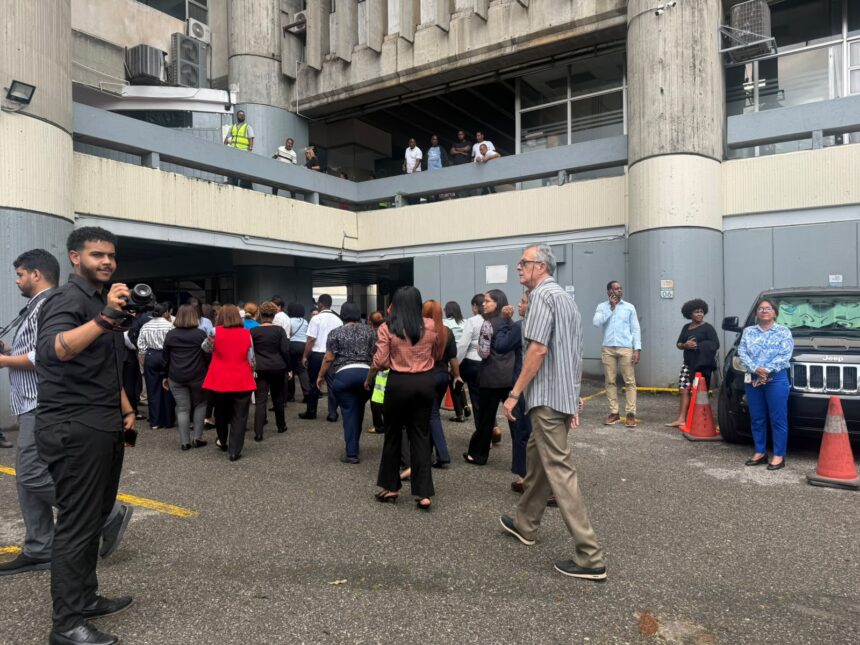
As part of this Tuesday’s exercise, around 7,000 employees evacuated the Juan Pablo Duarte government office building, known as El Huacal, in approximately nine minutes, a 14-story structure that houses multiple state agencies.
“We are talking about nearly 7,000 employees who were able to evacuate in nine minutes. Ladies and gentlemen, we are talking about a building that is multi-purpose, multi-office, and they were able to evacuate in nine minutes,” stated Olivares.
More Read
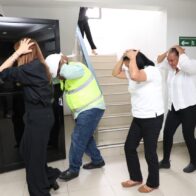
Although he avoided establishing whether the time achieved constitutes a record or comparing it with specific standards, the director of the COE considered that the result is at a “very acceptable” level.
The official explained that for the moment the authorities are focusing on the preliminary results, while later the lessons learned will be analyzed and the corresponding recommendations will be prepared so that each institution can determine the aspects it needs to strengthen.

Olivares highlighted that preparation for earthquakes, hurricanes, and other phenomena constitutes a shared responsibility and assured that they will continue to strengthen technology and preventive actions to increase the country’s response capacity in emergency situations.
RD in seismic zone
The Dominican Republic is located in a zone of seismic activity, so population preparedness constitutes one of the main components of risk management. In this context, every drill allows for testing the evacuation, communication, and coordination mechanisms that must be activated in the event of a real emergency.
These exercises seek to ensure that institutions and citizens are familiar with evacuation routes, meeting points, and the measures to be taken during and after a seismic movement. The practice also allows for the identification of flaws that could prove critical if a major earthquake were to occur.
The periodic execution of the national drill has allowed for the progressive expansion of participation by public and private institutions, educational centers, businesses, and communities. Beyond counting evacuated people, each drill serves to evaluate the response capacity of the authorities and determine which aspects need to be reinforced.
More Read
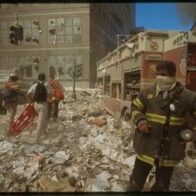
The drill also has an educational component, as it helps familiarize the population with behaviors that can reduce risks during an emergency. Among these are staying calm, taking cover during the movement, using established exits, and subsequently heading to safe zones.
For institutions, the drill also represents an opportunity to review their contingency plans and verify if their teams know the roles they must perform. Coordination between emergency agencies, authorities, companies, and citizens is fundamental to avoid disorganization in the first minutes of a potential catastrophe.
The experience gained in each drill allows authorities to collect information on evacuation times, participant response, and difficulties encountered during the exercise. With that data, recommendations can be established and adjustments can be made to the protocols.
This Tuesday’s drill is also taking place against a backdrop of growing interest in prevention and preparedness for natural phenomena. The massive participation seeks to strengthen a culture of prevention in which the population does not wait for an emergency to occur to know what to do.
In this way, each drill functions as a test of collective preparedness and as a tool to improve the country’s response capacity. Its importance is not limited to the day of the event, but its results can serve to correct weaknesses and strengthen protocols for future events.
The ultimate goal of these exercises is that, in the event of a real earthquake, institutions and citizens can act in an organized, quick, and safe manner. In that sense, the drill becomes a prevention tool that allows for transforming preparation into a more effective response.