
Founded in Paris in 1904, the International Federation of Association Football went from bringing together seven European entities to becoming a global organization with 211 affiliated federations and competitions that mobilize millions of people.
The FIFA history began more than a century ago with the creation of an entity intended to unify the organization of international football. The International Federation of Association Football, known universally by its French acronym, is the main body responsible for directing, organizing, and promoting this sport throughout the world.
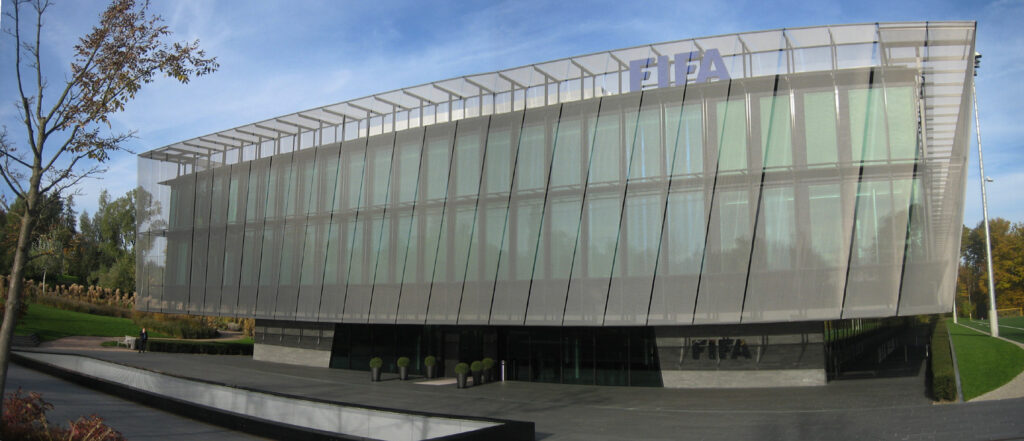
From its headquarters in Zurich, Switzerland, it coordinates 211 national associations, organizes major international competitions, and establishes policies related to refereeing, player transfers, sports development, football medicine, and disciplinary administration.
FIFA is also part of the International Football Association Board (IFAB), the body responsible for studying and approving modifications to the Laws of the Game.
FIFA origin history
At the beginning of the 20th century, football had already spread across different European countries and international matches were becoming increasingly frequent. However, there was no common authority to organize competitions or guarantee the uniform application of the rules.
More Read

Faced with that need, representatives from Belgium, Denmark, France, the Netherlands, Spain, Sweden, and Switzerland met in Paris on May 21, 1904, to establish the Fédération Internationale de Football Association.
Spain was represented by the Madrid Football Club, the current Real Madrid, because the Spanish federation had not yet been created.
The French journalist and executive Robert Guérin was elected as the first president. The official French name and the acronym FIFA were subsequently retained in all languages, even in countries where that language is not spoken.

England, considered the cradle of modern football, did not participate in the foundation, although it joined in 1905. Scotland, Wales, and Ireland did the same in the following years.
International expansion
The organization’s early years were marked by financial difficulties and a lack of experience in hosting large tournaments. An initial international competition promoted by FIFA in 1906 did not achieve the expected results.
That same year, Guérin was replaced by the Englishman Daniel Burley Woolfall, who promoted a more uniform application of the rules and strengthened relations between the affiliated associations.
The 1908 London Olympic Games football tournament represented one of the first major international stages for this sport, although the organization was primarily under the responsibility of the English Football Association.
FIFA then began to expand outside of Europe. South Africa joined in 1909; Argentina, in 1912; while Canada, Chile, and the United States joined between 1913 and 1914.
This growth progressively turned the federation into a truly international institution.
More Read

The First World War
World War I interrupted the development of international football. Travel between countries became practically impossible, numerous players were sent to the front, and several federations reduced or suspended their activities.
Following Woolfall’s death in 1918, the Dutchman Carl Hirschmann provisionally took over the leadership of an organization that was facing economic problems and political divisions.
British associations temporarily left FIFA due to their differences regarding the possibility of competing against countries that had been adversaries during the war.
The federation managed to survive the crisis, although it needed new leadership to regain stability and expand its reach.
Jules Rimet
The transformation began in 1921 with the arrival of the Frenchman Jules Rimet to the presidency.
Rimet believed that soccer could become a tool for bringing nations closer together. Under his leadership, FIFA strengthened its participation in the 1924 Paris and 1928 Amsterdam Olympic tournaments, which demonstrated the growing international interest in this sport.
The success of those competitions led the FIFA Congress held in Amsterdam on May 28, 1928, to approve the creation of a world championship independent of the Olympic Games.
Uruguay was chosen as the host for the first edition due to its sporting successes and because in 1930 it was celebrating the centenary of its independence.
The first World Cup began in Montevideo on July 13, 1930. 13 teams participated and Uruguay was crowned champion after defeating Argentina in the final.
Although only four European teams made the long journey to South America, the tournament marked the beginning of the competition that would later become FIFA’s main sporting product.
World Cup Growth
Italy hosted the second edition in 1934. Interest was considerably higher and 32 national teams participated in the qualifiers to determine the 16 teams qualified for the championship.
Uruguay decided not to attend in response to the absence of several European national teams in the 1930 tournament. To this day, it is the only world champion that did not compete in the edition immediately following the conquest of its title.
Italy won the 1934 and 1938 World Cups, before the Second World War forced the tournament to be suspended for more than a decade.
The World Cup returned in Brazil in 1950. By then, the British associations had already rejoined FIFA and the organization was resuming its international expansion.
When the federation celebrated its first 50 years, in 1954, it already had 84 members.
From sports organization to commercial powerhouse
Jules Rimet left the presidency in 1954 after remaining in the position for 33 years. He was succeeded by Rodolphe Seeldrayers, Arthur Drewry, and Stanley Rous.
During Rous’s tenure, between 1961 and 1974, television transformed the reach of football. The World Cup ceased to be solely an event followed from stadiums and the radio to become an audiovisual spectacle with a global audience.
Commercial transformation accelerated with the arrival of the Brazilian João Havelange to the presidency in 1974.
Havelange expanded funding sources through sponsorship agreements and television rights, promoted new tournaments, and strengthened development programs for national federations.
During his administration, the World Cup went from 16 participants to 24 in Spain 1982 and subsequently to 32 teams in France 1998.
FIFA also incorporated numerous federations from Africa, Asia, the Caribbean, and Oceania, consolidating the global presence it maintains today.
The Blatter era
Swiss Joseph Blatter assumed the presidency in 1998 and continued the organization’s territorial and commercial expansion.
During his tenure, Asia hosted a World Cup for the first time, held jointly by South Korea and Japan in 2002. Eight years later, South Africa hosted the first edition held on the African continent.

The institution increased its revenue, developed new cooperation programs, and strengthened its women’s, youth, futsal, and beach soccer competitions.
However, his management was also marked by questions related to transparency, governance, and resource management.
FIFA history and the FIFAgate
The greatest institutional crisis in the modern history of FIFA erupted in May 2015, when several officials were arrested in Zurich as part of investigations related to corruption, bribery, commercial contracts, and broadcasting rights.
Blatter was re-elected president on May 29 of that year, but announced his resignation just four days later, amid international pressure and judicial investigations.
Subsequently, he was suspended from all football-related activity by the organization’s disciplinary bodies.
The crisis, known as FIFAgate, led to changes in the administrative structure, the introduction of term limits for some positions, and a greater separation between political and executive functions.
The Infantino era
Gianni Infantino was elected president at the Extraordinary Congress held on February 26, 2016.
The Italian-Swiss executive, who previously served as UEFA general secretary, arrived with the promise of pushing for reforms and restoring the institution’s credibility.
During his administration, the expansion of the men’s World Cup from 32 to 48 teams was approved, starting with the 2026 edition.
The FIFA Club World Cup was also transformed, adopting a 32-participant format starting with its 2025 edition.
Infantino was re-elected in 2019 and again in 2023. The General Secretariat is headed by the Swedish-Dutch official Mattias Grafström, formally appointed in 2024.
211 federations
FIFA currently brings together 211 national associations, a figure higher than the number of member states of the United Nations.
This is because it admits federations belonging to territories that are not sovereign states. England, Scotland, Wales, and Northern Ireland, for example, compete independently despite being part of the United Kingdom.
The national associations are distributed across six continental confederations: AFC, CAF, Concacaf, Conmebol, OFC, and UEFA.
Although these manage regional competitions, the national associations are the direct members of FIFA.
FIFA history features
FIFA is not limited to organizing the World Cup. Among its main responsibilities are the supervision of international transfers, the development of disciplinary regulations, the training of referees, the development of training programs, and the promotion of sports medicine standards.
It also distributes resources for the construction of facilities, the development of leagues, the training of coaches, and the administrative strengthening of federations.
In addition, it promotes policies against racism, discrimination, match-fixing, doping, and other practices that affect the integrity of sport.
Modifications to the Laws of the Game are approved by The IFAB, which is comprised of FIFA and the football associations of England, Scotland, Wales, and Northern Ireland.
Competitions
The men’s World Cup is the most well-known tournament, but FIFA manages a wide calendar of competitions.
Among them are the FIFA Women’s World Cup, the men’s and women’s U-20 and U-17 World Cups, the FIFA Futsal World Cup, the FIFA Women’s Futsal World Cup, and the FIFA Beach Soccer World Cup.
It also organizes the FIFA Club World Cup, the Intercontinental Cup, and various youth championships.
In coordination with the International Olympic Committee, it oversees the men’s and women’s tournaments of the Olympic Games.
The Confederations Cup was removed from the calendar after its last edition, held in Russia in 2017.
FIFA Awards
Since 1991, FIFA has recognized the most outstanding footballers of each season.
The first award was the FIFA World Player of the Year. In 2010, the organization and the French magazine France Football merged their awards to create the FIFA Ballon d’Or.
The partnership concluded in 2016 and FIFA subsequently launched The Best awards, which recognize players, coaches, goalkeepers, fans, and the authors of the best goals.
The voting combines the participation of national team captains and coaches, specialized journalists, and fans.
FIFA Foundation
In 2018, the FIFA Foundation was created with the goal of using football as a tool for social transformation.
Their projects encompass education, community integration, humanitarian assistance, the recovery of sports facilities, and support for populations affected by conflicts or disasters.
One of its main programs is Football for Schools, developed to incorporate football and educational tools into schools in different countries.
FIFA Video Game
For nearly three decades, the FIFA name was linked to one of the most successful sports video game franchises in the world.
Electronic Arts released the FIFA series annually since the 1990s. However, the licensing agreement concluded after FIFA 23.
Since 2023, the company continued the franchise under the name EA Sports FC, while FIFA announced its intention to develop new partnerships in the video game industry.
More than a century
Since that meeting of seven European associations held in Paris in 1904, FIFA history reflects the transformation of football from a discipline with limited international competitions into a global industry driven by audiovisual rights, sponsorships, digital platforms, and events capable of attracting massive audiences.
The institution has been a protagonist in the expansion and professionalization of the sport, although it has also faced governance crises, judicial investigations, and questions regarding the transparency of its decisions.
More than 120 years after its foundation, FIFA continues to occupy the center of international football. Under its administration, the planet’s main championships are played and decisions are made that influence federations, clubs, players, and fans in practically every territory where this sport is practiced.