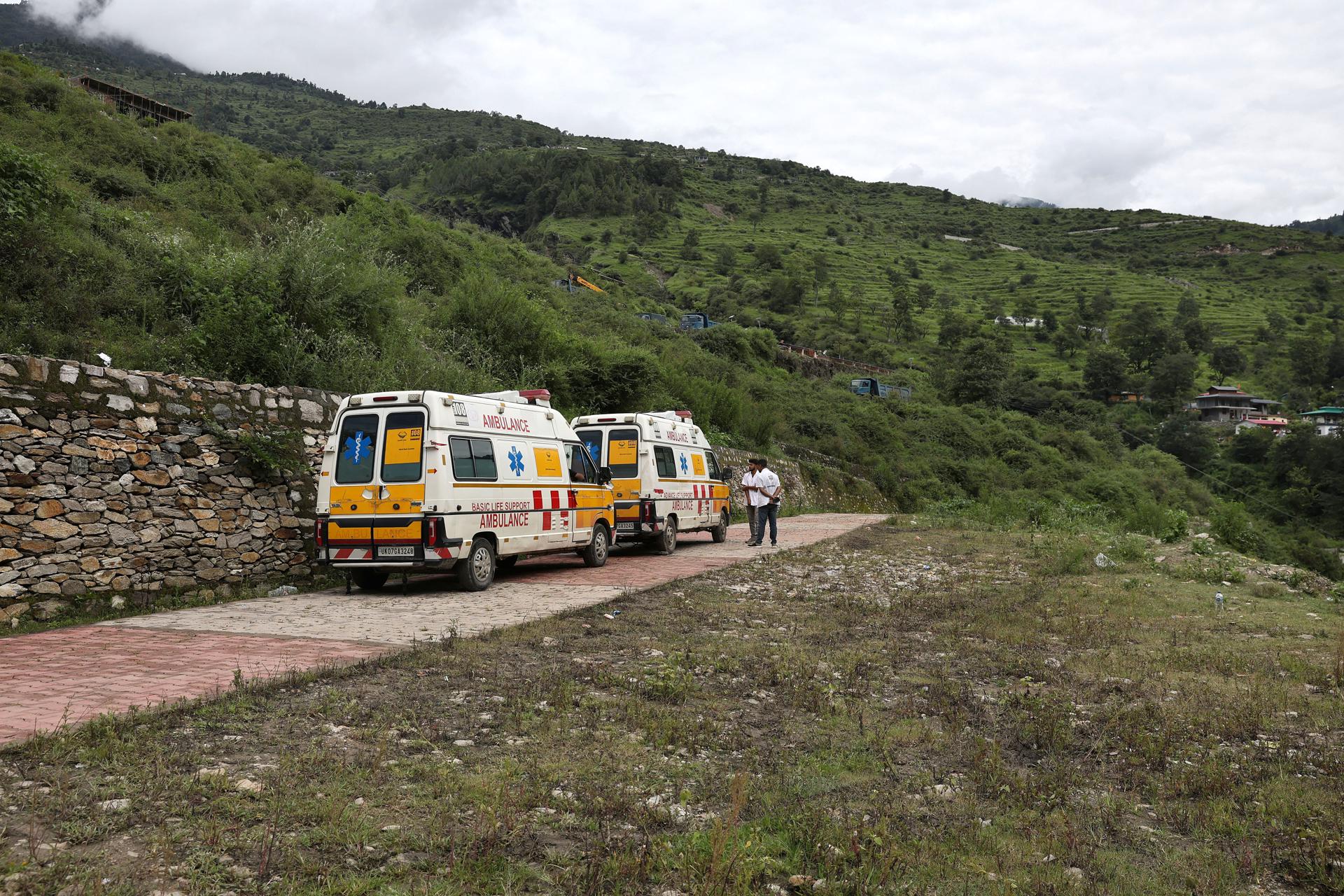
New Delhi.- Operations to search and rescue dozens of
missing persons after a catastrophic flood in the Indian Himalayas are facing an almost total blockade this Thursday, with emergency teams isolated by the collapse of roads and adverse weather that drastically limits the use of helicopters, the only access route to the area.
The tragedy, which has left at least five confirmed dead, hundreds of people evacuated, and dozens missing, has transformed the Harsil valley, in the Indian state of Uttarakhand, into an “island of disaster” inaccessible to heavy machinery.
The number of missing persons has fluctuated in the last few hours, as the authorities manage to verify the situation of the different groups.
A significant reduction in the initial estimates, which were approaching one hundred, occurred after it was confirmed that a group of 28 tourists from Kerala, reported as missing, were found safe, although they remain isolated pending evacuation.
With this update, the most recent official figures place the number of people whose whereabouts are still unknown in a range of 50 to 70.
As the fight against the terrain continues, the cause of the disaster is being reevaluated. The initial theory of a “cloudburst” (torrential rains) has been questioned by the India Meteorological Department (IMD) itself, which confirmed minimal rainfall.
Now, experts from the National Disaster Management Authority (NDMA) point to a Glacial Lake Outburst Flood (GLOF) as the most likely hypothesis, a sudden and much more destructive phenomenon.
This theory is reinforced by the similarity to a similar disaster that occurred in 2021 in the same region and by satellite images showing high-risk glacial lakes above Dharali, the most affected locality.
Dharali was a key point on the Hindu Char Dham pilgrimage route, which explains the diverse origins of the victims. Among the missing are 11 soldiers from a nearby camp, 16 tourists from the state of Maharashtra, and several local workers.
The crisis for the authorities in Uttarakhand is aggravated by a second front in the Pauri Garhwal district, where the intense monsoon rains, according to the authorities, have caused floods and landslides with a toll of two dead and five others missing.
This disaster is part of a pattern of recurring catastrophes that highlight the systemic vulnerability of Uttarakhand. Experts have pointed to events like this, the devastating Kedarnath floods in 2013, which left thousands dead, and the Chamoli GLOF in 2021, as evidence of this fragility.