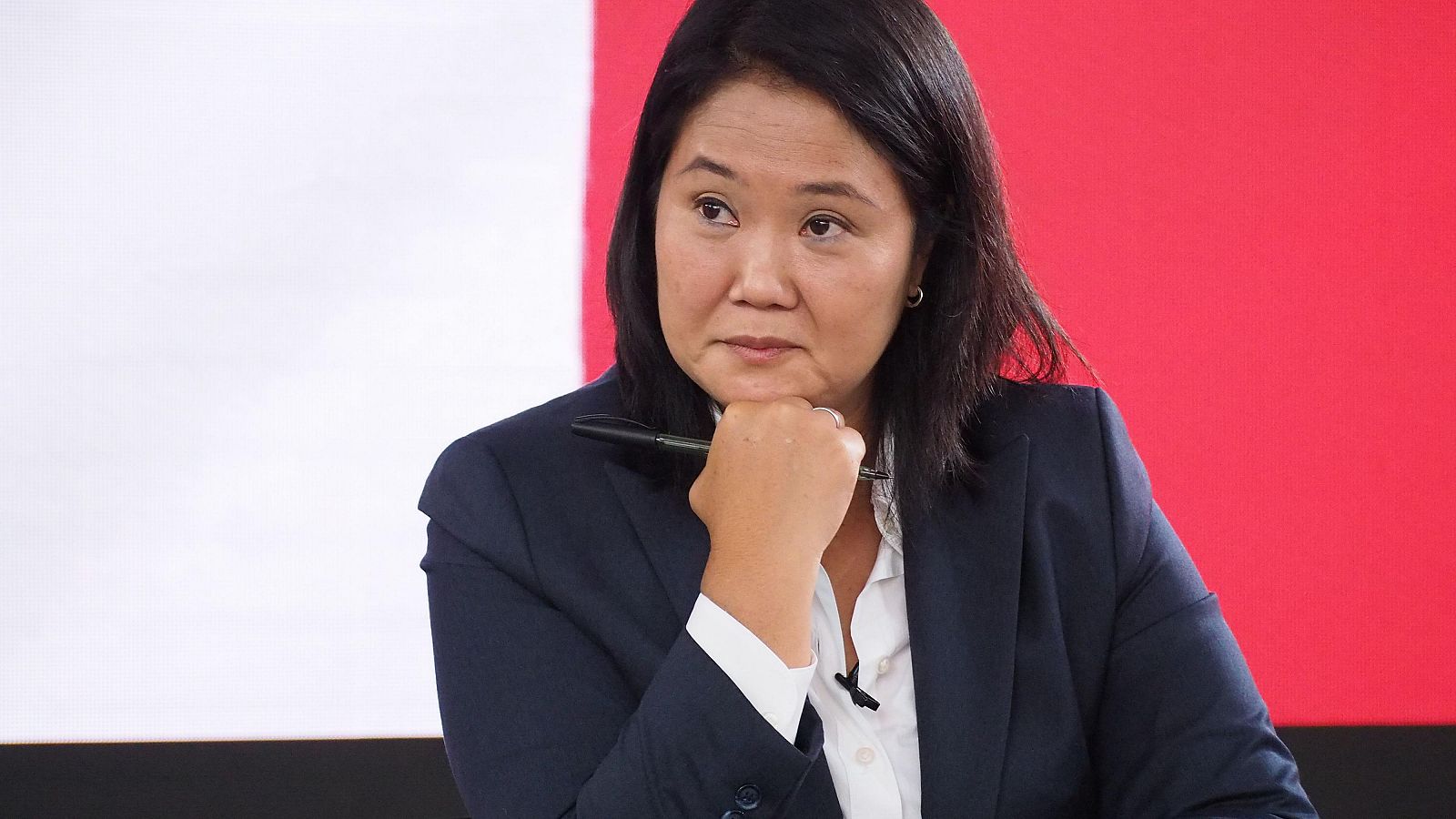
Lima.- Keiko Fujimori celebrated this Monday the sentence of the Constitutional Court that annulled the accusation against her for alleged money laundering of funds supposedly received from the Brazilian construction company Odebrecht and other companies for the 2011 and 2016 campaigns, and avoided confirming whether she will be a candidate for the fourth time for the Presidency of Peru, in the 2026 elections.
In a press conference, the leader of the Fujimorist party Fuerza Popular said that “in a few days” she will make that decision, with her daughters, and that she will make “the corresponding announcement”, after having been defeated in the second round of the last three elections by
Ollanta Humala (2011), Pedro Pablo Kuczynski (2016) and Pedro Castillo (2021).
You may be interested in: Keiko Fujimori faces 30 years in prison
However, the daughter and political heir of former Peruvian President Alberto Fujimori (1990-2000) noted that, after 10 years of “unjust accusations”, this decision “is more difficult to make”.
Fujimori added that Peruvians “are clamoring” for “security”, referring to the wave of crime in the country, and that for that reason his Fuerza Popular party will participate in the general elections next year.
“Besides being an opportunity, it’s an obligation as a political party,” expressed the three-time presidential candidate.
Fujimori highlighted that the Constitutional Court’s ruling obeys justice, as it “corrects errors and arbitrariness”, allegedly committed in the prosecution’s accusation presented in the so-called Cocktails case, for which she was even preventively detained.
Alberto Fujimori’s daughter complained that there were “unjust preventive detentions” and “raids without a legal direction”, based on “accusations that seemed like an eternal punishment”.
However, he said he would accept the resolution of Peru’s highest court of guarantees “without resentment and with his head held high”, because he believes “in due process and not in a political lynching”.
Fears new complaints during election period
In that sense, he thanked his lawyer Giuliana Loza for carrying out a “true feat with honor”, as well as the leaders of his party, collaborators and militants who were “unjustly dragged into this process” which had around 40 co-defendants.
“We know that elections and new complaints are coming, but it’s not just democracy that loses, but the citizen,” Fujimori affirmed.
The presidential pre-candidate of Fuerza Popular insisted that her claim is “against those who used justice as a political weapon”, but stressed that “this day is a turning point, because it was decided that justice has no affiliation”.
When asked if she is evaluating a complaint against prosecutor José Domingo Pérez, she said that she has not made that decision personally, but that “the more than 40 defendants are fully entitled to do so.”
The TC’s decision declared “founded” a lawsuit filed by Fujimori’s defense and ordered that this process be archived.
They argue error in criminal classification
Fujimori’s lawyer had requested that the judicial resolutions related to the process against her client for the crimes of money laundering, criminal organization, false declaration and generic falsehood, as well as “all preceding acts” followed since the beginning of the preliminary investigations, in 2017, be declared null.
Loza argued that before November 2016, receiving money to finance a political campaign was not considered to imply a money laundering offense and that the Prosecutor’s Office incorporated new elements to the case in October 2018 “without respecting the right to defense”.
“The beneficiary’s innocence or guilt is not being declared, but rather the unfeasibility of continuing with an accusation lacking legal basis and clearly opposed to what is established in the Constitution,” clarified the TC resolution.
The so-called ‘cocktails case’ was opened against Fujimori and other leaders of the Fuerza Popular party for the alleged irregular financing of their electoral campaigns of 2011 and 2016 with money from private companies, which the political group explained as coming from a series of ‘cocktails’ in which sympathizers participated.
During the investigation phase of this case, Fujimori was sent to preventive prison in two different periods that totaled about a year and a half, the last of them before the covid-19 pandemic began, a reason that led to her being released to remain on parole.