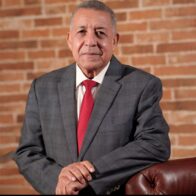
The Catholic community in Kazakhstan has changed radically in the last three decades of independence of the Central Asian republic and is now made up of representatives of all the ethnic groups that inhabit this region, Spanish Bishop José Luis Mumbiela Sierra told EFE.
“The face of the Catholic population of Kazakhstan is multi-ethnic,” said Mumbiela, bishop of the Diocese of the Most Holy Trinity in Almaty and president of the Episcopal Conference of Central Asia, less than a month before the VII Congress of Leaders of World and Traditional Religions is held in Kazakhstan.
Three decades of change since the fall of the USSR
The religious man noted that in recent years the community, whose history predates the Soviet era of Kazakhstan (1920-1991), has been expanded with “many people of non-Catholic and even non-Christian tradition”.
If in the Soviet era, Catholics in Kazakhstan were characterized by the presence of deported Poles, Germans, and Baltics, nowadays “the face of Catholics in Central Asia and specifically in Kazakhstan has changed a lot,” he said.
On the one hand, it was pointed out, many Germans and Poles have left the region, and on the other hand, due “to the mixtures, because human love knows no religion, if it is authentic”.
And although the number of faithful has been reduced – estimated at almost 200,000 Catholics in Central Asia -, the evolution of the community is “positive”, since it is “more open, better reflects what the Catholic Church is, which does not belong to one or two nationalities but is universal, it is for everyone and for everyone”, he said.
Furthermore, “since Kazakhstan’s independence in 1991, the Catholic Church has developed organizationally, with an increase in the number of parishes and religious organizations”.
“We have gained in organization, we are more established as a structure,” he highlighted.
In particular, he highlighted “the good relations with the Kazakh government,” since “a living church that tries to be active” must project itself “not only for the benefit of Catholics, but also for the benefit of the country, of Kazakhstan, so as not to be a church that only thinks of itself” and that is “more capable of contributing something.”
In that sense, citing Jesus, the Kazakh Catholic community seeks “to be the light of the world like the yeast in the dough, like salt, which gives flavor to society even if it is not a large amount, but which influences a lot and helps everyone”.
Ukraine, a fratricidal war
Asked about the conflict in Ukraine, he pointed out that “it is not a war between two countries, but a fratricidal war (…) a very sad reality like all wars”.
Although he confessed not to be the most suitable person to state the causes of this conflict, he estimated that it is “a whole history of lack of unity (…) a history sometimes provoked by hatred, a history in which it has not been known how to live together, forgive and be united, and promote unity more than division”.
“What we have to do as Catholics is always to seek what Pope Francis said: unity, peace, forgiveness, reconciliation, truth,” he indicated.
And that is because, he pointed out, “in a war no one wins because everyone loses, everyone has lost something, they have lost lives, they have lost friends, they have lost family, they have lost relationships, they have lost hope, they have lost history. There are many losses”.
According to the bishop, Kazakh Catholics pray that “the drama of the war will end. An unjust war that cannot be justified.”
Kazakhstan, center of dialogue
In that sense, he highlighted the attitude of Kazakhstan, which is projected as “a center of dialogue, of cultural encounter, as Pope Francis said” when he visited Astana.
Therefore, he described as very timely the initiative to hold the Congress of Leaders of World and Traditional Religions on September 17 and 18, noting that this type of project is “very necessary.”
“And this favors peace. Kazakhstan, the spirit of Kazakhstan, is part of that solution for the future. Creating dialogue structures for the benefit of all,” he asserted.
In that sense, it was pointed out that Kazakh Catholics “are few, but we can contribute something important.”