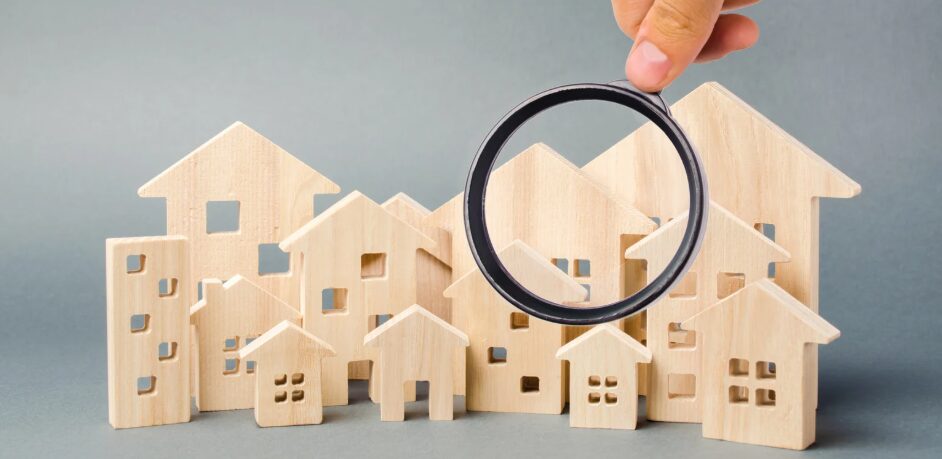
Nairobi.- The United Nations Human Settlements Programme (UN-Habitat) warned this Friday that the current “global housing crisis” will cause a “humanitarian emergency” if governments do not address the problem “immediately”.
With that forceful message, the second UN-Habitat Assembly resumed in Nairobi, which was held in June 2023 in the Kenyan capital, but left pending issues that it must now address, such as the adoption of the 2026-2029 strategic plan of that agency, which addresses the importance of decent housing for all.
“We are living through a global housing crisis that is worsening day by day. Almost 3 billion people lack access to adequate housing, safe land, and even the most basic services such as water and sanitation,” said the executive secretary of UN-Habitat, the Brazilian Anacláudia Rossbach, at a press conference after the opening of the forum at the UN complex in Nairobi.
According to this UN agency, headquartered in Nairobi, the impacts of climate change, growing inequality, and large-scale displacement caused by conflicts are exacerbating that crisis.“If it is not addressed, this crisis constitutes a humanitarian emergency,” warned Rossbach, emphasizing that these figures “are alarming and the human suffering that accompanies them is even more so.”
“There is no more fundamental issue for people’s lives than housing and the right to live with dignity and security. In this we must act before it’s too late,” Rossbach urged.
“Better access to housing, land, and basic services is essential if we want to address poverty and inequality,” the executive director insisted, while acknowledging the “difficult realities” that complicate the implementation of solutions. Multilateral institutions, including the UN, are suffering “increasing pressure, both financial and political,” asserted Rossbach, in a veiled allusion to the geopolitical world shaped by the unilateral policies of US President Donald Trump.At the press conference, the Undersecretary for Multilateral Affairs of the Ministry of Foreign Affairs of Mexico, Enrique Javier Ochoa Martínez, whose country chairs the UN-Habitat Assembly, defended the need for multilateralism.
More Read

In these “times of polarization”, Ochoa Martínez urged UN-Habitat Member States to translate the debates into concrete and effective commitments that allow cities to “provide adequate and sustainable housing, overcome territorial inequalities, and guarantee the inclusion of all citizens”.

According to organization data, over 200 government representatives, including 39 ministers, attend the conference. At the beginning of the second session in June 2023, the Assembly adopted several resolutions, including those related to adequate housing for all and the transformation of informal settlements and slums.
The resumption seeks to conclude issues such as the adoption of the UN-Habitat 2026-2029 strategic plan, which focuses on the housing crisis.
More Read

You may be interested in: The British government injects 2.4 billion to build 18,000 social housing units
The conference also aims to adopt the so-called “International Guidelines on People-Centred Smart Cities”.
As the governing body of the United Nations Human Settlements Programme, the Assembly, composed of 193 UN member states, meets every four years and is the highest global decision-making body on sustainable urbanization and human settlements.UN-Habitat, which held its first Assembly in Nairobi in 2019, is the only UN agency – along with the United Nations Environment Programme (UNEP, also located in the capital of Kenya) – that has its headquarters in a country of the global south.