
Donald Trump promised in his last presidential campaign that he would execute a deep reform aimed at limiting the stay of foreign refugees in the United States.
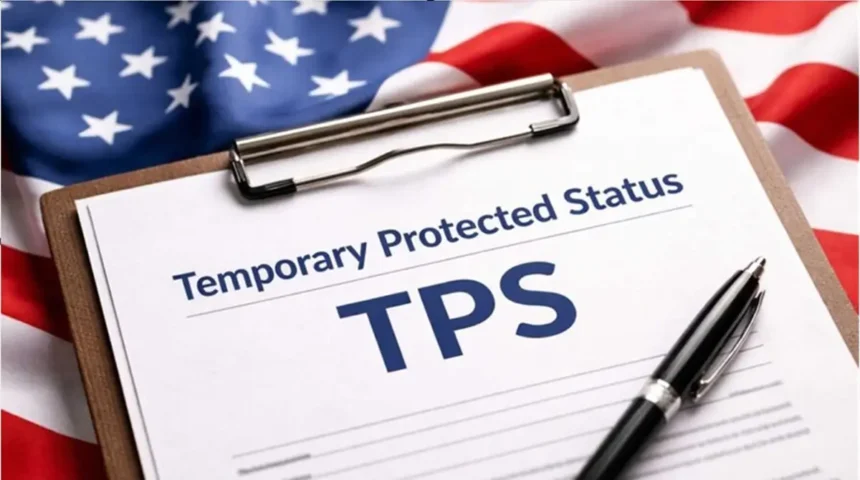
Trump advanced on the Temporary Protected Status (TPS) and managed to get the Supreme Court to rule in his favor, after a complex legal battle that was fought in various lower courts.
You might be interested in: Trump revokes TPS extension for Venezuelans
The TPS was created in 1990, designed by Democratic Senator Edward Kennedy and enacted by the Republican administration of George H. W. Bush.
It is a work permit and protection against a potential deportation order for foreign citizens who were born in countries affected by armed conflict, natural disaster, or an epidemic, to cite historical examples that justified the validity of the TPS.
El Salvador since 1991, and Honduras starting in 1998, are emblematic cases in the application of TPS. This legal resource does not grant residency or citizenship, and if TPS expires, beneficiaries return to an irregular status and are subject to eventual deportation.
The United States’ migration decision will have a different political response in Haiti, Honduras, Venezuela, and Nicaragua.
Haiti is a failed state, which has a weak government and is stalked by drug trafficking gangs that control 80 percent of its territory.
More Read

Official reports state that there are nearly 300,000 Haitian refugees in the United States, who have no intentions of returning to the Caribbean island.
The situation in Honduras is different: its president Tito Asfura designed an emergency system to accompany the return of thousands of Hondurans who will have to leave the United States in the short term.
From this perspective, Asfura spoke with Marco Rubio—Secretary of State—to deploy a migratory process that allows for an orderly family transition.

In this context, Honduran consulates will be available in various cities across the United States to advise future returnees, who are estimated at 80,000.
The basic premise is that the family is not separated and that the move from the United States will be facilitated with all the goods that have been purchased during the validity of the TPS.
“We must be respectful of the sovereign decisions of the United States. Our commitment as a government is to work hand-in-hand with U.S. authorities through diplomatic channels to guarantee an orderly, dignified, and humanitarian transition for our compatriots, ensuring that families are not separated and that they can return with their belongings,” stated Asfura.
More Read
The case of Venezuela is complex. The regime led by Hugo Chávez and Nicolás Maduro expelled thousands of Venezuelans who found refuge in the United States.
The figures handled by the Republican administration maintain that 300,000 Venezuelans have been in American territory for years.
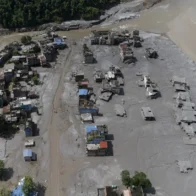
And there is still no formal process that allows for their transfer to Caracas. Many are political refugees still persecuted by the regime, to which one must add the precarious situation caused by the two earthquakes in June.
Like Venezuela, Nicaragua is a dictatorship that caused forced migration due to illegal repression and economic difficulties. Nearly 5,000 Nicaraguans are taking refuge in the United States, and their personal situation is uncertain.
The White House has no relationship with the dictatorship of Rosario Murillo and Daniel Ortega, and there is a great deal of uncertainty regarding the steps that will be taken by the Department of Homeland Security (DHS) to send Nicaraguan refugees to Managua.
The termination of Temporary Protected Status (TPS) for Haiti, Honduras, Nicaragua, and Venezuela involves more than 500,000 expatriates living in the United States.
Trump wants everything to speed up before the midterm elections, scheduled for this coming November 3rd. He believes that the cancellation of the TPS could strengthen the Republican Party’s electoral chances.