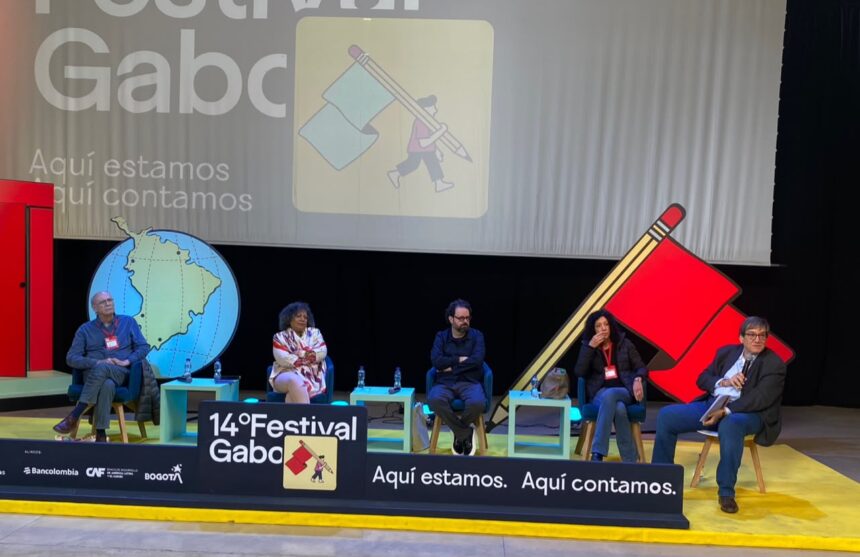
Bogotá, Colombia.- The expansion of El País’s journalistic operations in the United States, the defense of quality journalism, and the commitment to democracy marked the discussion “50 years of El País: journalism, training, and democracy,” held within the framework of the Gabo Festival 2026, which is taking place in Bogotá and brings together journalists, writers, and communicators from Ibero-America.
As one of the main novelties of the commemoration of the newspaper’s five decades, Javier Lafuente, deputy director of El País América, announced the strengthening of coverage for the Spanish-speaking audience in the United States.
“In this month of September, that operation will continue to grow. In total, it will have a newsroom made up of about 30 journalists who will report from the United States, in Spanish, both for that country and for the rest of the world,” he stated, considering it to be “a very wise decision.”
During the discussion, the panelists agreed that one of the newspaper’s strengths has been maintaining close coverage of Latin America.
“They have a way of telling our realities,” they expressed, highlighting that, throughout its 50-year history, El País has narrated the main political, social, and cultural events of the region from an Ibero-American perspective.
More Read

Nicaraguan journalist Carlos Fernando Chamorro highlighted the support that the newspaper has provided to Latin American journalism, especially in contexts of authoritarianism. He recalled that the presence of El País journalists in Venezuela allowed for the documentation of the country’s reality alongside local reporters. “The fact that there were journalists from other countries who went to Venezuela, who committed to telling the story of Venezuela and worked alongside local journalists, without pretending to tell them what they should do, also speaks to the impact that a media outlet that is 50 years old can have,” he expressed.
We recommend reading:
For her part, the Argentine writer and journalist Leila Guerriero stated that one of the newspaper’s greatest attributes has been preserving the role of the editor, a function that, according to her, has disappeared in numerous media outlets.
More Read
“They are not searchers, they are editors. They are people who think about what they can ask of a journalist, who engage in dialogue with them, read the texts, give their opinion, and suggest changes,” he maintained, highlighting that this support strengthens the quality of journalistic work.