Santo Domingo. – The
National Police assures that it is reinforcing actions to address the problem of
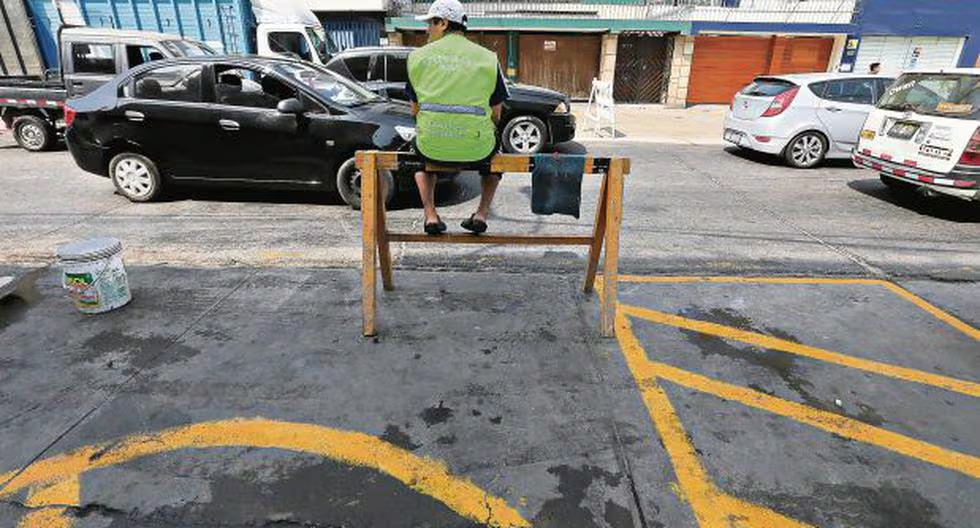
informal parking attendants who, without legal authorization, charge citizens for parking on the country’s streets, often compulsively and under threats.
The institution’s spokesperson, Colonel
Diego Pesqueira, indicated that for months they have received multiple complaints about the presence of people who
“claim the use of public spaces” and intend to charge obligatorily those who park, especially in commercial areas and around government institutions.
You may be interested in: Owners of the street: Who regulates informal parking attendants?
“Measures are being taken. There are preventive units patrolling these areas and acting when undue charges are detected. If anyone feels threatened or forced to pay, they can contact us directly at 809-682-2151,” Pesqueira expressed.
The spokesperson confirmed that, although some parking attendants have been detained for these practices, they are released in the reasonable time established by law. “This is a free and democratic country. We cannot prevent anyone from being in a public space, but we can act if they engage in extortion or threats,” he emphasized.
The Other Side: Survival Without Opportunities
On the other side of the conflict are the so-called
“car watchers,” who claim they are not criminals or extortionists, but rather parents who are trying to survive due to the lack of formal employment.
Josélito, a parking attendant in an area of the National District, says he has been in the job for 10 years and that his intention is to “do the right thing.” “We take care of the vehicles. Here, no rearview mirror, car, or anything is lost. What we ask for is a contribution, we don’t force anyone. I tell the person parking: if it’s within your means, give something, if not, it’s all good,” he explained.
He complains that some police officers, instead of regulating, have wanted to impose clandestine payments.
“There’s one who’s gotten on our backs because we don’t want to pay him a toll. But we don’t work for anyone, we do it on our own to feed our families,” he said.
“We are not all the same”
José Milos Jiménez, another parking attendant on the boardwalk, states that they have been stigmatized by the bad actions of a few. “Here we are organized by a trustee. If someone is disrespectful or does something wrong, they are removed from the group. I have been watching cars for 20 years and have never assaulted anyone. We are not all the same.”
He criticized the fact that they are arrested without offering them a job solution or regulation. “We are people who vote, who have families. If the president doesn’t have jobs for everyone, what do we do? Do we rob? No. Here we are looking for a pound of rice to cook tomorrow.”
Meanwhile, the conflict remains without a clear solution. The authorities act, but they do not offer a comprehensive policy. The parking attendants resist, but they also lack a legal framework to protect them. Public space thus becomes disputed territory: between the law, necessity, and institutional silence.