La Paz.- The next Government of
Bolivia that is elected in the elections of this August 17 will receive a country with persistent problems such as the lack of dollars and fuels, low growth and an accumulated inflation of 16.92% which for some experts are symptoms of a crisis due to the exhaustion of the model defended by President Luis Arce.
The ‘Social Community Productive Economic Model’ in force in the country was implemented by Arce since he was Minister of Economy during the Government of Evo Morales (2006-2019), with a strong state presence.
One of Arce’s electoral promises in the 2020 elections was to recover the Bolivian economy, which that year, when the world was paralyzed by the covid-19 pandemic, decreased by 8.74%, after reporting sustained growth in different proportions since 1987.
In 2021, Bolivia’s gross domestic product (GDP) grew by 6.11%, and in the following years it also reported growth, although smaller, until in 2024 the indicator reached 0.73%, a decrease that the Government attributes to social conflicts, especially those led by Morales’ followers, who is distanced from the Executive.
Furthermore, since the beginning of 2023, Bolivia has been facing a persistent lack of foreign currency, which coincided with the report that the country’s net international reserves (NIR) reached 3.148 billion dollars, compared to the historical record of 15.122 billion recorded in 2014.
By the first semester of this year, reserves reached $2.807 billion, according to the Central Bank of Bolivia (BCB).
On the other hand, in the last year, lines of vehicles at gas stations became a constant, while the accumulated inflation between January and July was 16.92%, above the official projection of 7.5% for the entire year 2025.
The general manager of the Bolivian Institute of Foreign Trade (IBCE), Gary Rodríguez, told EFE that the next Government will receive a country “with low growth and high inflation”, that is, with “stagflation, a phenomenon feared by economists, since the solution to the first problem usually opposes the solution to the second”.
For the economist, “another serious situation is high informality, which leads to low tax collection that, given a high level of public spending, causes a chronic fiscal deficit”, to which are added “low private investment” and “high internal and external debt”.
Until June 30th, the external public debt reached 13,805.6 million dollars, equivalent to 25% of the GDP, an indicator “below the reference threshold established” by international organizations, according to the BCB.
“Crisis Scenario”
Rodríguez lamented that “there is a crisis scenario in the country”, starting with the crisis in the balance of payments due to the trade deficit which, by the first half of 2025, reached 506 million dollars, a negative balance explained by the decrease in natural gas exports.
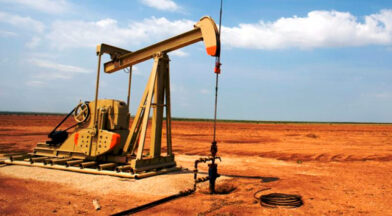
“There is an energy crisis associated with the fall in domestic natural gas production resulting from the lack of investment in exploration and the scarcity of dollars in the public sector to import fuels,” he pointed out.
He also mentioned as other symptoms of the crisis the inflation that “tends to worsen this year” and the “high structural fiscal deficit, for twelve consecutive years”.
The Arce government refused to adjust its economic model and, on the contrary, accuses the opposition and pro-Morales government parliamentarians of sabotaging it by preventing the approval of external credits in the Legislative Branch.
Rodríguez considered that the approval of the credits would have helped to solve the lack of dollars to import fuels, but “that would not solve the general situation that the country is experiencing”.
In his opinion, to stabilize the economy, “an influx of dollars into the country is required to lower the price of the currency and remove this component from the inflationary process”, which will also allow the normalization of the import of diesel and gasoline.
He also indicated that it is a priority to “solve the fiscal deficit problem” and sees “fundamental” the “total liberalization of exports and the full use of biotechnology” to “bolster the productivity and competitiveness of agriculture, “which could very easily fill the void left by the resounding fall in natural gas exports”.