
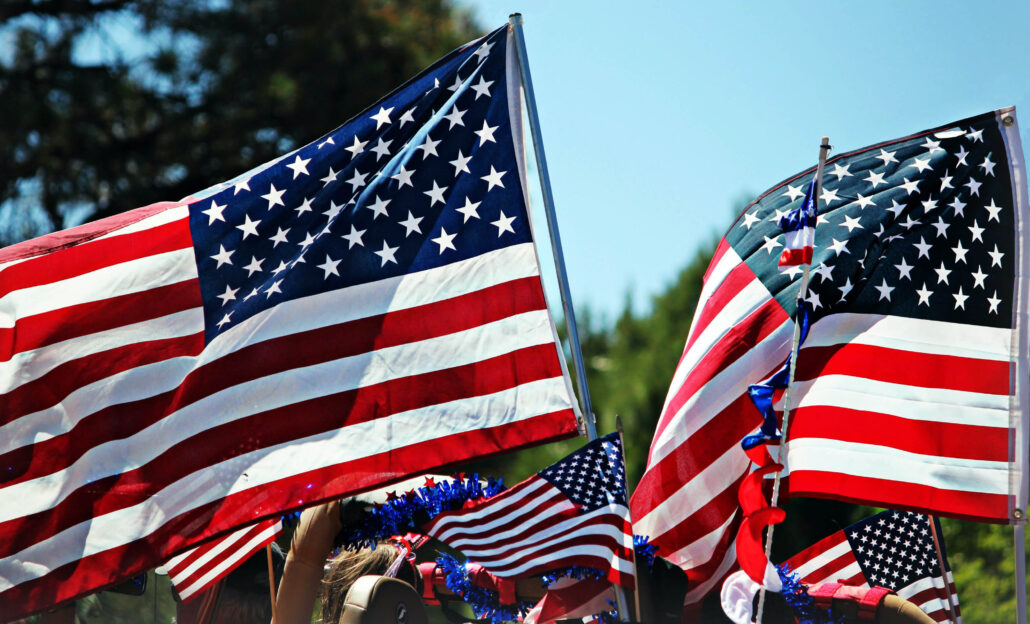
Every July 4th, United States celebrates its independence from the United Kingdom, a historical milestone that marked the beginning of a new era in America and laid the foundations of a democratic republic. But how did this separation, which changed the course of the Western world, come about?
The process towards the independence of United States was long, conflictive, and decisive. It began with the discontent of the Thirteen British Colonies settled on the east coast of North America, due to the high taxes and policies imposed by the British Crown without representation in Parliament. Among the main causes are the Stamp Act of 1765 and the taxes on tea, which led to protests and boycotts.
One of the most symbolic events was the Boston Tea Party in 1773, when colonists disguised as Native Americans threw tea shipments into the sea as an act of protest against British taxes. In response, the United Kingdom imposed more restrictive laws, which intensified the tension.
The situation became irreversible in “April 1775”, when the first armed clashes occurred between British troops and colonial militias in Lexington and Concord, marking the beginning of the “War of Independence”.
The high point came on July 4, 1776, when the Second Continental Congress, meeting in Philadelphia, adopted the Declaration of Independence, drafted primarily by Thomas Jefferson. In this document, the colonies proclaimed themselves free and sovereign, affirming the right of the people to change governments that did not protect their fundamental rights.
For eight years, the colonies waged an unequal war against the powerful British army. With the key help of France, Spain, and other European powers, the insurgents managed to weaken the British. The definitive victory came with the Battle of Yorktown in 1781, and official recognition was formalized with the signing of the Treaty of Paris in 1783.
The independence of the United States not only gave birth to a nation, but also inspired independence and democratic movements in Latin America and Europe. The country adopted a “Constitution in 1787”, which is still in force, and elected “George Washington” as its first president in 1789.

Fun Facts About the United States Declaration of Independence
Although the Founding Fathers signed the Declaration in the 1770s, Independence Day did not become an official holiday until 1870, and in 1941 it was established as a paid holiday by the federal government.
1. The Declaration wasn’t signed on July 4th: Although July 4th is the date the United States celebrates its independence, the document wasn’t signed on that date. The Declaration was adopted on July 4th, but most of the delegates didn’t sign until August 2, 1776. The New York delegates didn’t give their official support until July 9th, and the document wasn’t ordered to be written on parchment until July 19th. Interestingly, July 2nd, when the Continental Congress voted for independence, was the day that was expected to be remembered as Independence Day, according to John Adams’ writings.
2. There is more than one copy of the Declaration: Although the original document is on display at the National Archives in Washington, hundreds of copies were printed known as the “Dunlap broadsides”, after John Dunlap, the printer. Of these copies, only 26 are known to have survived. Among the most recent discoveries, one was found in 1989 in a picture frame purchased for $4 at a flea market, and another in a box of papers in the British National Archives in 2009.

3. Jefferson and Adams died on the same day: Thomas Jefferson and John Adams passed away on July 4, 1826, exactly 50 years after the adoption of the Declaration. Both were key in drafting the document and in persuading Congress to declare independence.
More Read
4. An Unsolved Mystery: In the lower left corner of the Declaration, a handprint appears whose origin is still unknown. The document was rolled up and transported frequently, which may have caused this mark. Currently, it is preserved in a titanium and aluminum frame with humidity control.
During World War II, the Declaration was transported to Fort Knox for protection, where it remained until the end of the war.Modern Traditions
Some cities in the United States are replacing traditional fireworks with ecological drone shows. This measure seeks to minimize the environmental impact and risks associated with fireworks.