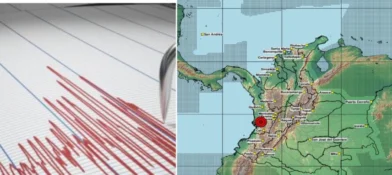
Several countries in the Pacific and Latin America have been on tsunami alert this Wednesday following an initial 8.8 magnitude earthquake that shook the Russian peninsula of Kamchatka, although the alarms have been deactivated during the day in places like Japan, Hawaii and the epicenter of the earthquake.
Russian emergency services recorded waves 3-4 meters high on the coasts of the southeast of that Russian peninsula, where the earthquake occurred, the most powerful in that region of the Pacific since 1952 and the eighth largest recorded worldwide.
You may be interested in: Tsunami challenges Japanese alert system in vulnerable locality
Four large waves caused by the earthquake reached and flooded the coast of one of the northern Kuril Islands, Paramushir, without causing casualties, according to local authorities.
The first wave advanced 200 meters and the following waves damaged the infrastructure of the port of Severo-Kurilsk. In total, about 2,700 people have been evacuated in the Kuril archipelago due to the tsunami alert.
After hours, and following a new earthquake of magnitude 6.2, Russia deactivated the tsunami alert, according to the Minister of Emergencies of the Kamchatka region, Sergei Lebedev.
That second tremor took place at 21:56 local time (09:56 GMT) and its epicenter was located at a depth of 69 kilometers and almost 200 kilometers east of the capital of Kamchatka.
California, the only coastal area in the U.S. still under alert
In the United States, the only part of the coast that is still under a tsunami alert – the highest level – is in northern California and covers about 64 kilometers from south of Klamath to the Oregon border, including Crescent City.
In that country, authorities issued tsunami alerts for several areas of Alaska, the Hawaiian archipelago, and the island of Guam. In these last two —Guam and Hawaii, islands located in the Pacific— the immediate evacuation of coastal areas was ordered, although authorities lowered the alerts throughout the day.
The tsunami also impacted the coast of California, according to the National Weather Service of Los Angeles (NWS) and was recorded on the tide gauge of Arena Cove, Monterrey and Crescent City.
The Pacific Tsunami Warning Center has also lowered its threat alert for Hawaii and has indicated that while a large tsunami is not expected to hit that state, “strong currents could occur along all coasts that could pose a danger to swimmers, boaters, and people near the shore in beaches, ports, and marinas.”
Tsunami advisories were also canceled for Guam and the Northern Mariana Islands.
More than 2 million evacuated in Japan
In Japan, after the initial scare, authorities have lifted the tsunami alert for its entire Pacific coastline, although they continue to recommend caution to the population.
The Japan Meteorological Agency (JMA) downgraded to a “tsunami risk advisory” the alert that had been activated in the entire coastal zone from Hokkaido (north of the country) to Kyushu, the largest southwestern island that makes up the Japanese archipelago.
However, he recommended that the population maintain caution and stay away from coastal areas while these warnings remain in effect.
Tsunami risk alerts of up to three meters in height led local authorities to issue evacuation orders that affected about 2 million people, who were urged to leave their homes and take refuge in public spaces set up for that purpose.
The situation caused serious disruptions to rail and air traffic throughout the day in the country, affecting -for example- the Tokyo metropolitan area and surrounding areas, where a quarter of the Japanese population is concentrated, or Sendai airport (northeast), where flights were canceled and diverted.
On the Japanese coast, tsunamis of different heights have been observed this Wednesday after the powerful earthquake in Kamchatka, which reached 1.3 meters in Iwate (northeast), 80 centimeters in Hokkaido (north) or 30 cm in Yokohama (south of Tokyo).
Alerts also in Latin America
The earthquake has also caused alarms in some Latin American countries such as Chile, Peru, Ecuador and Colombia.
In Chile, its National Disaster Prevention and Response Service (Senapred) declared an alert on the country’s coasts for the regions of Atacama, Coquimbo and Valparaíso, while declaring a state of “precaution” for the rest of the coastal territory.
Colombia also ordered the evacuation of beaches and coastal areas, according to the risk management authority, while Ecuador ordered the preventive evacuation of beaches, docks and low-lying areas in the tourist Galapagos Islands, 1,000 kilometers from the mainland.