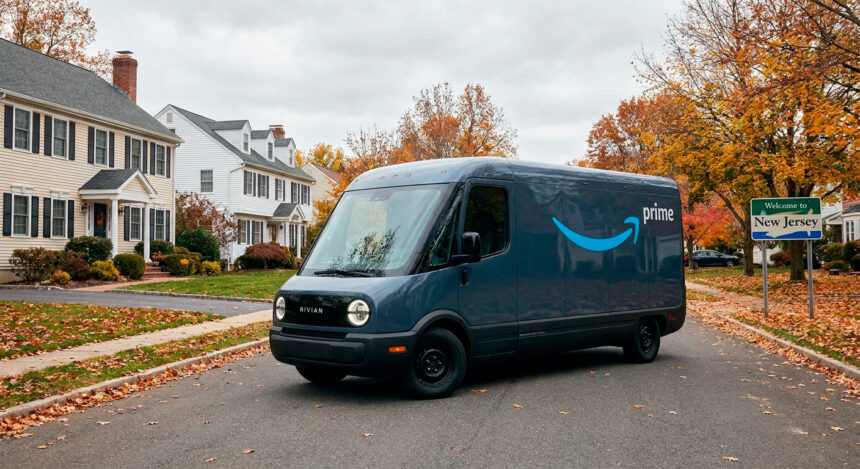
New Jersey.- The model used by Amazon to carry out millions of last-mile deliveries is facing increasing scrutiny in the United States, after New Jersey filed an antitrust lawsuit against the company for allegedly using its dominant position to limit labor competition and keep wages low for drivers in its delivery network.
The legal action was filed by New Jersey Attorney General Jennifer Davenport in a federal court. The state maintains that Amazon exerts excessive control over the small companies that make up its Delivery Service Partner (DSP) program, even though these companies are considered independent contractors.
According to the lawsuit, the company allegedly developed monopsony power, a concept used when a buyer or employer acquires enough dominance in a market to influence prices or conditions. In this case, authorities argue that Amazon’s position would allow it to influence the wages and working conditions of thousands of drivers.
The Prosecutor’s Office also accuses the e-commerce giant of restricting the ability of partner companies to hire workers belonging to other providers within its own network, thereby reducing competition for labor. Furthermore, it maintains that Amazon has discouraged unionization attempts among delivery drivers.
The DSP program has been operating since 2018 and allows small businesses to take charge of transporting packages from Amazon facilities to consumers. This scheme has helped the company develop an extensive delivery infrastructure of its own and reduce its dependence on traditional carriers such as UPS and FedEx.
More Read

Amazon rejected the allegations and asserted that the lawsuit is not supported by the facts. The company maintains that its delivery partners are independent businesses responsible for making decisions regarding employee hiring, vehicle management, and operational capacity, in addition to having the ability to provide services to other companies.

The conflict could extend to the other side of the Hudson River. New York is analyzing legislation that would modify the rules for delivery companies, including Amazon, FedEx, DHL, and FreshDirect. The proposal known as the Delivery Protection Act contemplates, among other provisions, that these companies obtain municipal licenses and directly handle the hiring of drivers instead of relying on certain subcontracting schemes.
Amazon has warned that an eventual approval of that initiative could lead it to reconsider part of its distribution operations in New York City, while business sectors have pointed out that the changes could increase costs associated with deliveries. Proponents of the proposal, on the other hand, argue that it would offer greater labor protections to workers.

New Jersey’s lawsuit also mentions a labor dispute that occurred at an Amazon station in Queens, where, according to authorities, a contractor company allegedly lost routes and subsequently ended its relationship with Amazon following union activities among its workers. The company disputes the allegations made by the state.
New Jersey is seeking a court order to stop practices it considers anticompetitive, in addition to claiming damages and other legal measures. The process could become a relevant test of the extent to which large platforms are responsible for workers hired through intermediary companies.
The controversy thus places Amazon’s delivery system under simultaneous pressure in New Jersey and New York, two strategic markets in the metropolitan area, albeit through different avenues: a legal battle in New Jersey territory and a legislative discussion regarding the working conditions of delivery drivers in New York City.